Wind farm would 'dominate key views' at Iron Age hillforts

 Jim Barton
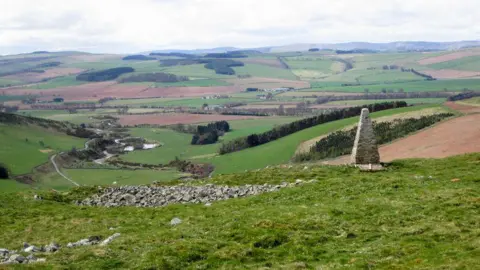
A council is being advised to oppose plans for a wind farm in the Lammermuir Hills due to concerns over its impact on the area where three Iron Age hillforts once stood.
Developers RES want to build 12 turbines as part of its Glenburnie project, near Oxton.
The scheme has been scaled back since it was first proposed but Scottish Borders Council (SBC) is still being advised to object.
Its archaeology officer said it would "adversely affect" the sites at Glenburnie, Addinston and Longcroft and the wider historic landscape context.
The local authority is being advised to object to the wind farm although the final say will lie with the Scottish government.
The proposal originally consisted of 19 turbines and was called the Longcroft wind farm.
However, when it was reduced, it was also renamed due to the locations of the remaining turbines.
A report to councillors recognised the contribution that the proposal would make towards meeting climate change objectives and emission reduction targets and its net economic effects.
It also stated that the revised plans would not result in widespread significant landscape and visual effects.
The area of concern for the council is the "significant adverse effects" on the setting of the three hillforts.
A report said the scale of the turbines - 220m (720ft) in height - would "dominate key views" which were "integral to the setting of these scheduled monuments and their cultural appreciation".
It concluded that "no exceptional circumstances" had been shown to justify such impacts nor had any mitigation measures "reduced the impacts to tolerable levels".
Developers RES said the project could meet the energy needs of nearly 100,000 homes.
It added that it would generate a community benefit fund of close to £20m over its operational lifetime and deliver about £10m in inward investment during its construction.
