First Channel ferry uses port's plug-in electricity

 BBC
BBCA cross-channel ferry has become the first to leave the UK using shore power.
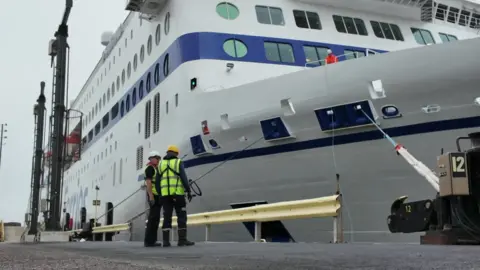
The Brittany Ferries hybrid vessel Guillaume de Normandie sailed for Caen on Monday morning, after having been plugged into the new £24.4m facility at Portsmouth Port.
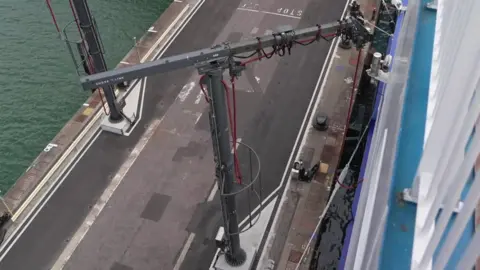
The shore power system enables ferries and cruise ships to switch off their engines and plug into electricity when berthed, a process which aims to cut carbon emissions and improve air quality.
The ferry operator's chief executive Christophe Mathieu called it a "huge milestone".
Portsmouth's plug-in power system was allocated £19.8m by the Department for Transport in 2023 and £4.6m by Portsmouth City Council, which owns the port.
It means three large ships can plug in at the same time, using the equivalent amount of electricity as half the entire city.
The port finished its work on the project late last year, but completing the connection to the grid was delayed, with months of negotiation taking place to strike a deal with the Brittany Ferries over financial terms.
In February port director Mike Sellers even warned the scheme "could be a redundant asset".
But ahead of the start of its use on Monday, he described it as a "huge moment not only for us, but also for the UK ports industry as a whole, as we are now the country's first port to offer multi-berth, multi-user shore power".
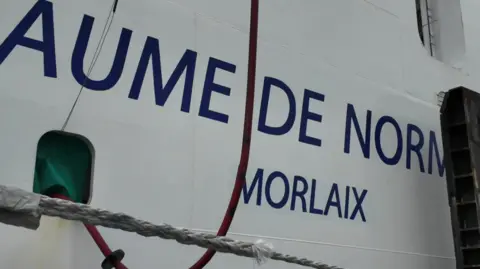
Guillaume de Normandie, is one of two hybrid-LNG ships operated by Brittany Ferries.
It sails the Portsmouth-Caen cross-Channel route.
Spokesman Nigel Wonnacott told the BBC: "The reality is if we're plugging in while we're alongside, the generators get turned off, the batteries get charged, and while that happens, there's absolutely no emissions in Portsmouth."
Mathieu said: "It means we can now realise the full potential of the greenest vessels on the Channel.
"We're better neighbours to those living and working in Portsmouth, and we're leading the sector on sustainability."
But the process costs more than burning marine fuel, and the ferry company has called on the government to incentivise the additional expense.
"This doesn't come without a cost," Mathieu said.
"We're urging the new government to consider tax breaks to offset the additional expense of plugging-in while alongside."
Sellers also warned that the infrastructure might not be used in the long term without government intervention.
He said: "We're going to be high-energy users, ports are going to be high-energy users, and we need the same kind of policy interventions that the manufacturing facilities have."
A government spokesperson said: "Our investment in energy infrastructure will get more renewables on the grid, ending our reliance on volatile fossil fuel markets and bringing down bills for good.
"We are supporting the transition to cleaner maritime operations by working with [energy regulator] Ofgem and network companies on reforming the outdated grid connections process and speeding up delivery of new infrastructure."
The deal with Brittany Ferries to use shore power lasts for at least the next 12 months.
