Coroner raises concerns about 999 response to trapped mum

 Facebook
A coroner has raised concerns about a 999 call-handling team's inaccurate communication to other emergency services while a mother was trapped in sea defence rocks and drowned.
Saffron Cole-Nottage, 32, slipped and fell headfirst between rocks near The Esplanade in Lowestoft, Suffolk, on 2 February 2025.
In a prevention of future deaths report, Suffolk Coroner Darren Stewart said "there was a possibility of successful resuscitation" had the firefighters who freed her been sent earlier by the ambulance service control room.
The East of England Ambulance Service Trust (EEAST), which handled the emergency call, said changes had been made to procedures and training.
The inquest in May heard two men had tried to pull Cole-Nottage out from the rocks by her legs, which were the only part of her body visible.
She had been "shouting and screaming", and water had eventually submerged her head at 20:00 GMT.
A 999 call was made at 19:52, and an ambulance was quickly dispatched, but when the first paramedics arrived at 20:13, they rapidly determined Cole-Nottage had died, and it was a recovery and not a rescue operation.
Firefighters arrived 40 minutes after the fall and took less than half a minute to free her, but resuscitation attempts were unsuccessful.
"The tone and language of the call used by the EEAST caller alerting the Fire Control Room suggested at best confusion and at worst an inadequate appreciation of the situation, including the requirement for the situation to be treated as a rescue and the need for timely action," said Stewart.
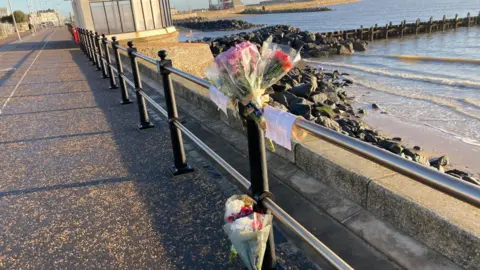 Luke Deal/BBC
The decision that it was a recovery operation went against guidelines, which advise that rescue attempts should continue for at least 30 minutes after the arrival of the first professional rescuer and confirmation of submersion.
EEAST also failed to record when Cole-Nottage became submerged to create an accurate start time to focus resuscitation efforts, Stewart's report added.
"The effect of these failures was to create the impression for each emergency response unit subsequently attending after the EEAST rapid response vehicle that the activity was not a rescue but a recovery when the guidelines clearly stated otherwise," he said.
"Inadequate communication from EEAST to other emergency services... created a confused picture of what was happening at the scene and created an impression of inertia by emergency services prior to the fire service arrival."
EEAST, which has a duty to respond to the coroner's report, is expected to comment fully later.
Do you have a story suggestion for Suffolk? Contact us below.
Follow Suffolk news on BBC Sounds, Facebook, Instagram and X.
