The rise of English whisky and how producers want to take on the world

 BBC
BBCWhen the word whisky is mentioned, the first thought that comes to mind might be of ones produced in Scotland or even Ireland and the USA.
But could it be England in the future?
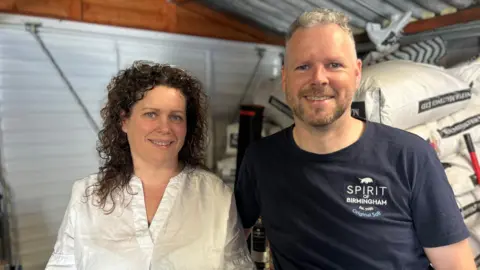
A brother and sister who set up Birmingham's first licensed whisky distillery in a garage at the end of their garden reckon there is "huge scope for growth" in the country's whisky industry.
Spirit of Birmingham was launched by Anthony and Joanie Dillon after a conversation around a kitchen table with their friends.
Less than 50 metres away from the table, their South Yardley distillery is now one of more than 70 whisky distilleries currently operating across England.
"What's produced in England is a fraction of what is produced in Scotland, let alone the rest of the world," co-founder Joanie Dillon admitted.
The idea for the business came after the pair realised Birmingham did not have a whisky distillery.
"Why not? It is the second city, it has a huge brewing history, but no-one has taken that extra step to make whisky," Joanie said.
"We don't have generational wealth, we are two kids from Acocks Green.
"Our parents came over from Ireland in the late 60s. With them they brought a stubbornness and [that] you can do it if you try."
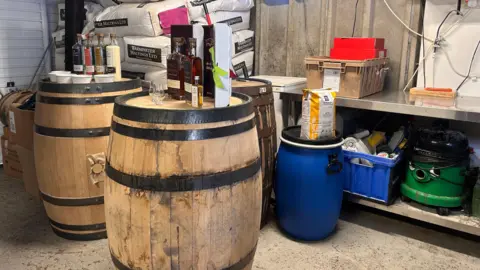
Brother Anthony said they had started reading and researching around the idea, but found "you needed a minimum of £2m to build a distillery - which we didn't have".
"However, when Covid hit, we wanted to see if it was possible to build a distillery self-funded and built the distillery in a double garage at the end of my garden," he said.
In March, their single cask single malt was released.
Anthony said making whisky required patience as the spirit had to mature for at least three years before it could legally be called whisky.
"It is not the cleverest busiess plan when you pick a product that you have to sit on for at least three years," he admitted.
Protected status
An application for a Protected Geographical Indication (GI) for English whisky is currently being considered by the government.
Such protected status has been given before to items such as Cornish pasties, meaning only ones produced in Cornwall can be called Cornish.
The Department for Environment Food and Rural Affairs say the globally recognised mark of authenticity gives consumers confidence in the origins of products.
Supporters claim the move will help protect English whisky's reputation and identity.
With more than 70 producers across England, a spokesperson for the English Whisky Guild added their alcohol was now being exported to other countries.
"The proposed GI would help protect the identity, authenticity and reputation of English whisky as the category continues to grow," they added.
 AFP via Getty Images
However, some distilleries and producers have raised concerns.
Anthony said one proposal requiring English single malt whisky to be made using copper pot stills would affect distilleries like his, which uses stainless steel equipment.
"What that would mean is that all the English single malt we have produced over the last five years, we wouldn't be able to call it English single malt whisky," he said.
Ministers were considering all the evidence gathered during the statutory assessment process before making a decision and they aimed to announce the outcome in "due course", a Defra spokesperson added.
Despite the uncertainty, producers like the Dillons remain optimistic about the future of the sector.
"The most exciting thing for me is it's grown phenomenally in the last 10 years," Joanie added.
"You've got the big companies, the big giants, but there's so many smaller companies like us who aren't afraid to take a risk and are going for true innovation in whisky."
Follow BBC Birmingham on BBC Sounds, Facebook, X and Instagram.
