'Infected blood payout wait like world's longest queue'

 BBC
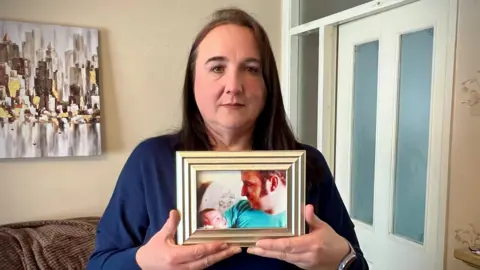
BBCThe daughter of a man who died after being infected with HIV and Hepatitis C from contaminated blood products has said the family's long wait for compensation is an "open wound".
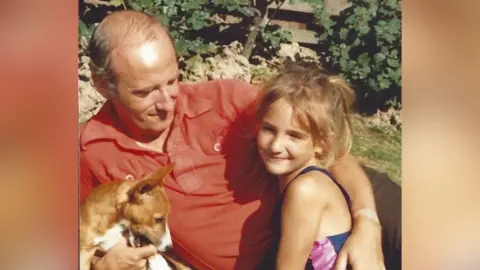
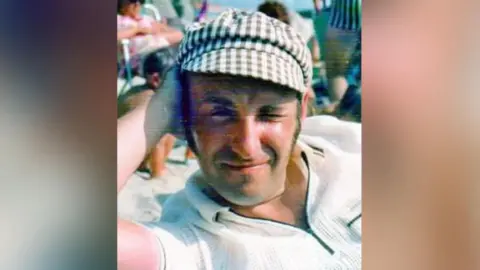
Jack Edwards died aged 47 in 1985 from Aids-related illnesses after he contracted the viruses from medication he was given to treat haemophilia.
Ahead of a national remembrance service on Tuesday for the infected blood community, his daughter, Louise Edwards, from Leeds, said the wait for compensation was "like being in the world's longest queue".
The Infected Blood Compensation Authority (IBCA) said its priority was to pay "every eligible person as quickly as we can", but admitted there was still "a long way to go".
More than 30,000 people contracted HIV and hepatitis from contaminated blood or blood products in the 1970s and 80s – and over 3,000 people have since died.
Edwards lost her dad when she was just 12 years old.
Haemophiliacs, like her father, were at particular risk of infection due to new blood clotting treatments that were made with pooled plasma.
At the time, some stocks were imported from the USA where high risk groups, like drug addicts and prisoners, were among the donors.
In May 2024, a six-year public inquiry led by Sir Brian Langstaff identified a "catalogue of failures" and concluded the scandal could have been "largely avoided".
The government launched a multibillion-pound compensation scheme for victims and families in the wake of the report's findings, but it began to attract criticism over the way it was being handled.
In July 2025, Sir Brian took the unusual step of publishing further recommendations, which led to the government announcing "substantial changes" to the compensation scheme.
Latest figures from IBCA , which administers the scheme, show more than 18,500 registrations for compensation have been received, with over £2.1bn already paid to more than 3,000 people.
Most cases that have been completed so far are those who were infected and are still alive.
 Louise Edwards
Edwards said she was "happy" that those claims had been settled first, but said IBCA needed to "move quicker" to deal with everyone else.
"Until everything is paid out, this is still ongoing. It's almost like a wound that's still open and can't quite heal," she said.
"We don't know when we're going to be called; we don't know when they're going to start doing the deceased estates; we don't know when they're going to be doing the affected claims," she explained.
"It's like being in the world's longest queue but you don't know when your number's going to be called."
An IBCA spokesperson said the authority was handling "deceased infected" claims, but in "smaller numbers for now" while it was building up the service to handle them "with confidence".
It would open up to larger numbers "as soon as we can", the spokesperson said.
 Louise Edwards
Kate Burt, chief executive of The Haemophilia Society, said it was "not right" that settling compensation claims was taking so long.
"The Infected Blood Compensation Authority have told us that 'test and learn' is their approach," she said.
"Of course, we agree they want to get the system right - but they're being so cautious and so conservative that people are dying.
"Children who've lost parents, and parents who've lost children, are waiting and waiting and waiting.
"Frankly, the compensation authority just needs to get on with it."
'Long way to go'
The spokesperson for IBCA said: "Those impacted have waited decades for recognition and to get the compensation they deserve.
"Our priority is to pay every eligible person as quickly as we can, while building a compensation service which is right for everyone.
"We have paid more than £2.1bn to 3,232 people, but we know there is still a long way to go.
"While we cannot comment on individual circumstances, we are prioritising and paying claims based on recommendations made by the Infected Blood Inquiry.
"We are now processing claims for every eligible group of people.
"Within these groups, we prioritise claims made by all those who are sadly nearing the end of their life, and then people from older age groups."
The national service of remembrance for the infected blood community is due to take place at St Paul's Cathedral in London on Tuesday.
It is taking place on the eve of the two year anniversary of the Infected Blood Inquiry publishing its report into the disaster.
