Teams working to prevent fire at beauty spot

 BBC
BBCRangers working to protect Dartmoor all year round are reminding people that fires are not allowed at the national park at any time and can prove disastrous.
Deputy head ranger Ella Briens told BBC Spotlight: "A wildfire at this time of year would be so impactful and the fire itself could actually go underground and continue burning for days, weeks, even months."
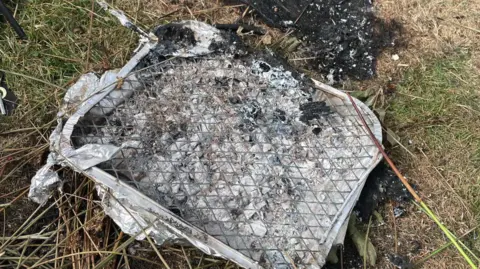
She said the team had to move people in tents in areas closed to camping and found the remains of barbecues which had scorched the parched grass around them.
Dartmoor marshals had patrolled the beauty spot and advised people about fire risks. Firebreaks have also been erected to help stop fires spreading.
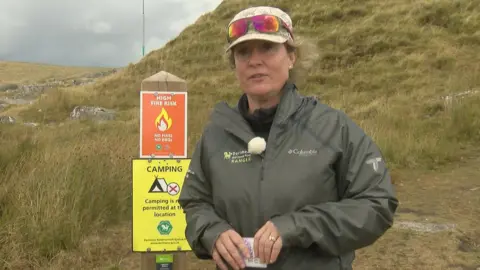
Briens said other fire hazards include discarded bottles.
"We just don't want glass lying around, it's going to be a source of ignition if the sun shines through that."
In May 2025 a large wildfire on Dartmoor destroyed about 1,230 acres (5 sq km) of land.
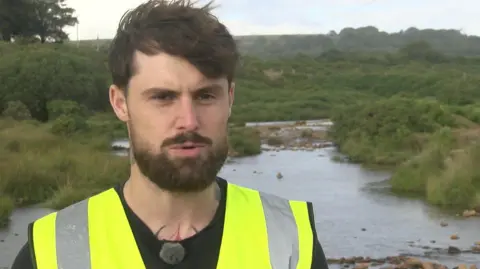
Ranger Luke Engel who had just spotted another discarded barbecue and abandoned tent at Cadover Bridge on Dartmoor said: "All it takes sometimes is a bit of wood, a spark just spreading to another bit, and when the ground's really dry it can spread anywhere."
He added: "We spend a lot of time clearing up rubbish and clearing up these fly encampments," and urged people to look at the camping map and only stay in authorised areas and avoid lighting fires.
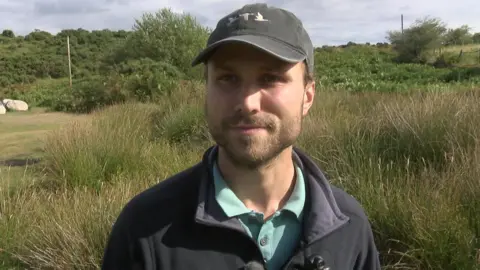
Fire marshal Lewis Edwards said: "People sometimes need like a gentle nudge in the right direction to make sure that they're being safe or using the right areas for camping."
He said because of the heatwaves "we've had to step in and really clamp down on people having open fires, disposable barbecues and things like that".
Visitors were more aware of the risk, he said, with the extra signage on the moor and the alert sent by the government to mobile phones.
"We just need to keep promoting it," he added.
The Dartmoor team's warnings came after Devon's assistant chief fire officer Darren Mclatchey said: "The conditions in the United Kingdom don't really cause spontaneous fires.
"I would say all, or most are directly impacted by humans, be that from, careless disposal, accidental and deliberate fires as well."
July was Devon and Cornwall Fire service's second busiest month in a decade with fire crews tackling 1,058 fires in the open between 1 June and 18 August this year.
Mclatchey said the government's temporary ban on the sale of disposable barbecues "does help" and added they "aren't necessarily a dangerous item" if they were disposed of "carefully and considerately".
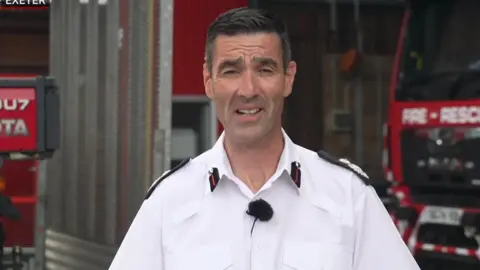
Mclatchey told BBC's Spotlight the service is planning for the pressures of coping with climate change.
He said: "We absolutely recognise that there's a long-term if not permanent change in climate."
"Part of our planning and preparation is to look at how we will respond to wide-scale incidents, how we prepare for it and how we invest into it."
He added: "We have the resources that we need, we will plan for the future as best as possible."
"But I think ultimately it's going to be very difficult for anybody to plan to know exactly what the future will hold we just have to respond to it and plan to it as best we can."
He said they were looking at the risks and "invest into the right area so we're able to respond appropriately".
The force was planning its response to El Niño which could bring powerful winds and "what that might look at for our region".
Follow BBC Devon on X, Facebook and Instagram. Send your story ideas to spotlight@bbc.co.uk.
