NHS trust 'to spend £30m' on mental health inquiry

 STEVE HUBBARD/BBC
The NHS trust at the centre of a public mental health inquiry estimates it will need to spend £30m to cover the costs of the process.
The Lampard Inquiry is looking into the deaths of more than 2,000 people under Essex NHS mental health services between 2000 and 2023.
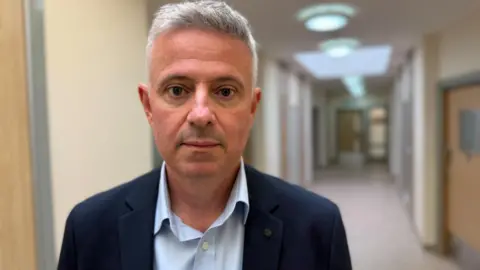
Paul Scott, the former chief executive officer of Essex Partnership University NHS Foundation Trust [EPUT], admitted the figure was "substantial" but said there was no set budget for the legal process.
"Our position is we need to spend what we need to spend to serve the inquiry," he said.
Scott was called back to give evidence to the inquiry, having appeared at a previous hearing.
Chief counsel to the inquiry, Nicholas Griffin KC, said that EPUT had spent £13.5m up to the end of November 2025 on the Lampard Inquiry and its predecessor - the Essex Mental Health Independent Inquiry - but was forecasting a £30m spend overall.
 PA Media
Scott left his role at the end of June to become CEO of East Suffolk and North Essex NHS Foundation Trust, which runs Colchester and Ipswich hospitals.
Bereaved families criticised the timing of his departure from EPUT when the Lampard Inquiry was still active.
Scott apologised to families who had been upset by the move, but told the inquiry: "I'm here…to assure people that I'm not running from anything."
He added he was "available to be accountable for my time in EPUT".
Scott admitted that the trust had "underestimated" the amount of work involved in meeting the demands of the inquiry process.
He apologised for missing deadlines for the submission of documents, some of which had been compelled under the inquiry's legal powers.
The inquiry heard how a collection of documents requested by the inquiry had been stored by one of EPUT's predecessor organisations in a building contaminated with asbestos, resulting in the documents having to be destroyed.
But Scott said EPUT was in a stronger position now than when he took over, with more investment in personnel and more modern data systems, and he was confident the trust was better able to meet the inquiry's demands going forward.
"Deeply troubled"
In her opening statement, Baroness Lampard reiterated that her recommendations could have national implications, saying it was "supported by the fact that systemic failings in mental health inpatient care are being identified in other parts of the country too".
She gave Northampton, Sheffield, Nottingham and Manchester as examples.
Counsel to the inquiry, Rebecca Harris KC, added that the inquiry team were awaiting "with particular interest" further developments in another mental health public inquiry into reported failings at the Tees, Esk and Wear Valleys NHS Trust, saying that issues raised "are likely to mirror very closely" those explored at the Lampard Inquiry.
Harris also repeated the inquiry's frustrations at not being able to determine exactly how many people had died under Essex NHS mental health services during the 24-year scope of the inquiry.
"We are deeply troubled that we still cannot say with any certainty how many people died… and we may never have a completely accurate figure," she said.
 PA Media
Over the next three weeks, the inquiry will hear from members of NHS mental health staff for the first time.
Harris thanked staff who had come forward "of their own volition", but added the inquiry had issued formal requests for evidence from more than 50 current and former members of staff so far.
The inquiry has also issued more than 500 requests for evidence from organisations and stakeholders, including more than 200 to EPUT alone.
It has issued 14 Section 21 notices which compelled evidence to be provided "without delay".
The July hearings will also explore issues surrounding the ongoing use of technology on mental health wards, as well as concerns regarding the resuscitation of patients, a matter which Baroness Lampard said required "urgent consideration".
Baroness Lampard added that interim recommendations could be made at the inquiry's next hearings in October.
The Lampard Inquiry is expected to finish hearing evidence in the autumn of 2027, with Baroness Lampard's recommendations not expected until 2028.
Do you have a story suggestion for Essex? Contact us below.
Follow Essex news on BBC Sounds, Facebook, Instagram and X.
