College gets primate licence to care for marmosets

 BBC
BBCA college believes it has become the first facility in North East Lincolnshire to be issued with a primate licence.
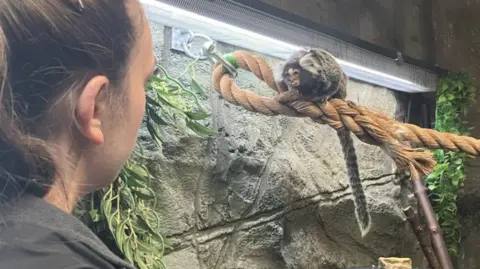
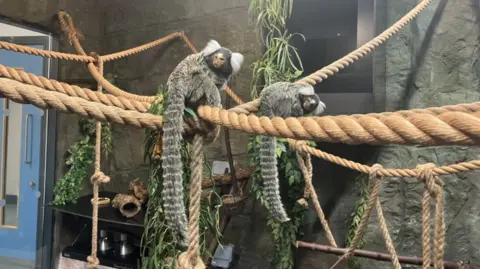
It means Grimsby Institute can house and care for three marmosets, called Tango, Cola and Sprite, which live at its new animal management centre.
Changes to the Animal (Primate Licences) Regulations 2024 means people who privately own a primate in England must have a licence.
Lead animal technician Zoe Lansley-Hogg said: "This licence is really important to us and we're really proud we were able to get it. It means a great deal not just for the marmosets but also the students."
Lansley-Hogg said the licences had been introduced to protect primates and hoped it would "slow down the pet trade industry for marmosets".
"It's a positive step for primates and hopefully we'll see licences come out for other animals as well as it's a great way to keep a check on them," she added.
"The licences are there to help animals in captivity and to make sure we're providing them with the best possible care."
North East Lincolnshire Council said: "All private primate keepers are now required to hold a licence, which is valid for a maximum of three years. They will then have to be reassessed to renew their permission to keep their animals."
The authority also said anyone who required a licence and kept a primate in England without one would be committing an offence and would be liable for conviction to imprisonment for a term of up to six months, a fine or both.
Staff at the institute look after the animals, which also include sheep, meercats, insects, goats and guinea pigs all year round.
They work alongside the students ensuring they get the experiences they need to complete their courses and gain industry experience.
Other animals included on the list requiring a licence are tamarins, squirrel monkeys, capuchin monkeys, lemurs and lorisids (also known as bush babies).
Listen to highlights fromLincolnshire on BBC Sounds, watch thelatest episode of Look Northor tell us about a story you think we should be covering here.
Download the BBC News app from the App Store for iPhone and iPad or Google Play for Android devices
