Coalsnaughton ground movement showing 'no signs of stopping'

 BBC
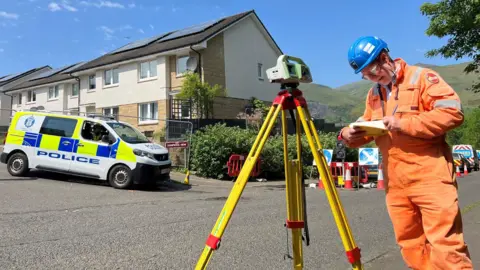
BBCGround movement in two streets evacuated in a former Clackmannanshire mining village is showing "no signs of stopping", a council meeting has heard.
More than 250 residents in four streets in Coalsnaughton were told to move out after ground movement was discovered in May.
A meeting of Clackmannshire Council was told by the Mining Remediation Authority (MRA) there was currently between 2mm and 10mm (0.07-0.39in) of ground movement a week in Dunmoss View and Benbuck View.
The MRA reiterated its assurance that a cause would be identified at the conclusion of its eight-week investigation.
Carl Banton, the MRA's chief operation director, told the meeting that ground movement was "still ongoing".
He said: "In total, you've had 345mm (13.5in) of ground movement on Dunmoss (View) and about 300mm (11.8in) on Benbuck View.
"But that 300mm does not include the initial event, which obviously we didn't capture.
"Ground movement continues at a rate of between 2mm and 10mm a week.
"So, although it's slowed, it is continuing and is not showing any signs of stopping as it stands at the minute."
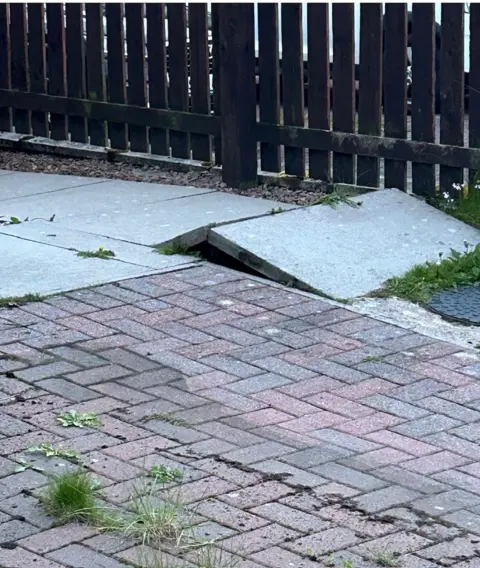
The meeting was told that cracking and what appeared to be movement of roads, footpaths, gardens, drives and damage to properties were initially observed in May.
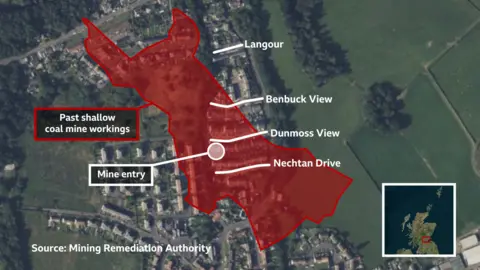
A total of 97 properties in Benbuck View, Dunmoss View, Nechtan Drive and Langour have been evacuated.
Banton said that ground movement had also been recorded on "a couple of points on the Glen", which runs adjacent to the four evacuated streets.
He said: "This is around where the junction of the Glen meets with Dunmoss, and again, that has been quite substantial, around the region of 200mm (7.8in).
"On the rest of the Glen though, that monitoring is not showing anything we would have any concerns about.
"But because of the gas main in the Glen, that is why properties had to be evacuated on Nechtan."
 Simon Woodward
Banton said that new aerial images of the area had been compared to those from 2008, and showed where the main ground movement had been.
He said: "But that does not show any wider movement in the surrounding community, which is very positive."
Banton said if ground movement stopped, there would be a six-month period of monitoring before any repair work would take place.
He said that the cause of the ground movement would be determined by the end of the MRA investigation.
He said: "We've given a commitment that we will make that decision within the eight-week period and we will communicate that as soon as we can.
"I will reiterate the fact that movement is ongoing, and I said this at the residents' meeting the other night, that at this stage, we're not fully understanding what's causing the movement.
"There are multiple different factors at play within the slope."
A report on the "unique and unprecedented" incident and the council's response so far was presented at the meeting.
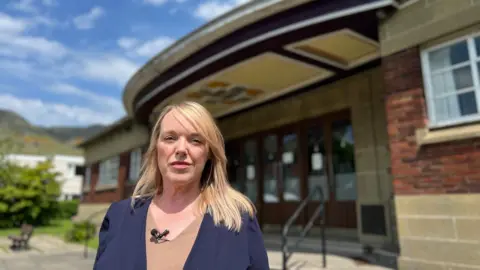
Council leader Ellen Forson said the major incident was "not just an item on the agenda" for affected residents.
She said the last number of weeks had been marked by "uncertainty, disruption and anxiety about what comes next".
Forson added: "We are still in the emergency response phase of the incident and our officers, working alongside partners, will continue to do their best to provide ongoing support and keep residents informed as this situation progresses."
