Why has a housing plan cut a county in two?

 Getty Images
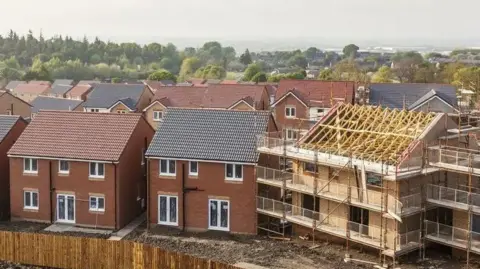
People living in the north of a county say they are being expected to take an unfair proportion of its new housing over the next 20 years.
The residents claim southern parts of Buckinghamshire are being allowed to have a lower number of new builds in Buckinghamshire Council's proposed local plan.
The residents are considering a legal challenge to the plan, but say it could be difficult to mount one.
Buckinghamshire Council say the final document will be supported by extensive consultation and "a robust evidence base".
So are the campaigners right?
What is all the fuss about?
 Martin Heath/BBC
Councils have to produce local plans, which determine where new houses, employment and infrastructure should go.
Buckinghamshire has been told by the government it needs to find space for 91,000 houses and its local plan sets out possible sites for them across the county.
One village in the north of the county, Slapton, currently has about 195 houses but the local plan allocates another 135 to the village, which is an increase of 70%.
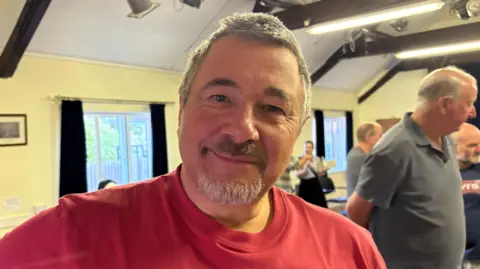
Jeremy Whinnett, who lives in Slapton, says: "It's just totally disproportionate.
"If you take a five, seven-mile circumference from here, the whole aspect is going to change just a 100%. So when you look then to the south of the county, there's nothing like that."
 Martin Heath/BBC
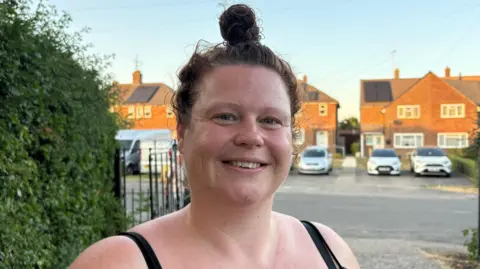
Kristina Hedley, also from Slapton, says: "Absolutely. We all moved here to this lovely little village because we wanted to live in a little village. We didn't want to live in a town.
"I'm not really sure why it is so disproportionate."
Just down the road from Slapton is a community that is even smaller and is facing an increase in houses that, in percentage terms, dwarfs that of the larger village.
Helen Collins says: "I live in the hamlet, Horton - there's about 30 houses there and they want to park 1,250, which is ridiculous.
"We're sacrificing lots of beautiful wildlife for the sake of more houses."
What about the wider area?
 Martin Heath/BBC
The town of Winslow is about 80 times larger than Horton, and it is bracing itself to become much bigger.
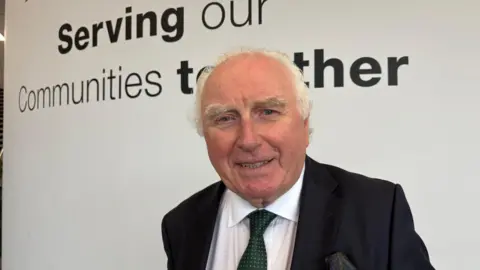
Llew Monger, a Liberal Democrat councillor in the town, says: "Eighty-five percent of the total development is in the north of Bucks and something like 50% of the total for the whole county is being squeezed into a small corner of north Bucks."
He adds that there was plenty of demand for affordable homes in the south of the county and plenty of grey-belt sites for them, but the county had decided not to use them.
Meanwhile, in Aylesbury, there is opposition to the plan for more than 10,000 new homes.
Do the figures back up their claims of a north-south divide?
It depends on whether the town of Aylesbury is considered to be in the north or south of the county. It is more-or-less in the middle.
If houses in and around Aylesbury were part of the southern total, the south would be getting 8,000 more than the north.
But if the dividing line were placed just over Princes Risborough, where an urban landscape gives way to a rural setting, the north would have 49,545 extra homes and south just 6,357.
This arrangement would mean the northern sector would roughly coincide with the areas served by the old Aylesbury Vale council and the Milton Keynes unitary authority.
Can the villages mount a legal challenge to the plan?
 Martin Heath/BBC
There are specific grounds on which a local plan can be challenged..
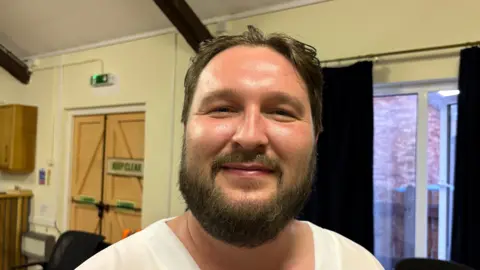
Matt Hensey, a planning expert who lives in Slapton, believes a challenge would be possible: "There are some clear deficiencies, in my opinion, and I think the absence of evidence of considering reasonable alternatives [to the allocations] to be one of them."
However, he recognises it would not be easy for a group of residents to put a case together, as they would have to consider hundreds of pages of documentation, some of which is not written in everyday language.
Some previous challenges have, though, succeeded.
What does Buckinghamshire Council say?
Peter Strachan, the council's cabinet member for planning, says: "The council recognises that growth on this scale raises concerns for residents.
"The draft local plan seeks to ensure that growth is planned in a coordinated way, supported by infrastructure and informed by extensive consultation, technical assessments and a robust evidence base.
"Without an up-to-date local plan, the county would have less control over where development takes place and would be more vulnerable to speculative development proposals."
The council has encouraged residents to respond to the consultation which closes on 6 September.
Do you have a story suggestion for Beds, Herts or Bucks? Contact us below.
Follow Beds, Herts and Bucks news on BBC Sounds, Facebook, Instagram and X.
