'The gulls have won': Row over plans to control birds in Inverness

 Getty Images
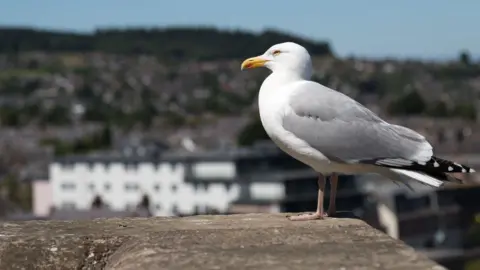
A councillor claimed Inverness' urban gulls "have won" while criticising new plans to control the birds.
Liberal Democrat Alasdair Christie said people were unable to eat outdoors or even walk along pavements for fear of being attacked by gulls.
He told a meeting on Monday: "We have given control over to the gulls."
A senior official said the birds would be discouraged from living in areas where they came into conflict with people, adding that Highland Council was "not anti-gull" and seeking a "balanced approach".
Urban gulls have been blamed for dive-bombing people, feeding from bins and waking residents with their early morning calls.
Inverness Ness-side councillor Christie raised concerns about the impact the birds were having on city life.
"I see people that can't use the cafes, can't use the pavements. I see people in the bus queues who can't eat outside because of the gulls," he said.
"The gulls have won."
 Getty Images
Highland Council plans to install "gull-resistant" bins and use audio and visual deterrents to discourage the birds from nesting on rooftops.
Senior environmental officer Eleanor Hood said the aim of the plan was to cut off urban food sources in the hope it would persuade the birds to nest elsewhere.
"We are not anti-gull, we are looking for a balanced approach," she said.
Hood said public and local businesses had important roles to play in helping to reduce the city's gull population.
"We can't do this alone," she said, adding that change was "not going to happen overnight".
Labour Inverness Central councillor Michael Gregson described the urban gull population as an "epidemic" that had "colonised our city".
Highland Alliance Inverness South councillor Duncan Macpherson claimed the 32 to 35-year lifespan of the birds was a "prison sentence" for the residents.
He asked: "Do the gulls have the vote and do the gulls pay business rates?
"Because it would appear that the gulls are being treated better than the people of this area."
Inverness Business Improvement District (Bid) previously oversaw a programme of egg and nest removal in the city centre to reduce the population.
But it pulled out of the programme earlier this year due to a lack of funding.
Macpherson praised the work previously done by Inverness Bid, and said the new plans did not go far enough.
Council officials said egg and nest removals were not "off the cards" under the proposals, but added that the birds' behaviour had changed over time, so a new approach was required.
 Getty Images
Meanwhile, the British Trust for Ornithology (BTO) has said research shows a "steep decline" in some UK gull species.
It said counts at roost sites across the two winters revealed substantial falls in the populations for four of the five main wintering species.
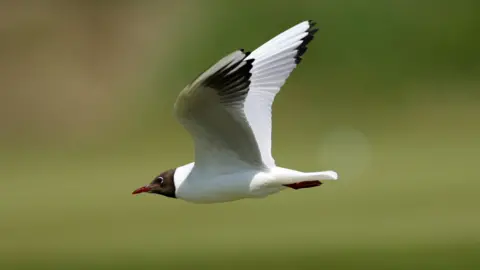
BTO said while herring gull numbers remained largely stable over the last 20 years, black-headed gull, common gull, lesser black-backed Gull and great black-backed gull had all experienced notable declines.
