'Medication turned my quiet dad into a hyper-sexualised gambler'

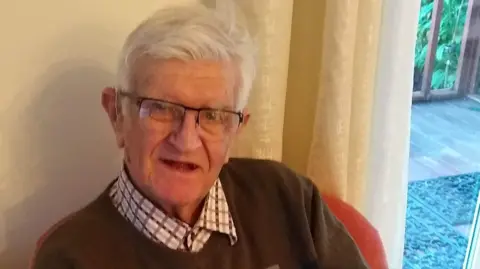 David Williams
"He turned into a dirty old man. Everyone started to hate him."
Before retired police sergeant Alan Williams turned into a "hyper-sexualised gambler", his family described him as a "normal guy" who enjoyed sailing and flying.
Aged 59, he was prescribed medication for Restless Legs Syndrome (RLS) and within months the "quiet introvert" became driven by compulsions and new addictions.
He openly watched pornography and medical gore videos, according to his relatives.
Alan made reckless financial decisions resulting in the loss of about £350,000 in life savings and became hooked on sugary snacks to the extent that his teeth fell out.
"This is what the drug drives people to do; it drives a wedge within the family," said his son David Williams, from Doncaster, South Yorkshire.
He put the change in his father's behaviour down to the RLS medication, which is part of a category of prescription drugs called dopamine agonists.
"There needs to be a full-scale Post Office-style public inquiry into them, it's a scandal," he said.
David is one of hundreds of people who have contacted the BBC about addiction caused by drugs prescribed for movement disorders.
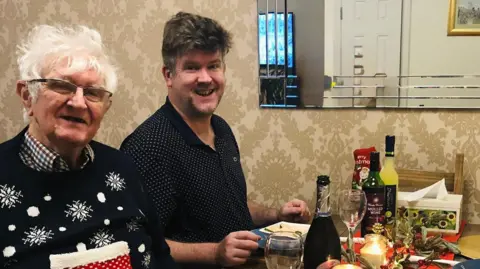 David Williams
As well as RLS, dopamine agonist drugs are used to treat conditions such as Parkinson's, pituitary gland tumours and some mental health conditions.
Alan was prescribed pramipexole in 2005 and his behaviour dramatically changed soon after, according to his family.
He became addicted to sugar and could eat up to 60 choc ices in a week. As well as losing nearly all of his teeth, he also lost his inhibitions.
"His libido was off the scale, which was incredibly embarrassing," David said.
"It was uncomfortable at mealtimes, he was always talking about sex and making inappropriate comments. It was really difficult for the family.
"I really didn't like him at all, I just thought he'd turned into a dirty old man. He lost all of his friends, luckily I never told him to his face that I didn't like him."
Alan went from being "tight-fisted" to investing in high-risk stocks and got involved in spread betting. It is estimated he lost about £350,000 over five years.
David, 45, did not think the changes were linked to anything and tried to ignore them, but made the decision to keep his two young children away from their grandfather.
"If we spoke to him about any of it, his answer was always, 'I'll die happy'."
In 2007, Alan's medication was changed to ropinirole, which is also one of the medications in the dopamine agonists family.
His dosage was increased three times overall, which made his RLS worse.
Alan's compulsions and hyper-sexuality continued until his death from heart failure in 2023 aged 77, his family said.
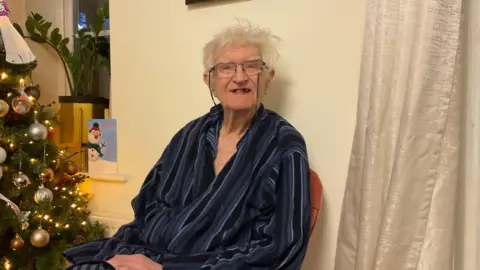 Supplied
In 2025, BBC Investigations published its first story about the behavioural side effects linked to dopamine agonists.
For David, reading the article was a "sledgehammer moment" where "everything unravelled" and he was finally able to understand his father's behaviour.
"The relationship breakdowns, the destruction of my family, to know that it was all avoidable is absolutely horrifying," he said.
More than 350 people have contacted the BBC with their stories about addictions and impulsive actions linked to the drugs.
The BBC reported that one in six Parkinson's patients taking the drugs are affected by impulse control disorders, the clinical term for these behaviours, according to one study.
 Supplied
The Medicines and Healthcare products Regulatory Agency (MHRA) has begun reviewing warnings for all eight dopamine agonist drugs.
Dr Alison Cave, MHRA chief safety officer, said: "Patient safety is our top priority. No medicine is risk-free and impulse control disorders are a known risk for patients prescribed dopamine agonists. Our sympathies are with those affected by any side effects from their use."
She continued: "Patients must be told about these possible side effects by their healthcare professional and advised to speak to their doctor if they, their family or their carer notices any behavioural changes.
"These medicines have improved many patients' lives but ultimately, doctors together with their patients must weigh up the pros and cons of the medicine when deciding on the most appropriate treatment.
"We're carrying out a comprehensive assessment of all available information to determine whether any regulatory action is required to help raise further awareness of these risks with patients and healthcare professionals in the UK."
Dr Julian Spinks, chair of the RLS-UK charity, said dopamine agonists should only be prescribed when other medication has failed.
"If people are going to be prescribed them, they need to be properly consulted as to the risks and what to watch out for, and their friends and family need to know about that as well," he said.
He wants there to be more awareness among GPs on the updated advice around treating RLS and the potential pitfalls of the drugs.
Dr Spinks added: "There's no doubt that some people have been on them without any problems, but when problems do happen they can be life-destroying, we can't be handing them out the way we used to do."
For David, he is determined to share his family's story to campaign for change around the drugs that "cheated" them of a father and a husband for 20 years.
He has now launched a petition calling on the government to hold a public inquiry to review the use of dopamine agonists. It has more than 3,500 signatures.
He said warnings about the side effects are "completely inadequate" and hoped a public inquiry would bring further attention to the issue.
"So many families have been torn apart," he said. "If you look at the limited statistics, there must be tens of thousands of people who are suffering from these compulsions in the UK at this moment."
- A list of organisations in the UK offering support and information with some of the issues in this story is available at BBC Action Line.
Listen to highlights from South Yorkshire on BBC Sounds, catch up with the latest episode of Look North
