Why has Texas set its sights on London?

 Getty Images
In the dimly lit cellars of London's oldest wine merchant, Texas is not the first thing that springs to mind.
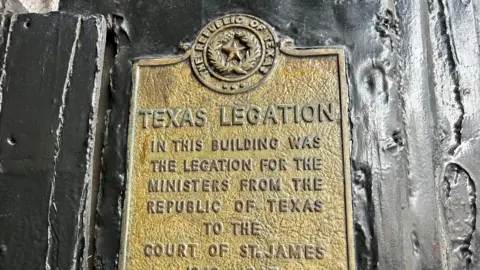
But nearly 200 years ago, Berry Bros & Rudd was home to the Embassy of the Republic of Texas.
If you look closely, you can see a remaining "Texan Legation" plaque on the wall outside the St James's Street store.
After Texas joined the US in 1845, the embassy closed - and the Texan diplomats headed home, apparently leaving behind an unpaid rent bill.
Now, two centuries later, the State of Texas has opened a dedicated new office just up the road to "grow international trade and tourism and support activities that are key to the economy".
Trade between Texas and the UK is already worth about $17bn a year, and the state wants even closer business ties.
"One of the things that was very compelling to me is the opportunity to look at dual listings between the London Stock Exchange and the Texas Stock Exchange," says Senator Tan Parker of Texas North and Republican leader of the Texas State Senate.
He adds he hopes it will create jobs and opportunities for small and large businesses - both in Texas aiming to enter the UK market, and British companies that want to enter the Texas market.
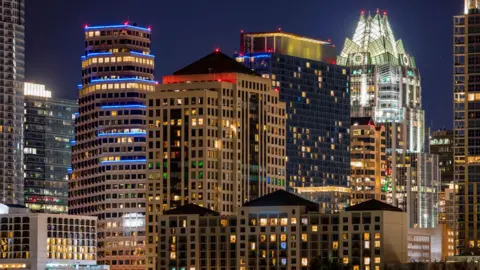
It comes as the state's capital Austin raises the profile of its own stock exchange as a challenger to New York, known as "Y'all Street".
"Austin 25 years ago was becoming a big international city and we are doing a lot to mature our way into that international role," the city's mayor, Kirk Watson, tells BBC London.
"Austin has become a focal point in a global economy."
He adds: "Looking to places like London will help us with that.
"I also think places like London get something out of these relationships because we talk about things like Austin energy - our municipally-owned utility - renewables, and climate."
He also stressed the importance of cities working together to address the growth of artificial intelligence and data centres, and how to implement them in dense urban settings.
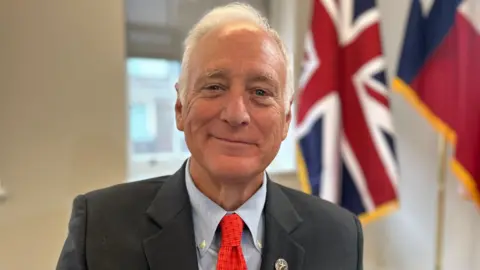
Watson stressed the importance of subnational diplomacy and "city-to-city relationships" amid "confusion and chaos on the world scene".
But while he adds that London is seen as a "leader" on the international business stage, this move may seem contrary to the recent exodus of firms from the London Stock Exchange with some well-known and highly regarded UK companies now selling their shares on foreign markets.
Economist Alexander Harvey from Oxford Economics says the move follows "a period of mixed economic fortunes for London".
"While employment growth in the capital has been stronger than in the rest of the UK, productivity has broadly stagnated since the global financial crisis," he says.
"Attracting investment in productivity-enhancing technologies, such as artificial intelligence, will be essential if London is to raise its trend growth rate and strengthen its position as a world-leading city."
 Getty Images
As such, it is no surprise that the opening has been welcomed by the City of London Corporation.
The City's mayor, Dame Susan Langley, marked her enthusiasm by travelling to Dallas in February, posting on X: "With the launch of the Texas Stock Exchange, new dual-listing opportunities could connect British and Texan firms to fresh capital".
Policy chairman Chris Hayward describes it as a "huge boost of confidence" that "highlights its role" as a gateway to capital markets around the world.
"This new trade office is just the start and we're confident in building closer relations with Texas which is the eighth largest economy in the world," he says.
"London and Texas shouldn't be viewed as competitors, rather our capital markets can complement each other for our mutual benefit."
Listen to the best of BBC Radio London on Sounds and follow BBC London on Facebook, X and Instagram. Send your story ideas to hello.bbclondon@bbc.co.uk
