Where have all the female councillors gone?

 BBC
BBCBirmingham has a brand new city council, but it is not just the political landscape that has shifted considerably.
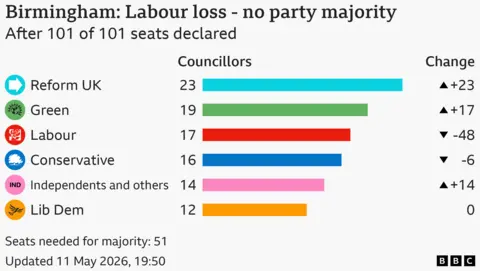
There has also been a significant drop in female councillors, with just over a quarter of women elected this year.
Of 101 councillors, 73 are men and 28 women - down from 42 women in the chamber previously.
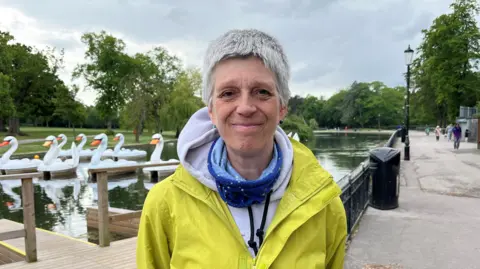
Izzy Knowles, a Liberal Democrat councillor who was re-elected in Moseley, said the imbalance was a "backward step".
She noticed the gender disparity early on after spotting that hustings were male-dominated.
"I think we're going to have some noisy debates in the council house and that sometimes the female voices will be drowned out," said Knowles, who has worked in the police for 30 years.
She cited a number of reasons why women might not be putting themselves forward for political office.
"I think that the demands of the role have changed over the years, it is a very demanding role," she said.
"You are basically on duty 24/7. A lot of women have other commitments around family, so think 'why do I want to put myself forward for that when I've got other things that I need to spend my time on?'"
There has also been a rise in abuse of councillors, with Prime Minister Keir Starmer acknowledging last year that women in public life were subjected to greater levels of abuse than men.
In an Ofcom report from 2025, female politicians said they believed online abuse deterred some women from getting into politics altogether.
In 2022, Knowles had to call police after a constituent sent her aggressive emails and threatened to go to her house.
"I think what's sometimes forgotten is when you're out in your ward, you're very much on your own," she said.
"I think social media abuse does put women off, because why would you want to put yourself out to do a job that you're just going to get negativity for everything you try and do?"
Dr Hannah Bunting, the co-director of the University of Exeter Elections Centre, told the BBC that the majority of social media abuse used to be directed at MPs, but that it had now "trickled down" to councillors and local politicians.
For Bunting, it is important to have gender diversity on local councils to ensure decisions made benefit female residents.
She said that was particularly true in areas of policy like education and social care, where it was important to have people involved in decision making who had lived experience.
Personal abuse
Some parties in Birmingham were closer to achieving gender balance on the council than others.
Labour now has nine male councillors and eight female councillors, while the Lib Dems have seven male and five female councillors.
However, the disparity grows when looking at the others.
Reform has 17 men on the council compared with six women, having fielded about 70 male and 30 female candidates in the city.
The Greens have 15 male councillors and four female, while the Tories have the largest gap with 14 male councillors and just two female.
In a statement made to the BBC, the leader of the Birmingham Conservative group, Councillor Robert Alden, said: "While all parties have seen a reduction in the number of female councillors this year - due in part to the rising levels of personal abuse in politics, the growing demands of the role, and the nature of this year's results - we remain fully committed to attracting the very best candidates regardless of background, ethnicity or sex."
He said Birmingham Local Conservatives were "proud to have, we believe, the first ever female Father of the House at Birmingham City Council, with Councillor Deirdre Alden serving as the city's longest-serving councillor".
He also said the group had some "fantastic female candidates" who were not elected.
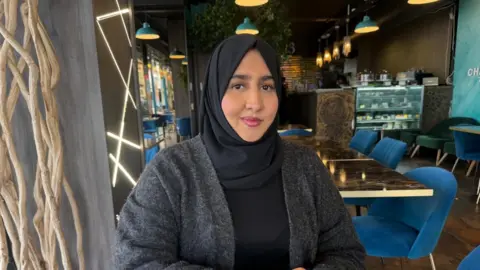
There are 13 independent councillors on Birmingham City Council - 10 are men and three are women.
Nosheen Khalid, councillor for Alum Rock, said she was aware of the number of male independent candidates in the area while out campaigning.
"I mean, it would be remiss of me to say that I didn't notice that and it is a shame, but I do understand the reasons behind it," she said.
In regards to hustings for the election, representing candidates from different parties, she said: "It was all bar one, middle-aged white men sitting on that table - and Birmingham is a very young, very ethnically diverse city."
Khalid has spoken publicly of the abuse she faced during her campaign, which included people creating AI-generated images of her naked and taking her hijab off.
"I also had Reform supporters out in droves telling me all number of things, which I won't say here," she said.
"So I think maybe women didn't want to be so public facing, and I completely understand that, because it's not nice to open yourself up to that kind of abuse."
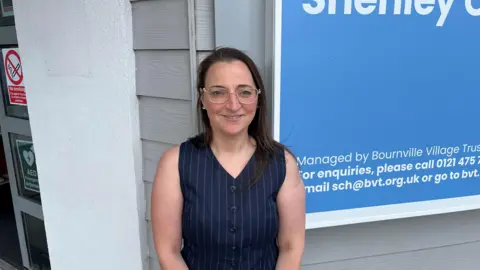
Cherie Waddingham is a Reform councillor for the Weoley & Selly Oak ward.
When asked about the gender gap in her party locally, Waddingham said: "I think Reform are doing the best they can to try and change this, they're very supportive."
Waddingham believes that some of the reason for gender imbalance in her party is that fewer women might want to stand for Reform.
"People don't like to say which party they're standing for, especially when you [get] to Reform," she said.
"Because of Reform and some of the statements that have been made, that would probably put people off standing for Reform.
"Women may not like the disagreements we get on the doorstep, some of the abuse."
Bunting had a similar view, telling the BBC that usually fewer than a quarter of Reform candidates were women.
"With this election in particular, where Reform have success, there's almost always going to be fewer women elected," she said.
The party launched a Women for Reform campaign last year, in a bid to win over female voters.
"I've had abuse - saying why am I standing for Reform and what about women's rights," Waddingham said.
"I want my voice heard. I am fully for women's rights, there is nothing on there that would say Reform are against this."
For all three councillors, it is important to have an equal gender balance on Birmingham City Council.
"It should be 50:50. Women have as many rights as males do, so this is why I stood forward," Waddingham said.
"This might give somebody the confidence sitting at home, thinking I can make a change."
For the mother-of-four, her 13-year-old daughter is her source of inspiration.
"I want to prove to her that we can stand up and we can make a difference. I want her to be a leader," she said.
For Knowles, it is important to have enough women on the council due to the number of decisions that need to be made that will have an impact on women in the area.
"They're making decisions on behalf of female residents, so women's voices need to be represented within the council," she said.
Knowles also believes that all parties should be doing more to attract women to stand for council and put them forward, adding that parties had not planned ahead far enough to nominate enough female candidates.
In particular, she praised the Labour Party's decision in a previous local election to have at least one woman standing in every ward with two candidates.
Khalid also believes the council needs to be diverse to represent its constituents "in the best way".
For her, she sees it as a responsibility to mentor the next generation to ensure progress is made.
"I have come into council, it's now my duty to ensure the next generation feel that they can," she said.
"I met a 14-year-old girl the day before polling day on the street that I grew up on whilst I was door knocking, and her mum asked if she could take my number because she wants somebody to mentor her into politics.
"I was like, that's exactly what I want to do. I want girls to feel like they have a seat at the table, and if I can make that happen in whichever capacity, that would be an honour."
Follow BBC Birmingham on BBC Sounds, Facebook, X and Instagram.
