The sea, a saint and the Gunpowder Plot

 BBC
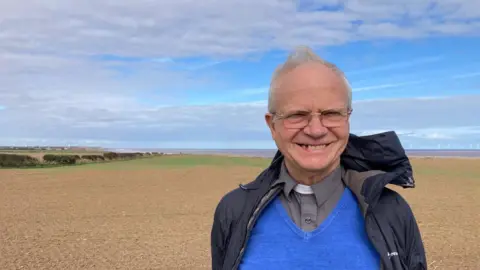
BBCTo the Reverend Philip West, the churches of Holderness in East Yorkshire are extraordinary, ancient places.
West is the deanery priest for South Holderness and has 22 churches in his patch.
"I'm retired but I have a proper retirement post which is the best in the world because, although I'm licensed to 22 churches, I'm not in charge of a single one," he tells the latest episode of the Hidden East Yorkshire podcast.
"So, I do new things for them and one of the things I've been doing has been day and weekend pilgrimages where we walk between the churches."
The walks also benefit from the newly opened King Charles III Coastal Path, which stretches up the Holderness coast.
In June, for example, West will lead a pilgrimage to Spurn Point to celebrate St Wilgils, a 7th Century hermit.
"People find, discover themselves, discover something they need to discover when they walk, and especially if they're walking between holy places," he says.
"So this is our little local attempt to emulate the big pilgrimages across the world, and it seems to work really well."
Of the 22 churches, some have particularly interesting stories behind them. Here are just three of those West enjoys:
 Universal Images Group/Getty Images
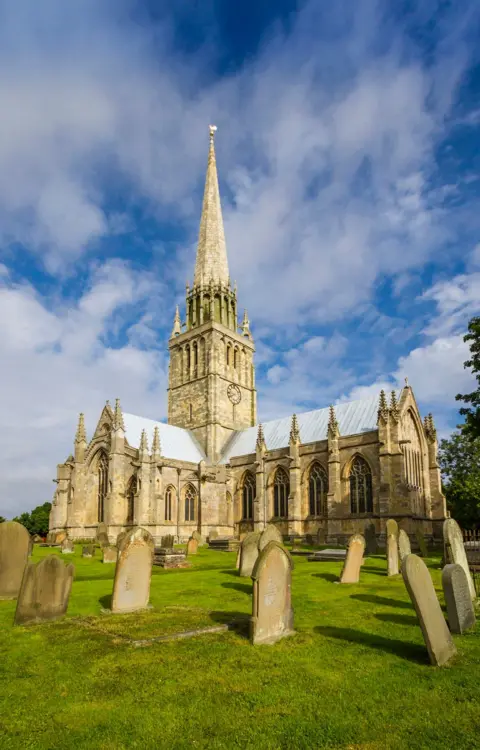
St Patrick's, Patrington
Known as the Queen of Holderness, the splendour of St Patrick's reflects the village's former importance as a market town.
"Architecturally, it is one of the most famous churches in the country," West says.
"People come from all over the country to go in.
"It's a sort of beautiful early English church and almost cathedral-like."
The church was begun in the 13th Century and its impressive spire was completed in the mid-14th.
 Google
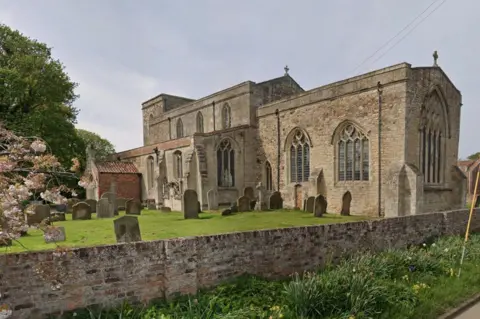
St Mary's, Welwick
"Welwick was where two of the gunpowder plotters lived way back, because the Catholics in this area were quite strong and suffered quite badly when they were being hounded out of their own churches," West explains of the attempt to kill King James I in 1605.
"So that's when you have these big old Catholic houses, which would have priest holes where they'd get a Catholic priest from the continent.
"And these two gunpowder plotters, they were two brothers, Jack and Kit Wright, who lived locally.
"They were discovered of course when Guy Fawkes and the rest were discovered, and they were chased by this posse to what is now north Birmingham and shot down there, which is dreadful really.
"I often think of them as little lads running around the church."
Another famous figure from the area is Mary Ward, who grew up in Welwick in the late 16th Century.
"She walked all the way down to Dover and then walked to Paris and to Rome and set up an order of nuns, a teaching order."
Ward founded the Catholic sisterhood of the Congregation of Jesus and was declared venerable by Pope Benedict XVI in 2009.
St Nicholas, Holmpton
"It's a smaller church but it's quite ancient. I'm not quite sure how far it goes back, but by the time of Victorian times it was a typical local church made of cobbles," West says.
"Obviously there's a lot of cobbles on the beach so it was a good material to use for the churches."
A plaque on the church states it was restored in 1874.
"And so the tower was put up, but the builder who did it encased the whole cobbled church in this lovely yellow and red brickwork and plastered it on the inside.
"I think it's lovely going through an ancient church door because they're usually big splendid efforts."
"You can see how thick the walls are because they've got cobbled walls behind them."
Listen to highlights fromHull and East Yorkshire on BBC Sounds, watch the latest episode of Look North.
Download the BBC News app from the App Storefor iPhone and iPad orGoogle Play for Android devices
