What happens to racehorses when they retire?

 BBC
BBCWhile ex-footballers sometimes quip they are a long time retired, the same also applies to racehorses.
But what happens once a thoroughbred horse has finished its time galloping over the turf at racecourses across the country?
One option for former racehorses is to be retrained and go on to compete in equestrian disciplines, such as dressage and showjumping.
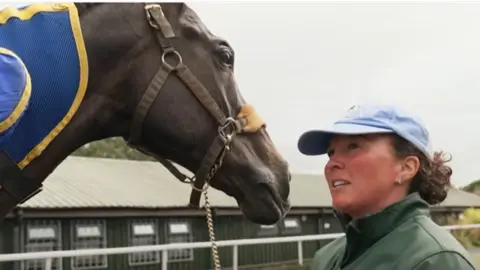
About 350 such horses are competing in a special event at Aintree Racecourse in Merseyside this week, organised by a retired racehorse charity.
The Jockey Club's Retraining of Racehorses National Championships is taking place at the Aintree International Equestrian Centre, at Aintree Racecourse, until Sunday.
The event takes place annually and is run by the Retraining of Racehorses (RoR) charity, whose stated mission is to safeguard the wellbeing of all former racehorses and ensure they enjoy a good life.
British eventer Hollie Cartright said her fourteen-year-old horse, Kimberlite Candy - who finished second in the virtual Grand National in 2021 - "could have ended up anywhere" without these competitions organised by RoR.
"These competitions are great because it gives you something to aim for," said Cartright. "To be fair, it's probably my favourite show of the year."
Another horse taking part in this week's events at Aintree is Lord Du Mesnil, who took part in the 2021 Grand National at the course.
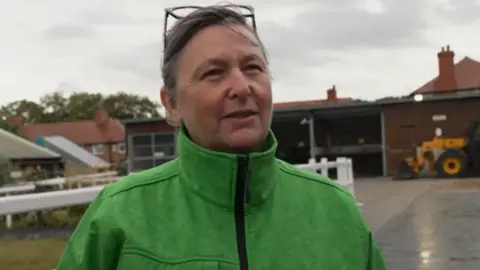
Now 13, he retired last year, but his trainer, Ceri Morgan, said she "threw him right in the deep end - and his first show under saddle was the Royal Windsor Horse Show" in May.
She said some horses "retire from racing and they just spend the rest of their life wasting in a field, because once you stop riding them the muscle just wastes".
'Record entries'
An RoR spokesperson said they had had a record number of entries this year, with more retired racehorses than ever set to complete across a number of disciplines.
David Catlow, managing director of RoR, said there were thousands of former racehorses "living good lives in leisure homes" as a "happy hacker", or competing in local shows.
But some of those who were retrained would go on to join British Dressage, British Showjumping and British Eventing, he explained.
"A horse can live quite comfortably into its late 20s. So if it retires at three-years-old, it's got a far longer life enjoying these sorts of activities than it ever had in racing," he said.
Listen to the best of BBC Radio Merseyside on Sounds and follow BBC Merseyside on Facebook, X, and Instagram. You can also send story ideas via Whatsapp to 0808 100 2230.
