Soho licence opposition bad for London, says mayor

 Getty Images
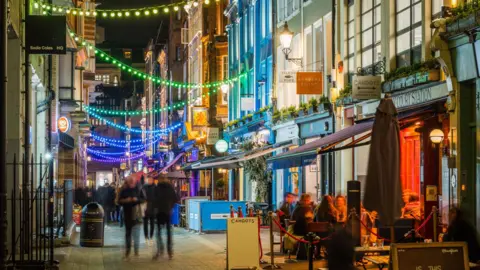
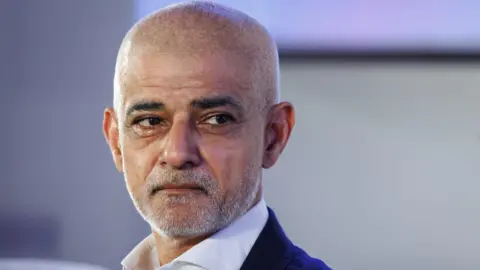
Sir Sadiq Khan has described a Soho residents group's decision to begin opposing all new licensing applications for bars and restaurants in the area as "bad for London".
The Soho Society, which was established in 1972 to represent residents' interests, voted last week to lobby against all new licensing applications, including renewals, that come before Westminster Council.
The mayor said he would use new licensing powers to be granted to him by the government to help "protect venues" and "extend London's late-night offer".
The Society said it has no "undue influence" on the council's decisions and it ensures its comments are "based on a broad reflection of views held by people in the community".
A spokesperson for the mayor said the Society's decision to apply blanket opposition to new and extended licences was "the wrong one".
"The mayor wants London's nightlife to thrive and the good news is that his new licensing powers from government will begin to come into force this summer," they said.
The powers will allow City Hall to make formal representations on licensing decisions across London. Later this year, subject to legislation, the Greater London Authority will also be able to call in some decisions made by borough councils.
The announcement comes amid debate about the future of Soho, where residents and businesses have clashed over the impact of the area's night-time economy.
The Soho Society said its objections were often based on concerns that growth in late-night activity had not been matched by improvements in infrastructure.
 Getty Images
"Our objections are often based on the data and experience that the intensification of the night time economy in Soho has not been matched by an equivalent increase in infrastructure needed to safely accommodate such growth," a spokesperson said.
The group also argued that rising rents and business rates posed a greater threat to hospitality businesses than residents' objections to licence applications.
The Society's move, first reported by the Guardian, has prompted concern among businesses who fear restrictions on licences could harm Soho's reputation as one of London's leading entertainment districts.
Rupert Power, who chairs the Soho Business Alliance and owns two hospitality venues in the area, told BBC Radio London that nightlife remained an important part of the area's identity.
"It's a melting pot of activity - and nightlife is a strong part of that," he said.
"Not the only part, but it is a strong part of that."
He said hospitality businesses were facing significant pressures, adding: "Saturday is busy, but that's one night a week. Our bills are based on seven nights a week."
Power said he believed businesses and residents could work together on future licensing policy.
Westminster Council said the Soho Society was independent from the authority and that each application was judged on its own merits.
Caroline Sargent, the council's deputy leader, said the borough sought to balance Soho's role as an international centre of culture and hospitality with the needs of local residents.
She said the council "takes into account all representations" in deciding licensing applications, including the applicant, organisations such as the police and resident groups.
"Each case is decided on its own merits," she added.
Listen to the best of BBC Radio London on Sounds and follow BBC London on Facebook, X and Instagram. Send your story ideas to hello.bbclondon@bbc.co.uk
