Ten moments in Salford's history as city turns 100

 Paul Foster/Geograph
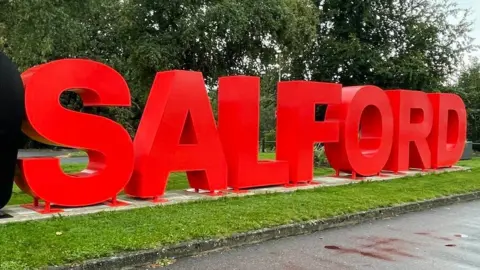
Exactly 100 years ago, on 21 April 1926, Salford was granted city status by Royal Charter.
It was given the title due to its importance in industry, its booming population and as a significant section of the Manchester Ship Canal is in the borough.
A century later, a lot has changed and the Salford of today is, in many areas, unrecognisable.
From being a pioneer in road safety for children to being steeped in musical history, the city's rich heritage is undeniable. To celebrate, we look at ten key events in the city over the decades.
1920s: Play Streets
 Hulton-Deutsch/Getty Images
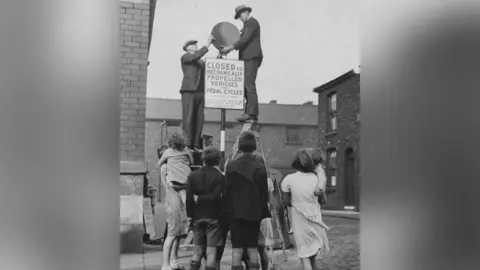
Salford became the first city in England to bring in "play streets" in 1929.
Chief Constable of Salford, Major Godfrey, introduced it after seeing its success in the US city of New York.
Hundreds of streets in the city went on to be closed to vehicles and bicycles at a time when there was a limited amount of playing fields and playgrounds, making it safer for children to play in the street.
1930s: The Battle of Bexley Square
 David Dixon/Geograph
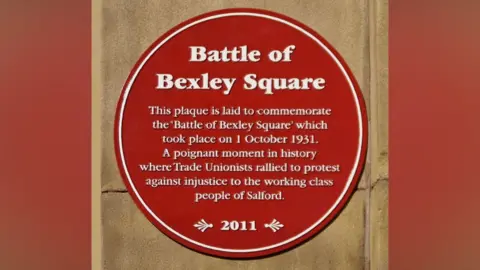
More than 10,000 people protested over the introduction of an enforced means test for dole at Salford Town Hall in 1931.
The test had been introduced by Ramsay MacDonald's coalition government in order to stabilise the British economy, following the 1929 Wall Street crash.
Known as the Battle of Bexley Square, the demo turned violent when protesters found their way blocked by police and after a stand-off a unit of mounted officers charged into the protesters, causing many serious injuries.
Walter Greenwood, who was there, depicted events in his novel, Love On The Dole.
1940s: Ewan MacColl's Dirty Old Town
 Getty Images
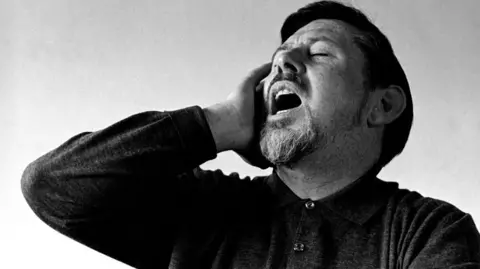
Ewan MacColl wrote one of the most famous songs in folk music, Dirty Old Town, about Salford.
The late folk legend created the song for Landscape With Chimneys, his 1949 play about his home city.
Since then, the song has been covered by everyone from rockers Black Rebel Motorcycle Club and Frank Black to country stars Steve Earle and Townes Van Zandt, but the most well-known takes were by Irish bands The Dubliners and The Pogues, with their much-loved covers leading many fans to mistakenly think the song was about Dublin.
Seeger, an accomplished performer and songwriter in her own right, said she was delighted to be revisiting a song "Ewan and I sang together for decades" at the festival.
1950s: A Taste of Honey
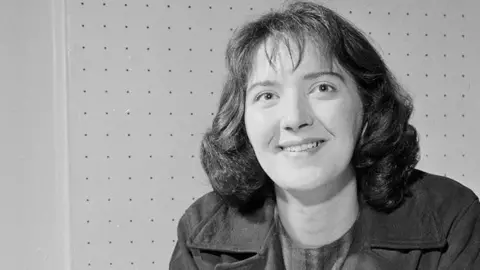
Salford playwright Shelagh Delaney's most famous play A Taste of Honey was published in 1958.
Delaney wrote it when she was just 18.
It won acclaim for its taboo-breaking depiction of working-class life in post-war Salford and was later turned into a film starring Dora Bryan and Rita Tushingham.
Delaney, who died in 2011, wrote for film, TV and radio and became a cultural icon to many, including the '80s rock band The Smiths, who used an image of her on the cover of their 1987 album, Louder Than Bombs.
1960s: Barton High-Level Bridge
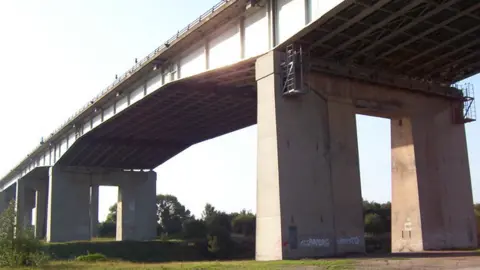 Keith Williamson/Geograph
The Barton High-Level Bridge opened in 1960 to relieve traffic between Salford and Trafford.
It is a critical crossing over the Manchester Ship Canal and carries part of the M60 between Eccles and the neighbouring borough of Trafford Park.
1970s: Salford City Council
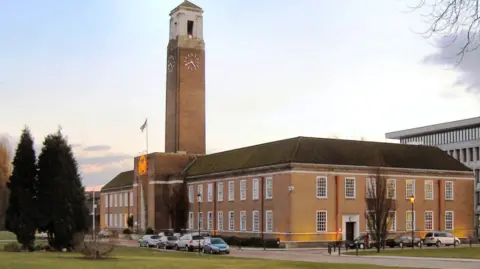 David Dixon/Geograph
The municipal boroughs of Eccles, Swinton and Pendlebury and the districts of Irlam and Worsley joined with Salford to create Salford City Council as part of a reorganisation of local government in England and Wales in 1974.
With its central location, Swinton town hall was the natural choice for its administrative headquarters and on 1 April 1974, it officially became the Salford Civic Centre.
1980s: The Smiths at Salford Lads Club
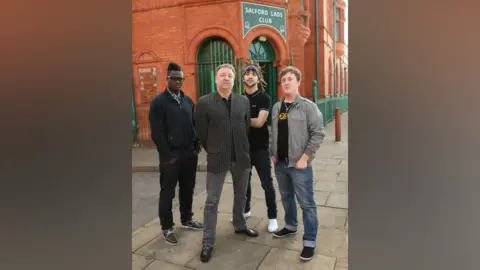 Getty Images
The Smiths carved out a place for Salford Lads Club, which first opened on Coronation Street in 1903, in music history with a now "iconic" photo shoot there in 1985.
The shot of the four piece outside the venue featured in the inside sleeve of the band's third album The Queen Is Dead and made the club a place of pilgrimage for fans from across the world, who flock there to recreate the pose.
Morrissey, the band's frontman, later donated £20,000 to help the club with roof repairs and a further £50,000 in 2024 to help save it from closure.
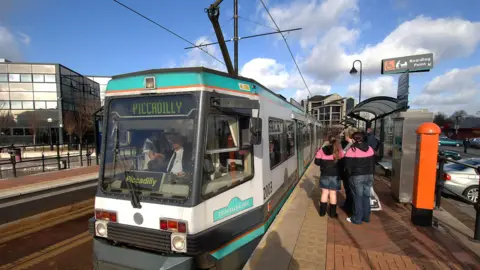
1990s: Metrolink extends to Salford
 Press Association/John Giles
The Metrolink tram network, which now links many of Greater Manchester's boroughs, opened into Salford (Eccles Line Phase 1) in 1999 with the first trams running through the Quays the following year.
A second much-smaller extension was opened in 2010 to link the new development of MediaCityUK on the Salford side of the Quays to the network.
2000s: The Lowry
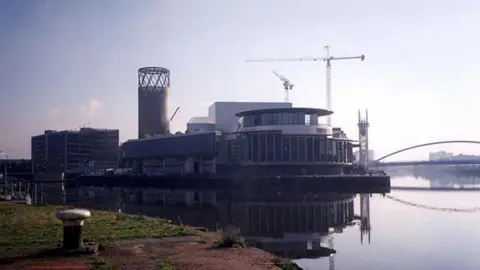
The £106m art and theatre centre, named after Salford's most famous son LS Lowry, opened in 2000 which heralded a new life for the Quays.
The Lowry was built in what used to be the heart of Salford's dockland, an area of massive industrial decline, and took inspiration for its design from the ships that once visited the docks.
It was the "cultural heart of one of Europe's most successful regeneration projects" at the Quays, which later included the BBC's move to MediaCityUK in 2011, chief executive Julia Fawcett said.
Alongside hosting a wide variety of stage performances, the centre also holds a permanent collection of Lowry's paintings.
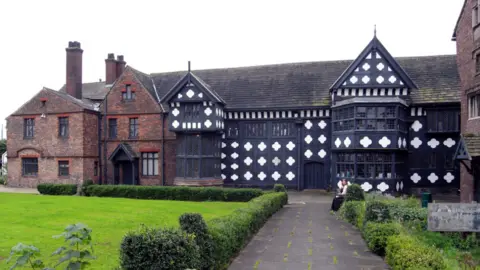
2010s: Ordsall Hall
 habiloid/Geograph
The historic Ordsall Hall in Salford, which was first built in the 13th Century, was given a new lease of life when a £6.5m refurbishment was completed in 2011.
The hall had been falling to disrepair with the roof in a bad state and historically significant rooms being completely inaccessible.
The Grade I listed building was not only brought back to its former glory with the redevelopment but was made "fit for purpose" for the next 800 years, according to the team behind it.
Local legend claims Guy Fawkes hatched his Gunpowder Plot in the hall in 1605 and while that has never been proved, it has led to the street running alongside the mansion to be named Guy Fawkes Street.
Listen to the best of BBC Radio Manchester on Sounds and follow BBC Manchester on Facebook, X, and Instagram. You can also send story ideas via Whatsapp to 0808 100 2230.
