Historical iron bridge documents to go on display

 National Trust
A collection of records telling the story of the world's first large-scale iron bridge are due to go on display.
The National Trust, which now runs the Ironbridge Gorge museums in Shropshire, said the records had recently been recognised for their significance by Unesco.
It said the construction of the iron bridge there "marked a turning point in engineering and construction, demonstrating the potential of cast iron on an unprecedented scale".
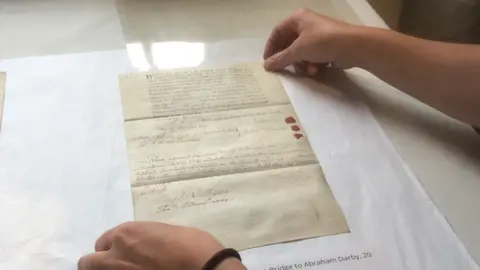
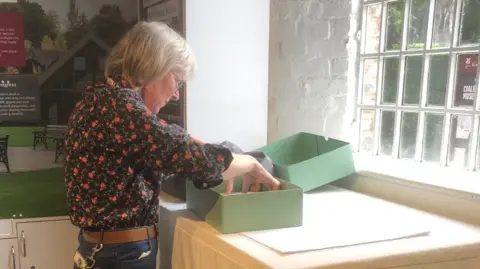
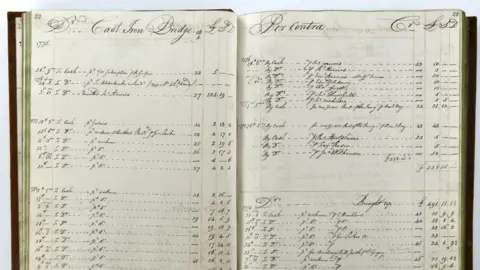
The three documents are Abraham Darby III's original cost estimate, a ledger showing a list of his business activities and a personal share certificate which belonged to him.
Last month the documents were added to Unesco UK Memory of the World Register, which recognises "documentary heritage of outstanding national and regional importance".
They will go on display for two weeks from 15 July to mark this.
The bridge, completed in 1779, gave its name to the town of Ironbridge and the surrounding gorge, which the National Trust said was "widely regarded as the birthplace of the Industrial Revolution".
Local ironmaster Abraham Darby III was commissioned to build the bridge to a design by Thomas Farnolls Pritchard.
As well providing an important river crossing, the bridge was used to "demonstrate the capabilities of his company and the versatility of cast iron for architectural use" the National Trust said.
 National Trust
The cost estimate document, drawn up in September 1775, details the projected cost of constructing the bridge, associated roadworks, and sets out the plans to finance it.
The ledger covers a time period from 1771 to 1781 and covers Darby's business activities in that time, including the construction of the bridge.
The third item is a personal share certificate, dated 20 October 1777.
The National Trust said the documents revealed the scale of the costs involved, the progress of the project and the names of some of the people involved.
 National Trust
Sarah Roberts, archivist for the National Trust at Ironbridge Gorge, said the collection "shines a spotlight on the vision, and the desire to innovate, shared by the ironmaster Abraham Darby III and the architect Thomas Farnolls Pritchard".
"Their revolutionary ideas, combined with their ambition and determination, were to prove truly world changing," she added.
Because the documents are fragile, they can not remain on permanent display, but they have been digitised and transcribed, ensuring they are accessible to researchers and the public.
They can be seen on display at the Museum of Iron, which is open daily from 10:00 to 16:30.
Follow BBC Shropshire on BBC Sounds, Facebook, X and Instagram.
