High levels of E. coli recorded after Thames spill

 Getty
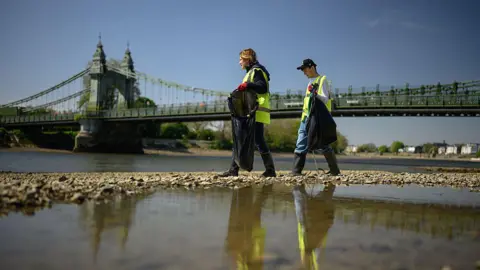
GettyA campaign group is calling for greater public control of England's water companies after a high E. coli reading was recorded in the River Thames in west London.
River Action said it had renewed its concerns over Thames Water's management of the capital's wastewater after Fulham Reach Boat Club recorded levels more than 60 times the Environment Agency's threshold for suitable bathing water.
The rise in the bacteria is thought to have occurred following a spill at Fulham Reach on Thursday.
A Thames Water spokesperson said: "We can confirm that an isolated spill occurred at Fulham Reach during planned maintenance works, as part of the Tideway Tunnel testing and commissioning programme."
Fulham Reach Boat Club's measurement was recorded as 58,000 colony-forming units (cfu) in 100ml of water.
The Environment Agency rates inland water as poor above 900 cfu per 100ml, and coastal or transitional water above 500 cfu per 100ml.
The readings come despite the £4.6bn Tideway Tunnel, which was built to cut sewage pollution in London.
Water companies are generally only permitted to release sewage through storm overflows during heavy rainfall.
River Action said both spills happened in dry weather, which would breach the rule.
According to Thames Water's open data, published via the website sewagemap.co.uk, the Hammersmith Pumping Station discharged sewage into the Thames at about 10:18 BST on Thursday.
A separate overflow near Putney ran for more than six hours from the early hours of Friday.
Official bathing water classifications are based on bacteria levels sampled over four years and apply only to designated bathing waters.
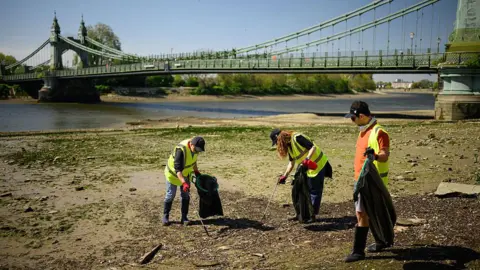
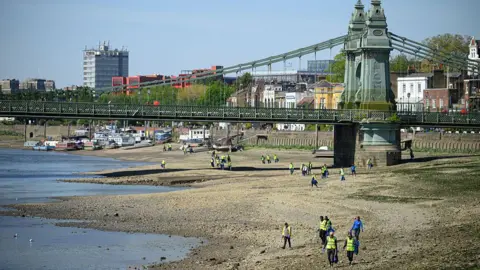
The stretch of the Thames at Fulham Reach is not designated for bathers, although rowers and other users are regularly seen in the water.
 Getty
GettyRiver Action's chief executive, James Wallace, said the evidence was overwhelming and "the privatised water model is broken".
The group argues the system puts investor returns and executive pay ahead of clean rivers.
It said any change should begin by placing Thames Water into special administration and moving it to a not-for-profit, mutual or publicly-owned model.
It also wants the government to block performance payments to water company bosses where firms repeatedly break environmental law.
 Getty
GettyA Thames Water spokesperson said: "The work required the temporary isolation of key assets to ensure their long-term reliability and performance.
"The maintenance was scheduled during a period of dry weather to minimise operational risk. However, an exceptional and highly localised storm occurred unexpectedly during this time, which resulted in the spill.
"While this incident coincided with essential maintenance activity, the Tideway Tunnel system played a key role in protecting the river by capturing and transferring significant volumes of wastewater for treatment.
"We are undertaking a detailed review of the circumstances, and any lessons learned will be applied to strengthen future maintenance planning and operational resilience, supporting the continued protection of the River Thames."
Listen to the best of BBC Radio London on Sounds and follow BBC London on Facebook, X and Instagram. Send your story ideas to hello.bbclondon@bbc.co.uk
