The developer still making games for the Game Boy

 BBC
BBCA video games developer says he spends hours a day creating games for a console which is no longer sold to help people tap in to the nostalgia of retro games.
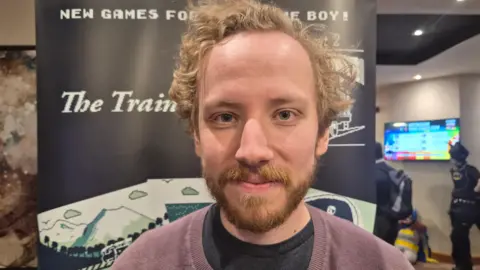
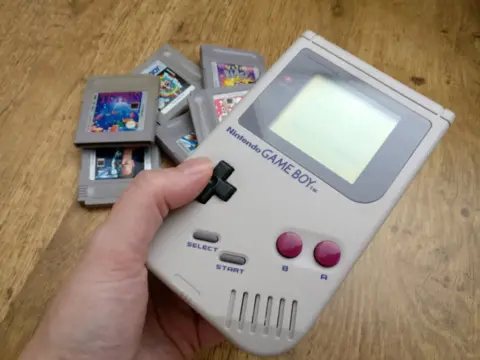
Alex Hamilton, 30, from Bakersfield, Nottingham, is a solo developer who creates games for the Nintendo Game Boy, which first came out in 1989 and was discontinued in the early 2000s.
Hamilton said he enjoyed working with the technical limitations of the vintage consoles but one of the hardest skills he had to learn to create the retro games was 2D pixel art.
He has created three games for the console so far in his spare time and said the process was his form of "therapy".
Hamilton said he fell in love with gaming when he was growing up, playing games like Pokémon Ruby and Zelda Ocarina of Time on the Nintendo 64 and the Game Boy Advance.
He said he was inspired to create his company, GnomeKing Games and his first title, The Train, after seeing a Spanish game creator - on project fundraising site Kickstarter - attempting to make their own Game Boy title.
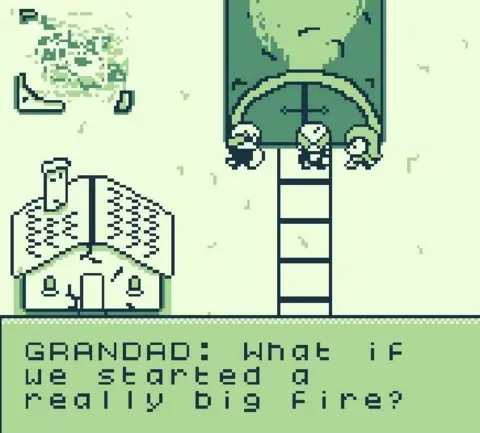
Hamilton's first game, The Train, was a narrative-driven comedy about a girl, her grandad, and the rebirth of a long out-of-service steam train.
 GnomeKing Games
"I wanted to tell an adventure story. I started writing a little bit of the prototype and eventually sort of got a flavour for how to write these characters.
"The main character, Eve, was just an arrow [on a screen] for a very long time. I hadn't decided whether I wanted her to be a boy or a girl yet or maybe a dog," Hamilton said.
He said he enjoyed creating these games in his evenings after he has finished work.
"There's no deadline or timecards to punch in. It's a form of therapy in a way and being creative also gives me something in return," Hamilton said.
He said he creates the games on his own, managing the character design, the story, the programming, the music and even the marketing.
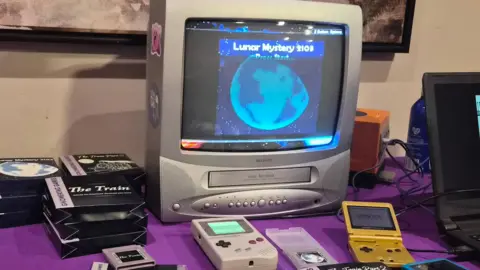
Hamilton said one of the hardest skills to learn was 2D pixel art, which he said had improved over time from his first game to his newest title Lunar Mystery 2103.
Modern handheld consoles like the Nintendo Switch 2, released in 2025, have about 2,073,600 pixels on their screen, whereas the Game Boy has only 23,040 pixels.
A lower number of pixels means the screen cannot hold as much detail.
Hamilton said he enjoyed working with the technical limitations of the vintage console.
"I can't have multiple characters. They start getting cut off and the game starts slowing down and I'm only allowed four colours for backgrounds," he said.
To overcome issues around the outdated hardware he said he had to find unique ways of telling his stories.
He said he relies on colour schemes to show players where to go on the screen and text boxes to replace cut scenes.
Hamilton said he made the games using a mix of his own and community made software and has been on a "learning curve".
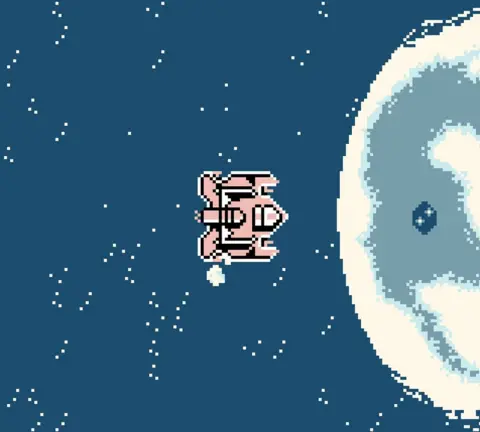 GnomeKing Games
Hamilton said he was able to sell his work as the games are his creations and he does not use Nintendo intellectual property, such as its characters, game visuals or music.
He said his work had received more than £24,000 of backing on Kickstarter and he has sold about 500 digital and physical copies of his games.
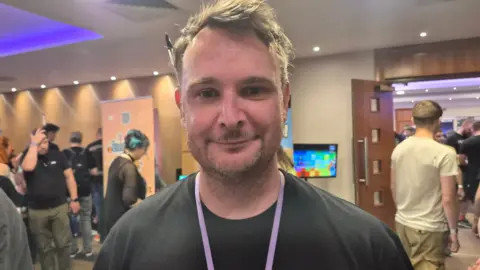
Alex Hunt, founder of the Nottingham Games Expo, an annual retro and indie gaming event, and events manager for games magazine TeamDebug, said: "People always look back to that time where they feel they were probably happiest, and seeing [new retro games], it gets people excited.
"Retro seems to be filling that gap where these bigger studios no longer are. [Larger game studios] are really stuck on a sort of formula that they think works.
"Whereas new retro games [developers], can create what they want, that appeals to a lot of people."
Hamilton believes the support for his work was due to nostalgia, the novelty of retro consoles and the unique game ideas that smaller game creators have.
He said he could not pay the bills by creating games full-time but he wanted to "give people a few hours of entertainment and a laugh".
Listen to BBC Radio Nottingham on Sounds and follow BBC Nottingham on Facebook, on X, or on Instagram. Send your story ideas to eastmidsnews@bbc.co.uk or via WhatsApp on 0808 100 2210.
