Why can just a few hot days increase fire risks?

 Dorset Emergency
Fire services across the south of England have warned that a few days of hot weather have "greatly increased" the risk of wildfires as the country experiences its third heatwave of 2026.
The warning comes as the UK Health Security Agency's amber heat-health alert remains in place across parts of England, including the south.
As temperatures rise, moisture evaporates from grass, shrubs and other vegetation, making plants dry enough to ignite more easily and allow fires to spread more quickly.
Fire services in Hampshire and the Isle of Wight, Dorset, Berkshire and Oxfordshire say even a relatively short period of hot weather can create conditions that make fires more likely to start and spread.
Why does hot weather increase fire risk?
The biggest concern for fire services is not simply high temperatures.
Several days of sunshine, low humidity and dry conditions can remove moisture from grass, heather and shrubs, creating "fuel" for fires to start.
Once vegetation dries out, a small spark from a barbecue, discarded cigarette, machinery or deliberate fire-setting can be enough to start a blaze.
Dry grass and heathland can also help fires spread rapidly across large areas before crews can bring them under control.
Why are heathlands and countryside particularly vulnerable?
Graeme Hartley, from Royal Berkshire Fire and Rescue Service, said heathlands and countryside become much more vulnerable during prolonged hot and dry periods.
He described areas with large amounts of crops, shrubland and grass as high-risk locations.
These landscapes often contain long stretches of continuous vegetation, meaning fires can travel quickly over large areas.
Some sites are also remote, making them more difficult for emergency services to access.
"These fires can be very dangerous, as they can spread rapidly and can become a risk to crops, wildlife, livestock, people and property," he said.
The service monitors conditions using Natural England's Fire Severity Index and works with landowners to reduce the risk of fires in the open.
Larry Mackrell, wildfire tactical adviser and group manager at Hampshire and Isle of Wight Fire and Rescue Service, said wildfires could also have long-lasting environmental impacts.
"They can destroy natural habitats and wildlife," he said.
"These incidents can have impacts across the county, seeing fire crews tied up at incidents for long periods of time."
Why do firefighters worry before temperatures peak?
 Dorset Emergency
Fire services say the danger can begin building before the hottest day of a heatwave arrives.
After several days of warm, dry weather, grass and vegetation may already have lost much of their moisture.
This means conditions can become favourable for fires even before temperatures reach their highest levels.
For firefighters, the combination of dry vegetation, sunshine, warm temperatures and wind can be more significant than a single exceptionally hot day.
Wind is often a particular concern because it can help flames spread quickly across open countryside and heathland.
What conditions do crews watch most closely?
Fire services monitor a range of factors including temperature, rainfall, wind and how dry vegetation has become.
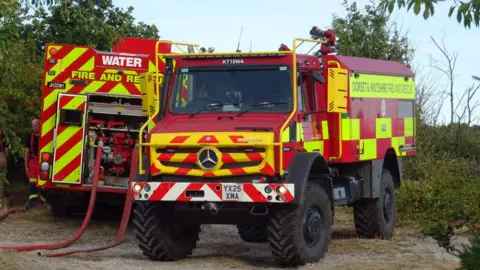
In Dorset, crews have warned that warm, dry and breezy weather can create conditions where fires spread rapidly.
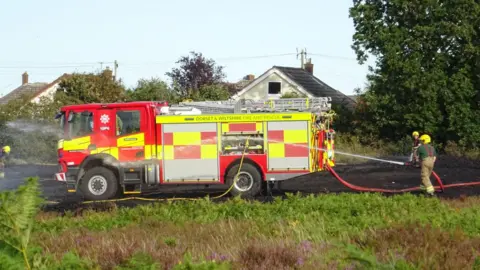
The risks have been underlined by recent incidents in the county, including a fire that destroyed about three hectares of heathland in Poole and another heath fire near Wareham.
Area manager Ant Bholah, from Dorset & Wiltshire Fire and Rescue Service, said: "Any ignition, whether accidental or deliberate, can spread quickly across the heathland.
"The fires generate their own heat and, once they get going, they can spread quicker than you can run, so they are really dangerous and the risk is quite high at the moment."
How can people help prevent wildfires?
Oxfordshire County Council's Fire and Rescue Service said that during dry weather it takes only a small spark from a disposable barbecue, campfire, cigarette or machinery to ignite grass, shrubs or litter.
Those flames can quickly develop into larger incidents that threaten people, property and wildlife.
Fire services across the South are urging people visiting the countryside, coast and heathland areas to avoid lighting barbecues, to dispose of smoking materials carefully and report fires immediately.
The advice is simple, if you are heading to the heath, countryside or coast during the heatwave, leave the barbecue at home.
