Climate change seeing roses bloom earlier than ever

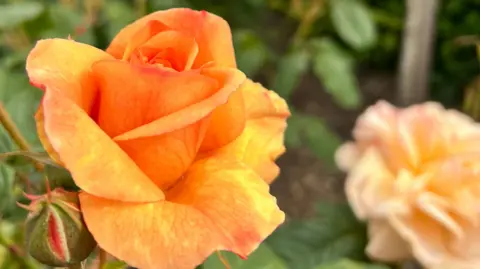 Christopher Lane/National Trust/PA Wire
Climate change is causing the roses at a number of National Trust (NT) gardens in the south of England to bloom earlier than ever, according to the conservationist charity.
It said flowering at the likes of Chartwell House in Westerham, Kent, is being brought forward from its traditional June high point, with this year's first rose arriving as early as March.
The shift has been driven by a milder, wetter winters and unusually warm spells in spring, the trust added.
But, while NT horticultural specialist Rebecca Bevan said this was not necessarily harmful, the bigger concern was "water availability" for the roses.
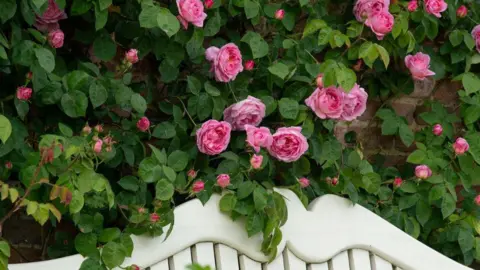 Sophie Bolesworth/National Trust
"Research shows that drought poses the greatest threat," she added.
"So we're focusing on building healthy soils, choosing tougher varieties and investing in water capture and storage."
Chartwell's gardens and outdoor manager Christopher Lane said this spring had been a clear indication of how the changing climate was affecting gardens.
"The lack of cold snaps has given plants an early boost, accelerating growth across the garden," he added.
"We saw our first rose in flower as early as March, something that would normally come much later."
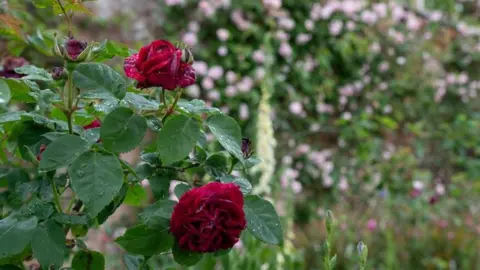 Sophie Bolesworth/National Trust
It is a similar story at other southerly NT gardens, such as Mottisfont in Hampshire.
Officially donated to the trust in June 1972, it has seen regular changes to flowering patterns ever since, with peak blooming periods moving forward by the equivalent of one day every two-and-a-half years.
Head gardener Rob Ballard said: "After a very wet, warm winter, including 42 consecutive days of rain at the start of this year, the roses got off to an early start.
"Then warm spells in April accelerated growth, and in 2026 they're flowering earlier than we can remember."
The changing climate also means Ballard's team has had to adapt the way the rose garden, and the wider site, is managed, from caring for the soil to pruning roses differently.
More pests surviving the winter was also cited as creating challenges.
However, more northerly properties are seeing more typical flowering, according to the charity.
Follow BBC Kent on Facebook, on X, and on Instagram and listen to BBC Radio Kent on Sounds. Send your story ideas to southeasttoday@bbc.co.uk or WhatsApp us on 08081 002250.
