From Vikings to Scousers: Liverpool's enduring Norwegian bond

 BBC
BBCWhen England meet Norway in their World Cup quarter-final later, it will be the latest chapter in a relationship lasting more than a millennium.
Liverpool's ties with the land of the Vikings are incredibly strong... and enduring.
Several place names have their roots in the Norsemen's invasions of the 9th and 10th Century.
Even the word Scouse has evolved from being a Norwegian mariner's staple meal to a badge of honour worn by Liverpudlians worldwide.
Here, the BBC explores how this bond began, its journey through an era defined by the industrial revolution, and what it all means for football fans in 2026.
The Vikings arrive
About 100 years after the first Viking invasion of Britain in the late 8th Century, Norse raiders landed in Scotland and made their way to Ireland and across the sea into the Liverpool city region.
Evidence is a bit scant, however.
"Archaeologists have relied heavily on pottery in an era when they didn't use much pottery, but we know Vikings settled in the Liverpool city region in the first decade of the 10th Century," said Liz Stewart, head of the Museum of Liverpool.
Place names form another strand of evidence, with historians confirming Toxteth, Croxteth, and Aigburth all have Viking roots.
 Museum of Liverpool
Stewart explained: "Anywhere ending in 'by', like Greasby, Raby, Urby, Frankby, in the Wirral, or Roby in Knowsley, were also farmsteads in the Viking period."
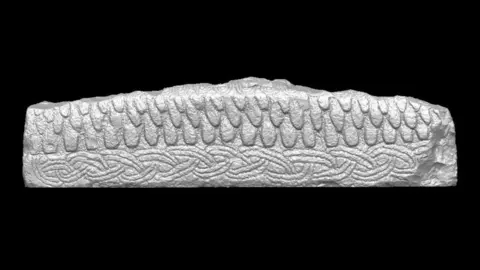
A collection of Hogback stones, which were discovered in West Kirkby in 1896, could act as further proof of Norse presence in the region.
It is unclear what the exact purpose of the stones was, but the Museum of Liverpool believes they are "early medieval Viking period sculptural pieces".
The birth of Scouse
Fuelled by the Industrial Revolution, and the founding of the United States of America in 1776, Liverpool was one of the world's major trading centres during the 18th and 19th centuries.
"The city was at its height during the building boom of Victorian Britain," said Dr Clare Downham, from the University of Liverpool.
"An awful lot of Norwegians and people from other parts of Scandinavia stopped off at Liverpool on their way to migrate to America.
"In the 1870s and 1880s around 50,000 people were moving from Scandinavia through Liverpool annually."
 Tiger
TigerThis all played a huge part in forming the Liverpool of today.
Sailors braving the treacherous journey from Norway could never have known the impact of their humble meat dish, however.
"The Norwegian mariners introduced a meal to the people of Liverpool, called lobscouse," Downham said.
She described it as "a cheap meal made up of whatever meat and veg sailors could get their hands on".
Downham said: "Eventually it was taken up by the locals, and by the time another wave of Norwegians come through the city in the 1940s - along with volunteers for military work in World War Two - the term Scouse had begun to stick."
The World Cup showdown
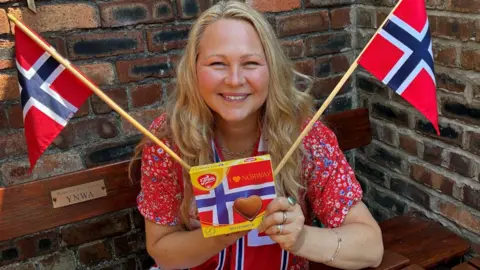
Fast forward to July 2026, and Liverpool fan Ragnhild Lund Ansnes will be making the reverse journey of her seafaring forebears.
She and 25,000 others will be cramming into a football stadium in Oslo to watch Norway take on England in their once-in-a-generation World Cup quarter-final in Miami.
"I've been watching the World Cup for years and this my first time seeing little Norway with 5.5 million people coming this far in the World Cup," she said.
"It's just so lovely to see how a team can do so well collectively by working so hard together."
Mari Lunde, a Wirral-based journalist who works with the Norway Liverpool Supporters' Club, confirmed: "I'm supporting Norway, all the way!"
Lunde added: "Oslo looks like the place to be because it's been a party city since the World Cup started a month ago, and I have real FOMO.
"If we're knocked out against England it would be a shame, but it would be nice for this country because its quite polarised at the moment."
Likewise, Lund Ansnes said the result could be bittersweet.
"I would love for England to become world champions again after so long, but not this year, sorry.
"This time, it's got to be Norway!"
Listen to the best of BBC Radio Merseyside on Sounds and follow BBC Merseyside on Facebook, X, and Instagram. You can also send story ideas via Whatsapp to 0808 100 2230.
