Birmingham 20mph limit: 'Life saver' or 'war on cars'?

 Getty Images
Birmingham could become England's first "20mph city", as the city council sets out a blueprint for the next two decades in a bid to stop cars "dominating" the second city's streets.
The move by the local authority, run by the Liberal Democrats, Green Party and independent candidates, has caused controversy.
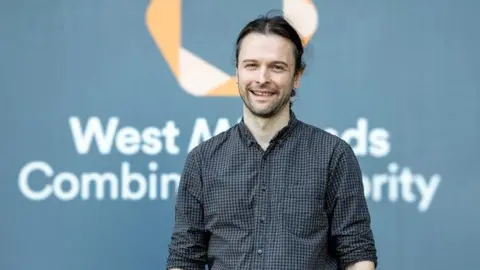
For Mat MacDonald, the region's road safety commissioner, the move for all roads in the city except for A-roads could be a "life saver".
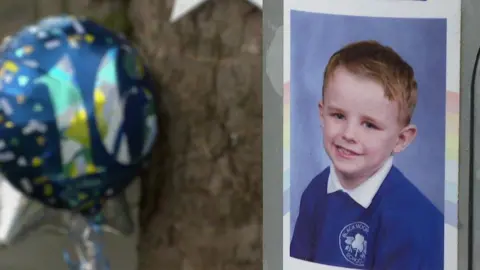
"Bobby Colleran was just six-years-old when he was crushed by a van driver in front of his mother and three siblings as they walked home from school," MacDonald told the BBC.
"We know if that van had been travelling at 20 rather than 30mph, which was the speed limit on that road, he would have [only] had a 10% chance of dying, compared to the chance he did have.
"So on the balance of probabilities, he would still be alive today."
However, Jex Parkin, the opposition Reform UK leader on Birmingham City Council, thinks the move would be a "war on cars".
While supporting a 20mph limit outside the city's schools, Parkin is stridently against a blanket imposition across the city.
"Look how difficult it is to be a driver. First, they make the potholes [irreparable] and they fail to repair the potholes and blight our highways and make it really tricky," Parkin told BBC Radio WM.
"Then, they introduce the clean air zone, charging some drivers to enter Birmingham city centre, and now they want to reduce every single local road.
"So the question that we're asking, that residents are asking, is just how hard does this council want to make it for people to drive in Birmingham?"
Parkin said Reform was pushing for an "evidence-based approach" targeting people "driving recklessly", but said a blanket ban was not the answer.
The Reform UK councillor also believes that reducing the speed limit to 20mph across Birmingham would "undermine the respect for that limit where it's actually appropriate."

Parkin also told the BBC: "We can't move to a society that is anti-car, that doesn't support cars, because what about businesses that use cars, lorries, vans, for transport?
"Birmingham is a rich, industrial city with a lot of business, a lot of commerce going on, and at the end of the day, goods need to get from A to B. Making it harder for businesses to do that just harms the economy locally here in the city too."
However, Mat MacDonald told BBC Midlands Today: "I don't think there's a huge amount of evidence that I've seen on the impact of 20mph specifically on the bottom line in retail.
"However, we do know from lots and lots of studies that when you make the streetscape more amenable, safer, more pleasant for people who are outside of a vehicle, retail sales go up massively.
"There was a study in London where pedestrianised and cycle-friendly areas, sales went up by 49% compared to 3%.
"The fact is that 20mph has saved the Welsh government £92m, when we're talking about the economic case, over the first year of implementation."
 West Midlands Combined Authority
While MacDonald supports the proposal and Parkin opposes it, how do the general public feel?
Writing in to BBC Radio WM, Chris from Lapworth said: "I wonder about all the thousands of carers looking after elderly and disabled people.
"This will probably add 20 minutes onto their day, they will probably cut short their time with their patients."
Russell from Telford thinks the biggest issue in Birmingham is people on e-scooters and e-bikes "driving at twice the speed limit".
"If someone breaks the 30mph speed limit, they're going to break the 20mph limit."
Daniel from Minworth said the implementation of a 20mph speed limit near him had not been a problem, while another listener said their road now had the 20mph limit but it was "totally ignored".
Audrey from Erdington thought the proposal would cause confusion and arguments between drivers, and expressed concern about the cost of implementing new road signs.
 Google
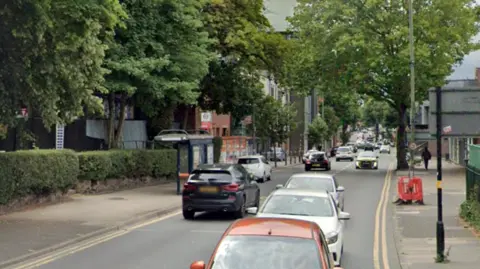
The BBC also visited Kings Heath, where the suburb's Low Traffic Neighbourhood has divided opinions.
Last year, the council pushed ahead with the second phase of the plan, which includes plans for new 20mph speed limits and one-way streets.
Many residents told the BBC they did not feel safe in the area, mentioning boy racers, excess traffic and drivers not stopping at pedestrian crossings.
Marion Cleal said: "You can't cross the road, it's dangerous.
"I feel as though [the measures] are not working, I don't think they're working at all, I'm not happy with it."
Meanwhile Sarah Albutt said: "I think it is a little bit safer with the lights, and the flow of traffic has improved."
Kings Heath resident of 40 years, James Stafford, said the main road was a "gridlock" and that he had walked "many times" from Moseley to Kings Heath quicker than the bus.
And while Jex Parkin believes the city should not turn against its motorists, Stafford thinks it should go further.
"Yes [the measures] are working but they haven't solved the problem," he told Midlands Today.
"It's just been moved somewhere else, onto the main road and Vicarage Road.
"There's basically too many cars, that's the problem, they've got to come to the root cause of the problem.
"I stopped driving 5 years ago. If you live in a city, you do not need a car. Simple as that.
"I can go anywhere I want to go and I can get there quite comfortably."
Has it worked elsewhere?
While Brummies can ponder over how 20mph restrictions might impact their lives, Wales has been living with these measures since 2023.
Since the speed reduction was introduced, there have been 900 fewer people injured on the country's roads.
Professor Charles Musselwhite, transport psychologist at Aberystwyth University, said the change had been a huge success.
"The bottom line is fewer people are being injured and killed on our roads and that's the main headline, that's what we want to happen," he said.
"That's a huge saving of money let alone of huge saving of lives and affected families."
In terms of the benefits, Musselwhite said reduced speeds allow more time to react and give a better field of vision to drivers.
Musselwhite acknowledged that there had been some frustration from members of the public and motorists, but said it tended to subside once introduced when people "realise actually it doesn't make a huge difference to journey times".
"It's not quite as frustrating as you think because we're travelling quite slowly on the roads anyway," he added.
While he admitted there would always be some dangerous outliers, Musselwhite said the majority of drivers in Wales stuck to the speed limit, with the number of drivers travelling at 25mph or lower increasing from 20% to over 60% in the first year of the change.
"You've either got to have an excellent campaign and bring people along with you," he said.
"Or what we've seen in many places, you introduce it when people are still annoyed and upset by it and over time people come around to just seeing it as completely normal and ordinary."
In March, a BBC-commissioned poll found that the default 20mph speed limit was opposed by more than half of people in Wales.
He said some roads in Wales had reverted back to 20mph in areas of particular frustration and on roads with no pedestrians or cyclists.
He concluded: "So maybe it's having an ongoing conversation with the city themselves to work out where the best places are for 20mph."
Follow BBC Birmingham on BBC Sounds, Facebook, X and Instagram.
