School pupils 'should be taught to check breasts'

 BBC
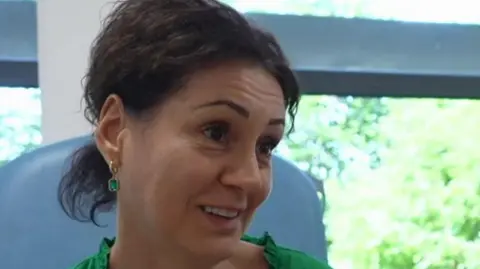
BBCSecondary school pupils should be taught to check their breasts every time they have a shower, according to an oncology research doctor.
About one in seven women in the UK will develop breast cancer during their lifetime, according to cancer charities. About 400 men are also diagnosed with breast cancer every year.
Dr Madalina Chifu, from the Royal Cornwall Hospital, said: "If you normalise it, then everybody will do it; like brushing their teeth or washing their face in the morning."
Chifu said men and women should check their breast and chest area as often as possible, although added "it doesn't have to become an obsession".
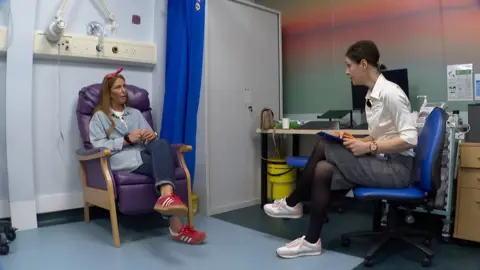
Chifu has extensive experience conducting clinical trials in Cornwall, saying the NHS trust was currently running 77 trials, with 37 of them still open to recruitment.
The cancer research doctor said she "gets to see science translated in to real life" and believed the Royal Cornwall Hospital was offering patients "tomorrow's treatments today".
Jemma Sleeman, 47, from Newquay, was diagnosed with breast cancer in 2020.
She said she was still alive thanks to taking action quickly, and urged anyone who found a lump to go straight to the doctor.
She said: "Don't wait about. Don't be scared to go and get checked."
Sleeman said she checked her breasts when she was lying in bed and recommended that people "get to know your normal, know your baseline".
She said she found a "pea-sized" lump in one breast just one month after she started checking them.
While being diagnosed, it was found the cancer had already spread to her lymph nodes.
She had the lump removed, as well as undergoing chemotherapy and radiotherapy.
She is now part of a clinical trial at the Royal Cornwall Hospital using a new blood test to pick up early signs of her cancer returning months or even years before it could be detected in a scan.

The BBC is running the Wake Up Call, encouraging everyone to take a look at their health by speaking to a range of experts about health issues and hearing from people who have been through difficult times.
If you are affected by any of the issues raised in this story, help and support is available via the BBC Action Line.
Follow BBC Cornwall on X, Facebook and Instagram. Send your story ideas to spotlight@bbc.co.uk.
