Is there a future for Britain's honesty boxes?

 BBC News
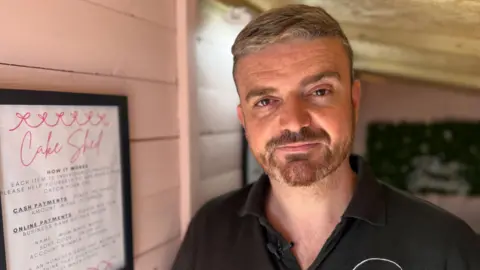
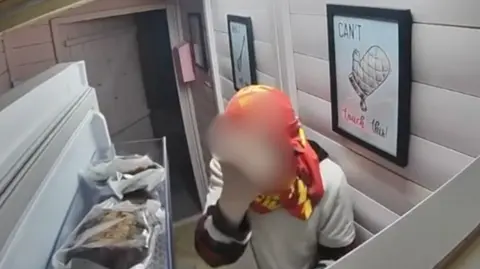
Lee McCann watches in disbelief as he plays back CCTV showing a young man sticking his middle finger up at the camera while helping himself to £150 worth of cake slices.
McCann, 36, owner of Mum Made Meals in Grantham, Lincolnshire, began selling his wares, using an honesty box system, from a shed in February.
To date, there have been 11 thefts. McCann has not been informed of any arrests. Lincolnshire Police told the BBC investigations were ongoing in relation to the incident involving the young man caught on camera.
"It's soul-destroying," admits McCann. "Each time it happens you lose a bit of faith in humanity.
"I'm not Alan Sugar. I'm just a regular council estate lad just trying to make a business work.
"People just don't seem to care. It's a bitter pill to swallow."
 Lee McCann
While he is at pains to point out "99.9% of people are lovely and supportive", McCann says his business can no longer absorb the losses.
A few days ago he removed the facility for customers to pay cash. He also closes the shed at 21:00 BST, ensuring all stock is removed.
"That's a shame as a lot of emergency workers, taxi drivers and other shift workers would stop by for a sweet treat," he says.
Is there a future for honesty boxes?
From September, McCann's shed will be replaced by a trailer - with staff.
McCann's opinion is that people "are becoming less trustworthy", though he does still think there is a place for honesty boxes "when businesses are small and maybe attached to people's houses".
In March, a six-year-old boy had money and eggs stolen from his roadside stall in Malton, North Yorkshire. A social media post by his mum prompted a well-wisher to replace the amount taken.
Meanwhile, the owner of a Guernsey bakery business appealed in June for CCTV footage after damage totalling hundreds of pounds was caused to his honesty box.
 Amber Macey / BBC
Dr David Wilson, an emeritus professor of criminology at Birmingham City University, does not subscribe to the view that Britain is becoming less honest.
"Life often appears to have been better 'back then'," he says. "But I would question that.
"Take the so-called Blitz Spirit of the Second World War. There is this notion today that everyone went around with a stiff upper lip, that everyone was in it together, united in the fight against the Nazis.
"In actual fact, however, the crime rate in London doubled, so in reality there were a lot of people who were very much in it for themselves, not behaving honestly."
Dr Matt King-Parker, a lecturer in forensic psychology at University of Lincoln, is keen to explore the motivation behind the thefts.
He says: "There are two main motivations at play. Typically, people steal either to survive - to feed themselves, essentially - or in order to sell items to pay for illegal substances - drugs.
"In the case of cakes, and other small items, it's unlikely someone would make a large amount of money from selling such stolen items.
"We know a lot of people are struggling at the moment."
Are we more dishonest?
King-Power and Wilson share the view that Britons are not becoming more dishonest.
"Honesty levels, when you study the data, have not changed much since the late '90s," says King-Power.
He is adamant that criminals are "regular human beings" who know the difference between right and wrong.
Criminals weigh up their own needs against the risk of getting caught and the likely consequences, he explains.
Wilson says "guardians" such as CCTV will often prevent people behaving dishonestly - but admits there are exceptions, such as in the Grantham case, where the camera appears to have been mocked.
"What drives these people to commit the crime is the belief they will not be caught, with the police either unable or unwilling to act," he says.
Both academics are of the view that honesty boxes can still thrive in our communities.
"I think they are still able to stick around," says King-Parker. "Theft is a sad, inescapable truth.
Wilson adds: "There are plenty of honesty boxes near me that seem to be doing well. I can't see that changing."
Listen to highlights fromLincolnshire on BBC Sounds, watch thelatest episode of Look North.
Download the BBC News app from the App Storefor iPhone and iPad orGoogle Play for Android devices
