Pharmacists 'can't afford' to keep providing blister packs

 BBC
BBCIf you care for someone who takes a lot of tablets each day you'll probably know how blister packs can reduce some of the stress.
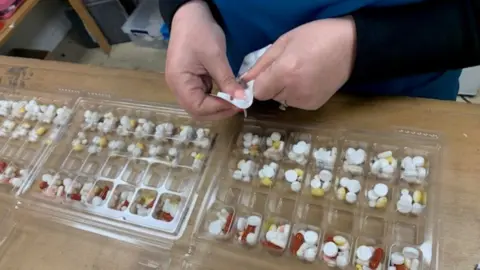
Also known as Monitored Dosage Systems (MDS) - all a patient's pills are organised into compartments and sorted by days of the week and specific times.
Community Pharmacy NI estimates that more than 50,000 people in Northern Ireland get assistance like this each week but that "many pharmacy teams are at capacity".
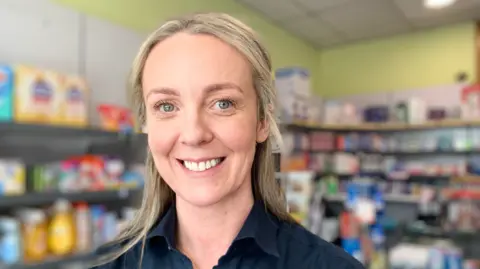
That's the case for pharmacist Orfhlaith McAreavey who said she had to turn people down on a daily basis.
"If someone has sadly passed away, we might have a space to be able to fit them in, but yeah, it's a really in-demand service," she said.
In a statement, the Department of Health said decisions on MDS packs were made on a "case-by-case" basis.
It said it provided significant funding to community pharmacies to meet Disability Discrimination Act requirements, including £18m annually in recurrent funding.
The statement added that when a patient did not meet the criteria for reasonable adjustments but requested support "for convenience, provision of an MDS may be a commercial decision for the pharmacy and a charge may apply".
But according to McAreavey, funding doesn't match demand and she said her pharmacy was often absorbing delivery costs to housebound patients.
She said providing medicines in this way was costly and she was "subsidising blister packs" from other parts of her business.
"Some of the medication that we are dispensing, we're doing it at a loss."
'It's a labour intensive service'
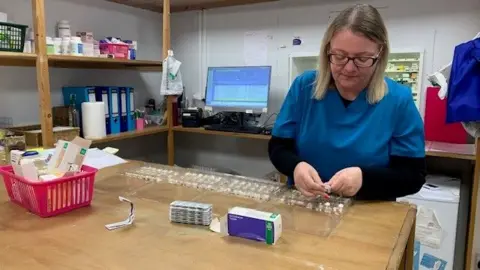
The other issue, McAreavey said, was "how long it takes and how difficult it is to make up a pack".
She employs pharmacy technician Michelle McNally on a full-time basis to do this one job.
All the different tablets a patient takes have to be checked and counted multiple times by her and the pharmacist on duty before they can be sent out in the special blister pack.
McNally sees for herself how they can help vulnerable people.
"You can make a difference to people's lives," she said, adding that people are "so grateful that all this is sorted out for them and that they can have their meds safely".
'A big headache'
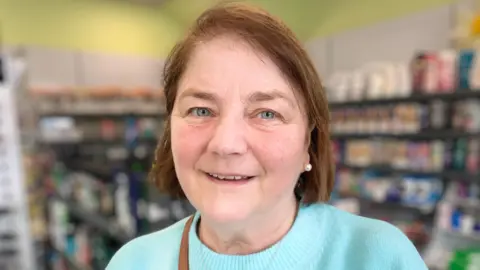
Marie McCrory's mother gets her medication in blister packs because she has dementia and has lived alone for a long time.
"We rely very heavily on the fact that her medication is sorted."
She worries about people who live on their own and aren't able to get them.
"There's other people living with medical conditions that just don't have the capacity to sit and work that all out and it's just a big headache."
'We can't afford it'
For pharmacists like McAreavey, it's difficult to say no to people.
"We want to do these services, we want to be able to provide the packs for our patients that need it, but we can't because at the moment it's just, we can't afford it."
She would like to see things change.
"All we're asking is can we get a proper review so the patients that really need the blister packs get them and that we are being recognised for the hard work and effort that it takes to do them."
'Find the money'

Niall Smyth runs Advanced Community Care - a care company based in the northwest.
He said their policy was that staff could give up to two medications without blister packs - but anything more - and they couldn't.
"Some of our clients have 10, 12 medications. Maybe nine in the morning, twelve at night," Smyth explains.
"Asking somebody to give six or seven different medications can be quite difficult. It's prone to mistakes."
He said they were having to tell families on a "weekly basis" that they couldn't give out certain medications because they weren't in a blister pack and the knock-on effect of that was "quite serious".
Smyth pointed out that in some cases, people don't have family.
"So what's the answer? The answer to me is quite simple. Maintain the blister packs."
He understands that they can be expensive for pharmacists to prepare but said "someone needs to find the money" to fund the service.
"That's the safest option. That's the best option. It's the option that families want. It's the option that care companies want."
Community Pharmacy NI - which represents the industry here - said "the priority for pharmacy teams will always be to maintain this service to existing patients, where appropriate, and to continue doing this in a safe way".
It added: "Pharmacies will carefully weigh up several factors including convenience, need, patient safety, pharmacy procedures and other medicines-taking support options that exist when dealing with any new requests."
