'Quitting social media was really refreshing'

 BBC
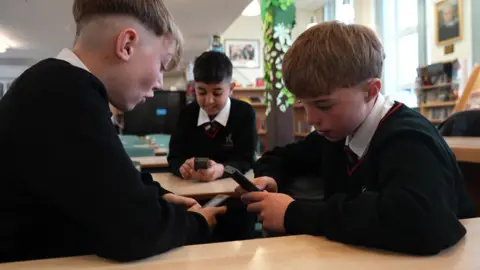
BBCA group of children who surrendered their smartphones for three weeks have said the change was "refreshing" and "quite amazing".
Pupils at Ecclesfield School in Sheffield said they had more sleep, more time with their loved ones and spent longer outside after switching to traditional "brick" phones.
The government's public consultation on whether to ban social media access for under-16s is due to come to an end next week.
Despite their positive experiences, many of the pupils who took part in the trial did not think there should be a ban.
Maliah, 14, said she wanted the government to find a way to reduce social media use by young people, but said banning it would be "pointless".
"It would be a lot of effort and kids would still bypass it," she said.
The year nine pupil said her screen time before the trial was up to 13 hours per day.
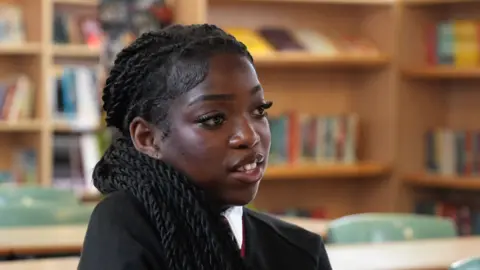
"I'd wake up, go on TikTok, sometimes I'll be on it until 8 o'clock, then I'll start getting ready late," she said.
"After school I'd have a detention [for being late] so I couldn't meet my friends.
"I'd get home and it would be late, so I'd just watch TikTok, eat, call my friends, sleep, repeat."
Maliah said she was sleeping more, doing things faster and getting more time for herself during the trial, but had been using her smartphone a lot again since.
"You feel a bit disappointed. I get a bit angry at myself," she said.
"I've realised maybe I should be on it less after hearing that [people think] six hours is a lot."
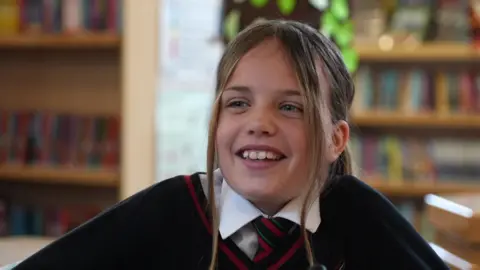
Year-seven pupil Olivia, 11, said she usually had about seven hours of screen time, and found the trial "quite challenging" at first.
"I went outside and did sports more and spent more time with my family, it made me appreciate all the stuff that I have," she said.
"It made me realise I don't need all the [apps] I go on 24/7, I just need the simple stuff to message or ring someone."
The pupils had access to brick or "dumb" phones during the trial. These only have basic features like texting and calling, similar to mobiles released in the early 2000s.
Zerdesht, also in year seven, said: "It was quite scary at the start because I didn't know how to use the brick phone, but once I got used to it, I think it was quite amazing."
He also found he was spending more time outside and with friends, but said the government should not ban social media and should "make it a safer place" instead.
The 11-year-old said "loads of friendships are going to be broken or lost" if a ban is imposed, as they are built around social media and online gaming.
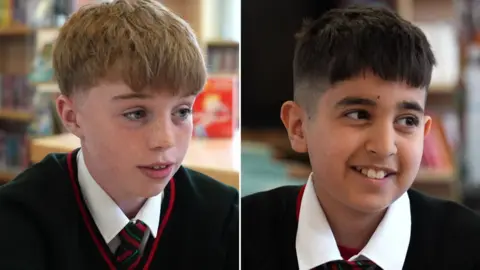
Twelve-year-old Flynn said his break from social media had been "really refreshing".
He is one of the few participants who did back the ban, saying it would help "bring people closer together".
"I've got a lot closer to my family and friends because I've been spending a lot more time with them, and I've been outdoors a lot," he added.
Liz Hunter, curriculum lead for PSHE and RE, said the "vast majority" of pupils had enjoyed the trial, and about half did not want to go back to their smartphones.
The school had seen more issues with attention and attendance since the rise of social media, she said, with some pupils spending up to 20 hours at a time on their phones at weekends.
'These apps are too powerful'
"We can't show a documentary in class, we can't show anything longer than a few minutes, because they're not used to being able to concentrate," she said.
"Loads of our kids are managing on four to six hours of sleep, they're not revising like they should.
"These apps are too powerful for our children, and they are struggling to manage that time."
Kanishka Narayan, minister for AI and online safety, said more than 10,000 young people had contributed to the consultation on the social media ban.
"Some of them tell me about the communities they have engaged with online and how that has been really fulfilling," he said.
"They see a huge amount of harm as well - bullying instances, impact of excessive screen time on their mental health, how they relate to people."
He said the report on the consultation is expected in the summer, and "robust action" would be taken by the end of the year.
"We want to make sure that British kids, young people across this country, have a fulfilling experience online, are leaning into the future of technology when it comes to jobs and socialising, but they're doing so in a safe way."
Listen to highlights from South Yorkshire on BBC Sounds, catch up with the latest episode of Look North
