Who won the local elections in Havering?

 Getty Images
What happened in Havering in the 2026 council election, and who won?
Reform UK won the election on 7 May 2026 and took control of Havering council after it was in no overall control.
The results were:
Reform: 39 seats (+39)
Residents Association: 14 seats (-9)
Labour: 2 seats (-7)
Conservatives: 0 seats (-23)
When were the 2026 local elections in London?
More than six million Londoners were eligible to vote in the council elections on Thursday 7 May 2026.
All 32 London boroughs were up for election.
There were also elections for the mayor in five boroughs: Croydon, Hackney, Lewisham, Newham and Tower Hamlets.
 Getty Images
Where is Havering and who lives there?
The London Borough of Havering covers parts of east and north-east London, forming the easternmost part of the capital. It borders Barking and Dagenham and Redbridge, and the Essex districts of Epping Forest and Brentwood, as well as Thurrock across its eastern boundary.
What's it like? Havering is one of London's most rural boroughs. It is made up of historic villages, 20th Century suburbs and bustling town centres. Many families pride themselves on having lived in the area for generations.
Neighbourhoods: Romford, Hornchurch, Upminster, Collier Row, Harold Hill, Rainham, Gidea Park, Emerson Park, Cranham, Havering‑atte‑Bower, Noak Hill, Harold Wood, Squirrel's Heath, South Hornchurch, Wennington.
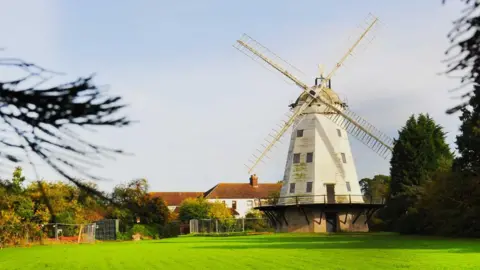
Places of interest: Upminster Windmill, Harold Wood, historic Romford Market, which has been functional since 1247, and Havering‑atte‑Bower - the site of the medieval royal Havering Palace.
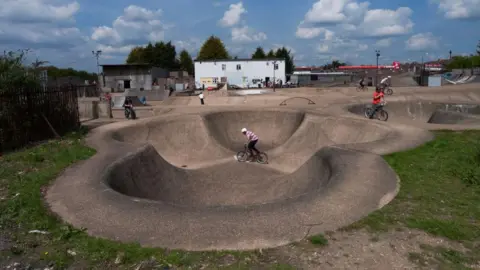
Pub quiz fact: Havering has one of the world's only listed skate parks. The Rom in Hornchurch is considered a technically significant example of 1970s shotcrete skate park construction.
Population:(2024 estimate): 276,274.
Demographics: According to the 2021 census, 75.4% identify as white, 10.7% as Asian, 8.2% as black, 3.7% as mixed race and 2% as another ethnic group.
Average property price: According to the Office for National Statistics (ONS), the average house price in Havering in December 2025 was £452,000.
Average monthly rent: The ONS reported that the average monthly rent in January 2026 in Havering was £1,560.
Council tax: Band D council tax in the borough for 2026/27 is £2,424.66
Transport: Havering has four Tube stations, three Elizabeth line stations, three London Overground stations, approximately 870 bus stops, and 36 day bus routes according to Transport for London.
It also has six National Rail stations: Emerson Park, Gidea Park, Harold Wood, Rainham, Romford and Upminster.
What is Havering's local history?
The modern London Borough of Havering was created in 1965 after the reorganisation and creation of the 32 London boroughs. Formerly part of Essex, it was formed from the old borough of Romford and the urban district of Hornchurch.
The arrival of suburban railways and the District line in the 20th Century accelerated suburbanisation, which blended historic country villages with new housing estates.
The borough's history stretches back to Anglo‑Saxon times, when Havering Palace served as a royal residence as early as the reign of Edward the Confessor, anchoring the area's early settlement.
The surrounding territory became the Royal Liberty of Havering in 1465, encompassing Havering‑atte‑Bower, Hornchurch and Romford.
Romford developed as a major market town after receiving a royal charter in 1247, a tradition that continues today.
Listen to the best of BBC Radio London on Sounds and follow BBC London on Facebook, X and Instagram. Send your story ideas to hello.bbclondon@bbc.co.uk
