'Utterly vile' abuse drives councillor to quit

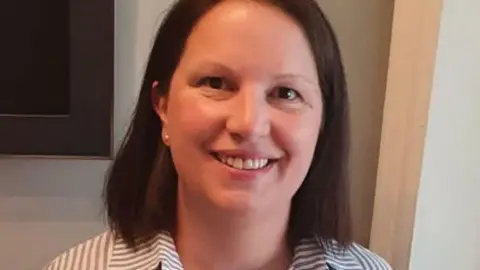 Jill Salt
A local councillor has announced she is standing down after 11 years, after enduring "misogynistic" and "utterly vile" social media abuse.
This had included faked sexualised images of her wearing a bikini, Jill Salt, a representative on Staffordshire Moorlands District Council and Biddulph Town Council, said. She added she would not seek re-election after her current term finishes next May.
The images had been made by lifting genuine images from her Facebook account, she added.
A male colleague, Nigel Yates, also "got some stick" from people online, but that no one had made images or video of him in his underwear, she added.
"He gets stick online, which I can cope with," Salt said, "because that's about politics and it's about your job and it's about people disagreeing."
She said the abuse she experienced was "something more sinister".
Yates described the types of behaviour endured by Salt as "beyond despicable" and said it was "very disappointing" that it had led to her decision to stand down.
"Nobody should suffer that type of abuse," he said. "She's a fantastic councillor, she really works hard in the local community.
"She's got opinions, but we need to have opinions. We won't drive the country forward, or the locality forward, unless we've got opinions to share and debate."
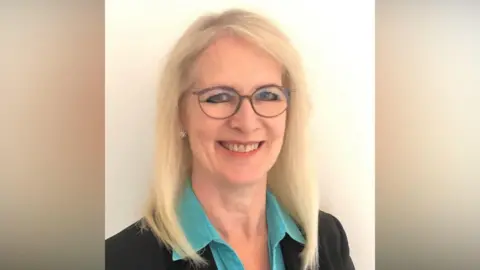 Kay Wesley
Kay Wesley, leader of the Equality Party and a town councillor in Congleton, said Salt's experience was not an isolated case.
"I don't think I know a single woman politician who isn't subjected to online abuse, and I feel as if it's been getting worse in recent years," Wesley said.
"Sometimes it's quite threatening, it can be quite frightening."
Tougher sanctions
Wesley added that council staff would help where possible but there was no significant infrastructure to support women in politics.
"It's exhausting, having to deal with it," she said, adding that twice as many men as women stood in the recent elections.
This was not representative of the country, she said, adding that she felt the solution involved having more women in power and tougher sanctions against those who perpetrate violence against women and girls.
The issue was both a cause and consequence of inequality, Wesley said.
"They don't participate in discourse, their voices aren't heard," she said.
"We just need to think differently, and accept that we have a problem and really address it right through our society - our education and our politics."
Follow BBC Stoke & Staffordshire on BBC Sounds, Facebook, X and Instagram.
