Llamas named after Only Fools characters join herd

 BBC/University of Reading
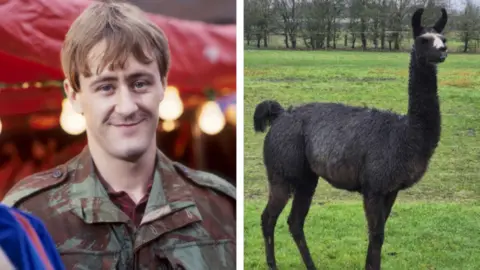
Five llamas named after characters from the classic BBC sitcom Only Fools and Horses are the latest to join a university research herd.
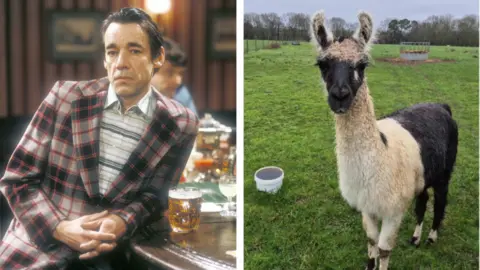
Earlier this year Denzil, Marlene, Raquel, Rodney and Trigger joined the herd at the University of Reading's Centre for Dairy Research in Arborfield.
They now live alongside the other 18 llamas at the centre, where they are used by researchers studying potential treatments for disease.
Professor Gary Stephens, who leads the research at the Berkshire-based university, said it was "always a brilliant day when new llamas arrive on the farm".
"We love these animals and we get very attached to them, they all have great personalities," he said.
"Their welfare is absolutely our priority and we take enormous pride in looking after them to the very highest standards."
 BBC/University of Reading
The now 23-strong herd are used by researchers to study nanobodies - a type of miniature antibody that only certain animals, including llamas, can produce.
Nanobodies are far smaller than standard human antibodies, making them easier to engineer into drugs and use as new research tools, the university explained.
It said scientists extracted them from the llamas' blood after exposing the animals to a small quantity of a virus - much like the vaccination process.
It said the llamas were not at all harmed by these procedures.
During the Covid-19 pandemic, nanobodies from the Reading herd were used to contribute to research into treatments for the virus.
Prof Stevens said the llamas were "doing something quite incredible".
"The nanobodies we get from them are being used in research that could one day change how we treat cancer, infectious diseases and much more."
"They are rather extraordinary creatures," he added.
The research is supported by the company Llamatech NBS, which is a spin-out of the university.
