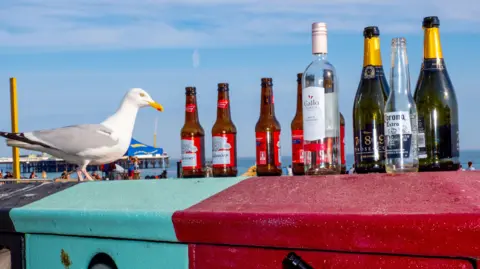
Why our seagulls are acting like lager louts this summer

 Getty Images
From stumbling out of a bar in the early hours to dropping a post-club portion of cheesy chips all over your mate, being drunk is an all too familiar feeling for many.
According to Drink Aware, 19% of men and 15% of women in the UK reported binge drinking – or having a lot of alcohol in a short space of time to get drunk - in 2022.
Consuming such levels of alcohol and becoming intoxicated as a result can be dangerous, cause health issues and have other serious consequences.
But it's not just us humans that sometimes take things a tad too far when it comes to boozing and the amount of alcohol we consume – seagulls appear partial to a tipple, too.
 Supplied
Only their boozy beverage of choice does not come in a can, a wine bottle, or a pint glass – it comes in the form of formic acid produced by ants to defend themselves.
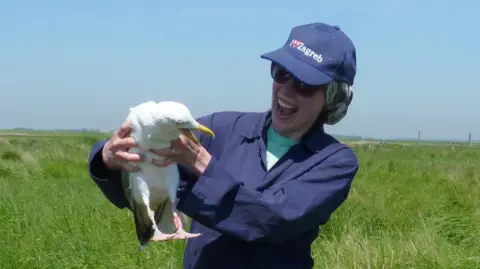
That's according to Dr Viola Ross-Smith from the British Trust for Ornithology, which is based in Thetford, Norfolk, who helped ring herring gulls at Orford Ness, in Suffolk.
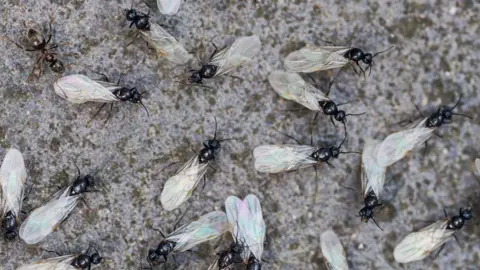
"There is some debate about exactly what's going on, but when you get these flying-ant days, this is great for gulls because they will hoover them up," she said.
"Other people think they're sleepy and drowsy because they're overeating and totally overwhelmed by food, but it could be that the formic acid is acting a bit like alcohol.
"I'm not sure it's actually been properly tested, but I do quite like the formic acid being like alcohol theory. It's fun, isn't it?"
'A lot of woozy gulls'
Suffolk has a large population of seagulls, not least in the likes of coastal towns such as Lowestoft, Felixstowe, Aldeburgh and Southwold.
"Last summer, if the gulls were in the road, they wouldn't move when the cars came and they were just staggering around," added Dr Ross-Smith.
"It kind of adds to that image of gulls being a bit like lager louts and if this carries on, and we get a lot of flying ant days, [there will be] a lot of woozy gulls."
If the number of flying ants gliding through the county does continue to increase, the guzzling gulls will be in their element – but why are there so many ants?
 Getty Images
"It's based on the weather, so a warm and dry, but humid day is absolutely perfect," said Dr Ian Bedford, who is an entomologist and known as East Anglia's Bug Man.
"So, they're up there in the sky, seagulls see this cloud of food, and they just gobble them up and then they've still got lots of these ants on the ground too to feed on."
But the influx in these swarms of flying ants – "one of nature's wonders", according to Dr Bedford - is not just good for seagulls, other species of bird benefit, too.
"Swallows, swifts and house martins need to build up their energy to make their long journeys back to Africa," he added.
"So, they're out feeding on all these flying ants too. The last thing we want to do is start killing them off because they are there as a very important food source."
Do you have a story suggestion for Suffolk? Contact us below.
Follow Suffolk news on BBC Sounds, Facebook, Instagram and X.
