Why batteries in our bins are a burning issue

 SAM READ/BBC
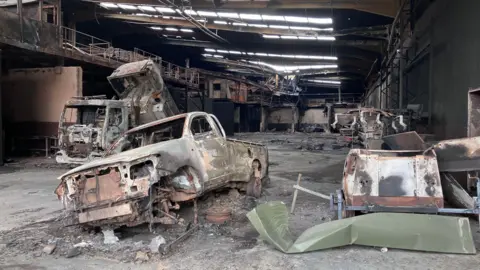
When a waste recycling facility in Buckinghamshire caught fire last March, it was immediately clear there would be an impact.
Six crews fought the fire at Bletchley, Milton Keynes, which ruined a building costing more than £1m, and some recycling collections were temporarily suspended.
But no-one was surprised by the suspected cause of the fire.
Discarded batteries are thought to cause several fires a day at waste facilities or in rubbish trucks across the UK.
This Bletchley facility was only being used to store recycling because another building, near Bedford, usually used by Central Bedfordshire Council, had been destroyed by an earlier suspected battery fire.
So how exactly are these fires starting, what are the potential risks and costs, and what can be done to prevent them?
How common are battery fires?
 FCC ENVIRONMENT
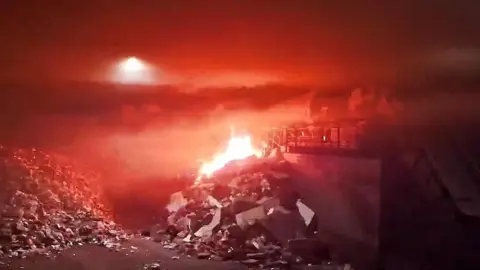
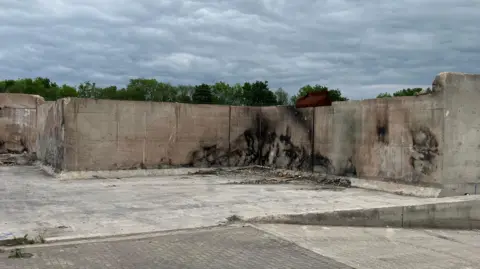
Contractor Veolia, which runs the Elstow Waste Transfer Station in Bedfordshire, where there was a fire last July, said across its sites and vehicles there were 370 fires in 2025 in which a battery was the suspected cause.
The latest industry-wide figures from the Environmental Services Association show there were 1,200 battery-related fires in 2023-24, a 71% rise on the previous year.
The organisation said about six billion batteries were thrown away across the UK in 2024 – about 3,000 every minute.
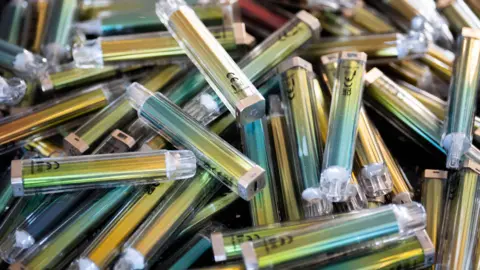
Of those, 1.1bn were inside electrical devices such as toothbrushes, mobile phones and disposable vapes.
Some recent fires, including those in Thetford, Norfolk, or Rushden, Northamptonshire, have been seen from a long distance away and have had a significant impact on local people, lasting days.
How do battery fires start?
 PA Media
Lithium ion battery fires start when the cell becomes damaged, often by crushing or piercing, which can occur when batteries have been disposed of among other rubbish.
"When those internal components become damaged, distorted or broken, we can have chemical reactions inside which will start what we call thermal runaway, which is when we get heat, gases and, ultimately, fire," says Scott Hirons, a station manager with Northamptonshire Fire and Rescue Service.
Battery fires can start not just from individual batteries but often from products with built-in batteries, such as disposable vapes, electric toothbrushes and even musical birthday cards.
Such products can get damaged in the waste collection process when not disposed of separately.
Lithium ion fires can generate their own heat and oxygen, as explained in this BBC video, whereas regular fires have to bring in oxygen.
This means that lithium ion battery fires can spread faster than some other fires.
Larger batteries in e-scooters or even battery farms can also pose fire risks.
What impact can battery fires have?
 SAM READ/BBC
As well as posing a risk to human health or life, these fires have had other impacts.
April's fire at the Thetford site resulted in its operator losing its treatment facility approval, meaning that most electrical items cannot be accepted at Norfolk's recycling centres.
There could be longer-term impacts, too.
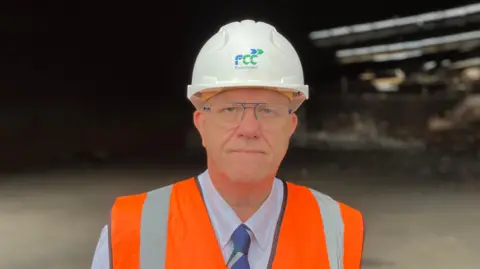
"As an industry, it is becoming harder and harder to even get these sites insured," says Brian Ashby, head of municipal collections for FCC Environment, the contractor that runs the Bletchley site.
"We have to price the service commensurately. Obviously, that then gets passed back down the chain."
Those costs will be passed, in some cases, to councils and taxpayers.
Dean Taylor is a morning supervisor at Veolia Commercial Northampton and discovered a fire last year that was contained with only limited damage.
"We have a sprinkler system in the roof, we have thermo-imaging cameras... Also we have a misting system that comes down in hotter temperatures," he says.
 SAM READ/BBC
What can be done to prevent battery fires?
 SAM READ/BBC
Industry representatives and fire services have consistently requested that batteries are never thrown away with other rubbish.
Instead, they should be disposed of in dedicated bins in supermarkets or at recycling centres.
In some areas, batteries and small electrical products can be collected at the kerbside, but the waste industry would like this dramatically expanded.
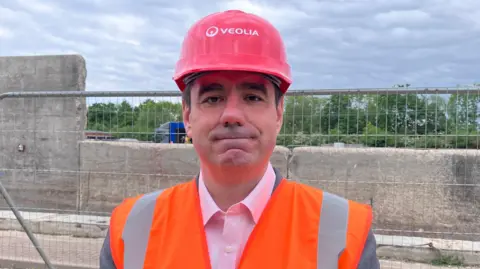
Gavin Anderson from Veolia wants to see a "producer-funded" kerbside collection scheme, paid for by battery or electrical product manufacturers.
He describes this as "the simplest way to overcome this problem".
Central Bedfordshire Council has written to the government asking it to do more to help prevent battery fires.
It said it has yet to receive a response.
A spokesperson for the Department for Environment, Food and Rural Affairs told the BBC: "This government is working hard to help prevent battery-related fires in waste including reviewing UK batteries regulations, improving recycling rates and working to embed expertise from partners across industry to help us do this.
"We urge the public to dispose of batteries safely at an appropriate collection point for recycling or through a specific kerbside battery collection service if provided by the local authority – not in household waste."
Do you have a story suggestion for Beds, Herts or Bucks? Contact us below.
Follow Beds, Herts and Bucks news on BBC Sounds, Facebook, Instagram and X.
