Why is King Charles III known as Lord of Mann?

 PA Media
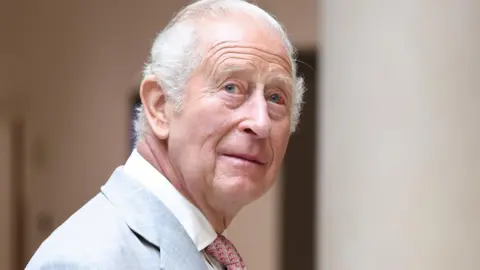
King Charles III's visit to the Isle of Man later marks his first official trip to the island since becoming Lord of Mann.
It is a title unique to the Isle of Man that reflects a constitutional relationship only mirrored in the British Isles by the Channel Islands.
The island is not part of the UK, but a self-governing Crown Dependency, with its own parliament, government and legal system.
The British monarch's title on the island is Lord of Mann, a role that has been passed down between monarchs since 1765.
Where does the title Lord of Mann come from?
Following the end of Norse rule on the Isle of Man, which concluded with the death of King Magnus in 1265, the island's ownership passed between Scotland and England for the next century.
From 1405, the Stanley family from the north-west of England were essentially regarded locally as the Kings of Man, ruling the island on behalf of the English king.
The title of Lord of Mann is first thought to have been adopted by Lord Thomas Stanley in 1507.
Following the death of James Stanley, who did not have a direct male heir, in 1736, the title passed to James Murray, the Duke of Atholl.
However, in 1765, his successor John Murray, along with the Duchess of Atholl Charlotte Murray, sold the feudal rights to the island to the British government.
The Isle of Man Purchase Act 1765 - known as the Act of Revestment – saw King George III become the first monarch to hold the title Lord of Mann.
Unlike the Duchy of Cornwall, which provides an income for the Prince of Wales, the Lordship of Mann is not a private estate.
The King does not own the island or its government, although the Crown retains certain constitutional responsibilities and interests, including some rights over the seabed surrounding the island through long-standing arrangements with the Manx government.
What role does the King have?
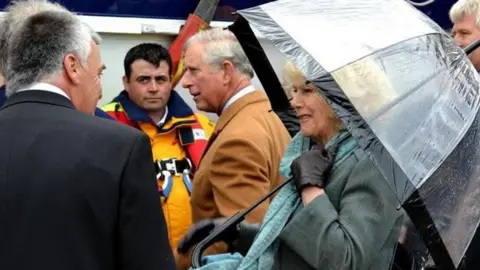
The King is represented on the island by the Lieutenant Governor – a position currently held by Sir John Lorimer - whose role is to promote the Royal family and the happiness of the Manx people.
Although Tynwald can pass its own laws, the proposed legislation must receive Royal Assent before it can come into force.
The British monarch also features on all Manx bank notes, coins and stamps.
During his visit, King Charles will address a special sitting of Tynwald, the Manx parliament, continuing a tradition established by Queen Elizabeth II in 1955.
Founded by Viking settlers more than 1,000 years ago, Tynwald is widely regarded as the world's oldest parliament with an unbroken continuous existence and has long symbolised the island's ability to govern itself while maintaining its relationship with the Crown.
How often do Royal visits happen?
 Manx National Heritage
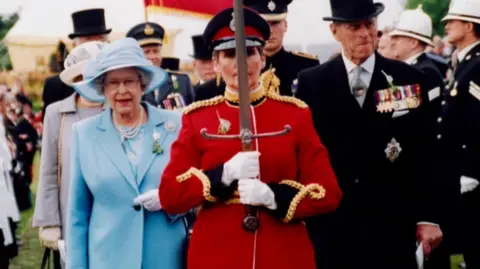
Queen Elizabeth II made five visits to the island during her 70-year reign.
Her first, accompanied by the Duke of Edinburgh, was in 1955 when the Royal couple sailed into Douglas Bay on board the Royal Yacht Britannia.
She then visited in 1972, in 1979 for the Millenium of Tynwald celebrations, in 1989 and finally in 2003.
Queen Camilla was on the island in 2024 to officially confer city status on the Isle of Man's capital, Douglas.
King Charles last visited the island in 2012, while he was Prince of Wales, as part of the Royal family's tour to mark the Queen's Diamond Jubilee.
That followed two previous visits, including one in 2000 when he presided over the open-air Tynwald ceremony in St John's.
The Princess Royal has also made several visits to the island, most recently presiding over the Tynwald ceremony in 2021 and attending a special service of thanksgiving at the refurbished cathedral in Peel three years later.
Read more stories from the Isle of Man on the BBC, watch BBC North West Tonight on BBC iPlayer and follow BBC Isle of Man on Facebook and X.
