Inside the youth hubs tackling the knife crime effort

 BBC
BBCYouth clubs in Bristol are set to receive new government funding after the city was identified as a knife crime hotspot. The investment will expand youth services in areas most affected by violence. But as investment grows, a wider question remains: can youth clubs like this really help prevent violence?
Inside a sports hall in St Pauls, young people pull on boxing gloves and gather around their coach. Nearby, others are writing and recording music, while a cooking session gets under way down the corridor.
For many, this is more than an after-school activity.
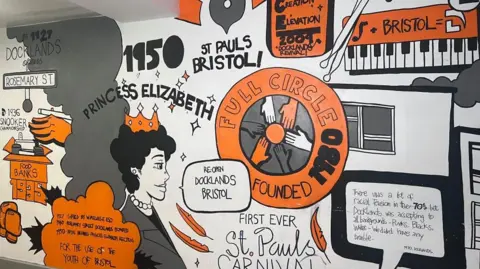
Full Circle Docklands is one of the projects benefiting from the new funding.
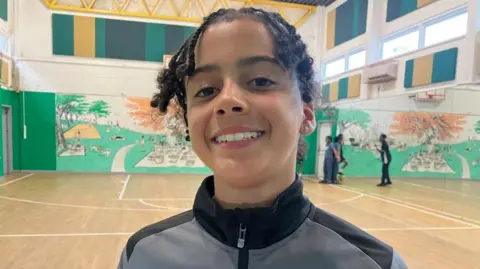
"Due to things happening in society, this is a safe place for me and my friends," says 12-year-old Jyream, who comes to the club twice a week.
"A lot of people my age would be on the streets… here you're just socialising and enjoying yourself."
Why Bristol is getting funding
Bristol is among areas chosen to receive a share of £2m aimed at tackling knife crime.
The Home Office has used so-called "micro-mapping" to pinpoint where violence is most likely to occur, directing funding into targeted support for young people.
At Full Circle Docklands, the investment will expand activities including sport, music and mentoring.
Similar schemes, known as Young Futures Hubs, are planned across parts of east Bristol and surrounding areas.
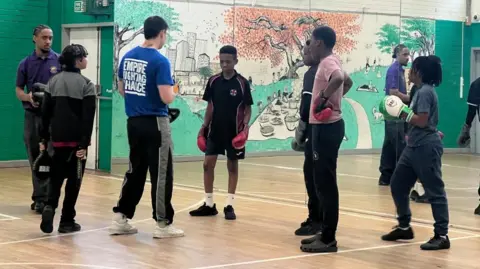
Each day after school, children as young as 10 arrive at the centre.
Some head straight to boxing sessions. Others focus on music production, learning how to create tracks and explore potential careers.
There's also a fajita-making contest, which the children all come together for.
Shiloh is 12 and attends every week: "I don't normally do anything other than music and chill," he said.
"It makes me feel like I'm doing something good, and I also get a lot of experience, because I know there are a lot of careers that can help me for music in future."
Youth workers say that sense of purpose – alongside simply having somewhere safe to go – is key.
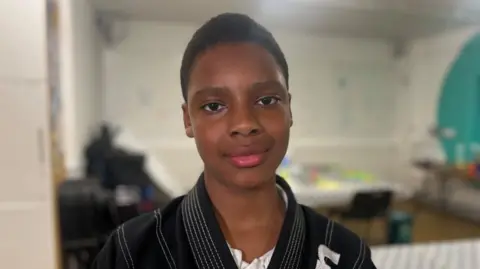
For Full Circle's chief executive Char Lawrence, who attended as the club as a child, the issues facing young people today are not new.
"When this building was first opened in 1927, it was to target young boys engaging in violence in the city, and 100 years later we still have the same problem.
She believes youth services are part of the solution, but not the whole answer.
"I feel like violence is a societal issue and all we can do as the youth sector is keep our doors open, create opportunities and pathways to something more, and raise the aspirations of our young people."
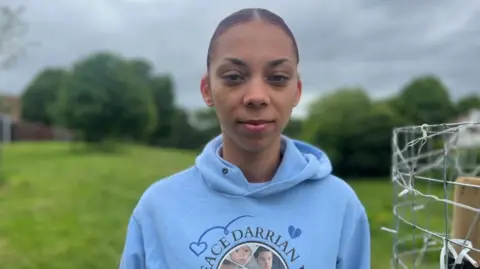
For families affected by knife crime, prevention is urgent.
Shanine Wright's brother, Darrian Williams, was fatally stabbed in a Bristol park in 2024. Two teenagers were later jailed for his murder.
She now works with the Home Office to share her experiences.
"The funding – it can't be a temporary fix - it has to be something that's permanent in order to keep the statistics down, as we say.
"If the statistics are looking good, it's not 'oh, okay we've got to this level, let's take it away' - it has to stay for the long term."
Wright says she hopes the funding will enable services to work better together in future.
"Unfortunately we have all these pockets of people doing stuff; and doing amazing things, but no one is linking together to ensure that the right things are being done.
"I hope now we've got the young future hubs in place... it will do what we are missing, and that's the collaboration in Bristol."
Does it work?
Police say targeted interventions can make a difference.
Knife crime in Bristol fell by 20% between 2024 and 2025, according to Avon and Somerset Police.
They will use the additional hotspot mapping technology to increase patrols and contribute to the wider efforts to reduce knife crime.
Insp Tom Tooth has been involved in knife crime trials going through court.
He told the BBC: "In the areas where we've been able to put on hotspot patrols, we've seen decreases in the volume and severity of violent crime.
"Any additional funding that we get from the Government that we can put into initiatives like this will be welcomed, and hopefully go towards that aim, which we share, of reducing knife crime and the tragic consequences that come from it."
Still, experts and local leaders stress that enforcement alone is not enough.
'Young people don't create this'
Bristol City Council says tackling knife crime requires looking beyond young people themselves.
"Young people don't create this," says councillor Christine Townsend, executive member for children.
"The root of that has got to be the adults themselves that are creating an atmosphere that young people then adopt and take on.
"They grow up in that atmosphere, and so when we talk to the adults, they do recognise that it's a space they need to step into."She argues that communities, families and services all have a role to play in reducing violence.
What happens next?
The new funding from the Department for Culture, Media and Sport and the measures to tackle knife crime will continue until 2029.
For those attending sessions at Full Circle Docklands, the impact is already clear: a place to go, people to trust and opportunities to explore.
Whether that is enough to sustain long-term reductions in knife crime remains uncertain.
But for Jyream and others, the value is immediate.
"It's just a good place to be," he says.
Follow BBC Bristol on Facebook, X and Instagram. Send your story ideas to us on email or via WhatsApp on 0800 313 4630.
