University to lead Pakistan waste-to-energy scheme

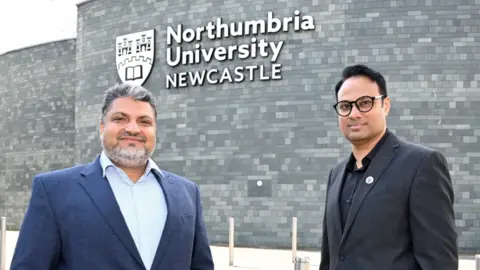 Northumbria University
Academics at a UK university have secured funding to build Pakistan's first full-scale plant that converts agricultural waste into clean energy.
Northumbria University's School of Engineering, Physics and Mathematics is leading the project called, Safer Plus, which turns cotton stalks and sugarcane waste into biofuel.
Millions of tonnes of the waste products are burnt every year in the Punjab province, contributing to air pollution and Pakistan's seasonal smog.
The project, awarded nearly £1.25m by the UK government, will also offer women in Punjab a new source of income through collection and supply of the agricultural waste.
The base materials will be converted into bio-coal pellets through a heating process known as torrefaction.
Potentially the pellets can replace imported coal in brick kilns and textile mill boilers at 40-50% lower cost.
Dr Jibran Khaliq, one of the academics leading the project, said: "Pakistan spends over $2.5bn every year importing coal to power its industries, while millions of tonnes of crop residue are burned in fields because there is no market for it."
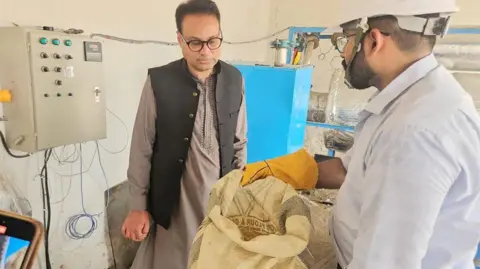 Northumbria University
Central to the project is a women-led biomass co-operative that will supply the waste product.
According to the university, women in rural South Punjab spend three to six hours a day collecting fuelwood and often work unpaid on family farms.
Through the co-operative, more than 120 households across local to the plant will receive a formal income for material that farmers currently pay to dispose of.
At least 60% of training places on the project are reserved for women and payments will be made directly into their own mobile wallets to ensure they have independent control over their earnings.
Three Pakistani textile manufacturers have signed letters of commitment to trial the bio-coal as boiler fuel.
"What makes this project different is that we are not proposing another laboratory study," Khaliq said.
"We have spent six years developing the knowledge and now we are building a live commercial facility with three textile mills already committed to using the fuel.
"This is the step that turns research findings into an investable, replicable business that Pakistan can own and scale."
