Surge in octopus numbers leads to 'record £500k catch'

 Kirsty Andrews
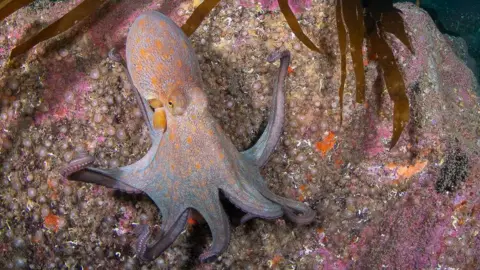
Marine researchers have said the mass numbers of octopus in waters around Devon and Cornwall could be "here to stay".
The Marine Biological Association's (MBA) latest study of the ongoing octopus bloom, the largest surge in 75 years, showed evidence of the invasive species' successful breeding in UK waters.
Having found octopus while emptying their pots of lobsters and crabs, fishermen in both counties are now landing record amounts of the fish at strong prices with one day's catch earning a record £500,000 in Brixham.
In the past, octopus blooms have come to an end, and fishermen said they were concerned they would lose their new catch, but the MBA's Dr Bryce Stewart said this appeared to be "a different bloom... it seems like they're here to stay".
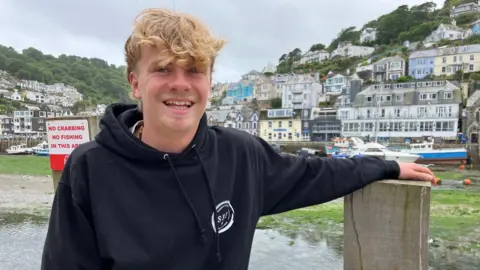
Ian Perkes, partner of Ian Perkes Fish Merchants, is based in Brixham, Devon, said: "Look at the numbers of octopus being landed, 100 tonnes in a week, possibly 200 tonnes by Friday.
"These fish eat 6% to 8% of their bodyweight per day, so we're talking about an estimate of 10,000kg [22,000lb] of shellfish per day are being eaten by these octopus.
"The experts say, at present, if the octopus were to disappear tomorrow, we'd be looking at eight to 10 years to return to the normal numbers."
Will Jaycock, a third generation lobster fisherman and a Looe Harbour Commissioner said the influx of octopus had "turned the shellfish industry on its head".
He said: "This year the shellfish industry has been all but wiped out. We are down by 90% to 100% some days and, on an absolute best day, you're still 70% to 75% down."
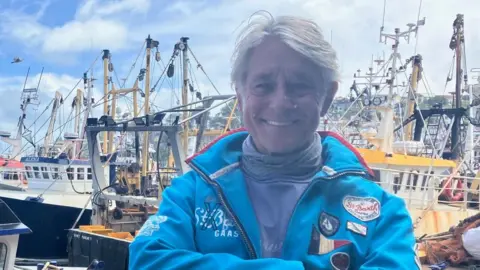
So now Jaycock is one of many shellfishers who have changed their catch to octopus.
He said: "They are absolutely right here. They're thick on the seabed and, financially, it's brilliant at the moment, there's a huge export market for octopus.
"We're able to catch them in the gear that we've been working all along, or very similar gear - it's not a huge changeover or outlay to catch them.
"It's fun, it's exciting. Looe is the busiest it's been since the fish market closed [in 2019]."
"Everybody's crabbing [throwing pots] now, which is carnage, but it's good fun. It's got a friendly rivalry and everybody's in a good mood," he added.
Two weeks ago, Brixham Fish Market sold a record-breaking amount of octopus, the most ever on a single day - 103 tonnes, with a value of more than £500,000.
Perkes said: "It's devastating for the thoroughbred lobster fishermen but on the other side of the coin, they're earning three or four times more money now with the octopus."
'Whole circle of life'
Dr Bryce Stewart, of the marine research charity Marine Biological Association, said, while history showed octopus blooms to have come and gone, the current one appeared to be different.
He said: "If we got a really cold winter, it would probably really dent their populations. But that hasn't happened now for at least 15 years, we haven't had the sort of cold winters that would would kill off the octopus.
"The octopus definitely are now breeding in UK waters, which is quite new, and people are starting to see the juveniles, as well just little tiny ones.
"So, the whole circle of life is playing out now and that's why I think this is a different bloom from what's happened in the past.
"It seems like they're probably here to stay now.
"We must plan for a future where these changes may become more frequent."
Meanwhile, the Cornwall Inshore Fisheries and Conservation Authority (IFCA) is proposing an emergency by-law at its quarterly meeting on 12 June to cut back on the number of boats fishing octopus.
Organisers said the aim was for it to come into force on 1 July for one year as there was a fear that, because there were now so many boats around octopus blooms, they could threaten populations.
The by-law aimed to prohibit more than 10 multihull vessels and more than 12 monohull vessels from using pots to fish for octopus within the IFCA district, they added.
