Teacher's blood clot death avoidable - coroner

 BBC/Harry Low
A woman who died a day after being discharged from hospital would have survived if a blood clot had been diagnosed and treated, a coroner has said.
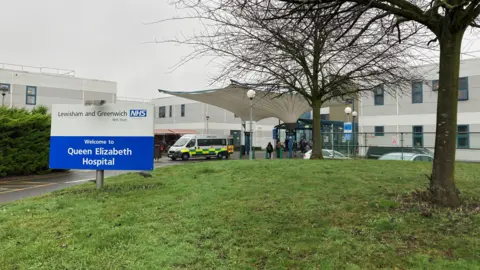
Dena Collins, a 28-year-old primary school teacher, died at Queen Elizabeth Hospital in Woolwich on 12 January 2023 from a heart attack caused by the clot.
An inquest into the death of Collins, from Eltham in south-east London, concluded on Friday at Inner South London Coroner's Court, on what would have been her 32nd birthday.
The coroner said there had been "errors of clinical judgment" in Collins' primary and secondary care in the lead-up to her death, but added that this did not amount to neglect.
Assistant coroner Linda Jacobs said a post-mortem examination found Collins had died from deep vein thrombosis (DVT), a blood clot in a large vein, and a pulmonary embolism, a blood clot that occurs in the lungs.
She said that if this had been identified and acted upon, and a treatment dose administered, "the fatal cardiac arrest would've been avoided".
'Trust your gut'
Collins visited her GP three days before her death complaining of leg pain. She was diagnosed with muscular pain and reassured.
On 11 January, the nursery and reception teacher attended Queen Elizabeth Hospital using a crutch after four days of leg pain, fever and diarrhoea.
Although the possibility of a blood clot was noted at triage and a D-dimer test, used to identify clots, returned a positive result, she was diagnosed with a possible ruptured cyst and told to return the following day for a scan.
She collapsed at home the next morning. Her father performed CPR before she was taken to hospital by ambulance.
She died a few hours later.
Speaking after the hearing, Collins' sister Clare said: "If there is one thing I hope people take from her story it is this: trust your body, trust your gut.
"If something feels wrong, keep asking questions, seek a second opinion and advocate for yourself loudly.
"We hope the findings of this inquest lead to accountability and meaningful change so that no other family has to experience all that we have endured."
A Lewisham and Greenwich NHS Trust spokesperson: "We recognise how important this inquest was to the Collins family and we will now take steps to understand it in full so that we can consider how to take forward the relevant recommendations made by the coroner.
"While nothing can change the sad outcome for Dena and her family, the learnings coming out of her death will help drive changes for future patients."
Listen to the best of BBC Radio London on Sounds and follow BBC London on Facebook, X and Instagram. Send your story ideas to hello.bbclondon@bbc.co.uk
