What's it like to be black and in the police?

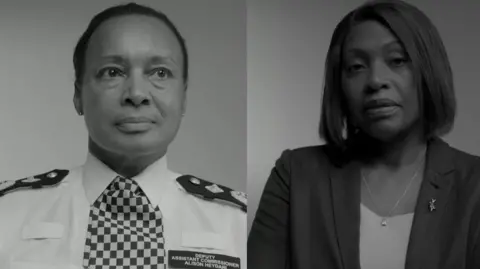 'Change Takes All' - Cocoa Media TV
For decades the relationship between the police and the black community has been fraught with tension and mistrust, following high profile incidents of racism and brutality.
So why would any black person want to work in the police?
It is a question that is explored in a new series, where children are given the chance to interview current and former staff from the Metropolitan Police.
The films, called Change Takes All, were created by Serlina Boyd, who launched the UK's first black children's magazines - Cocoa Girl and Cocoa Boy - and now runs a film school.
"I wanted to start a series of documentaries that tell the stories of incredible black people who never really get to tell their stories," said Boyd.
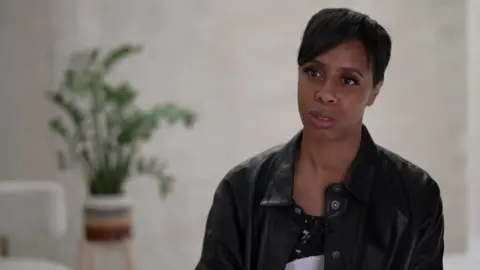
Boyd said it was important for her to get children to do the interviews.
"Children come up with amazing ideas and it's about housing those ideas when they're young and investing in those ideas," she said.
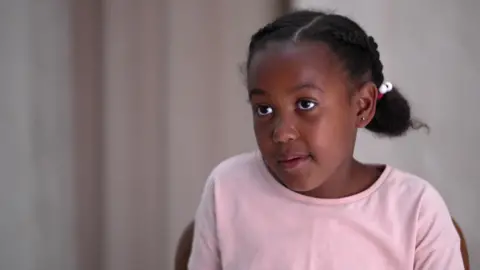
Seven-year-old Eden was one of the young interviewers and said the experience helped her better understand the police and their work.
"I thought that all they try to do is capture people and arrest people. But they're trying to help people, like if someone gets lost without their parents they go and find them," she said.
The Met's Deputy Assistant Commissioner, Dr Alison Heydari, the UK's highest ranking black female officer, shared her story alongside former Met Inspector Jennifer Donaldson.
Donaldson spent 32 years working in the force, before retiring in 2015.
She admitted being interviewed by seven- to 11-year-olds was nerve wracking.
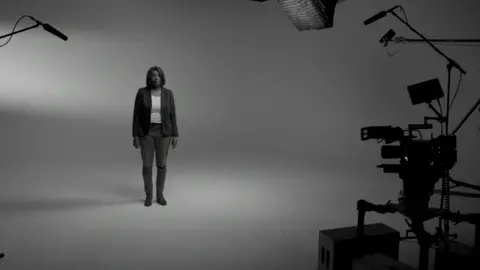 'Change Takes All' - Cocoa Media TV
"I didn't know what the questions were going to be and I had to really think about my responses," said Donaldson.
"I wanted to make sure that I came across so that they understood and that it was appropriate."
Change Takes All touches on issues including stop and search, trust and the struggles faced by black women in the police.
Donaldson, who joined the Met in 1983, said: "I know it sounds cliché, but I really wanted to make a difference.
"I did get abused. But I really thought it was important for me to speak to those young men when they called me names. I can't think of a time when I wasn't able to turn them around."
Boyd plans to expand the series, with another set of films highlighting the stories of black people working in the NHS and the judicial system.
Listen to the best of BBC Radio London on Sounds and follow BBC London on Facebook, X and Instagram. Send your story ideas to hello.bbclondon@bbc.co.uk
