Call to allow travelling farm volunteers on island

 BBC
BBCGuernsey farmers say a change to the island's restrictions on voluntary workers could help them remain viable and improve the sector's resilience.
Wwoof (World Wide Opportunities on Organic Farms) is a programme where people register to volunteer on organic farms as so-called "wwoofers", usually for several weeks, and are provided food and board by hosts.
Currently, international visitors to Guernsey must secure a residential permit before they can volunteer on the island, restricting wwoofers from travelling to the bailiwick.
The States' Population Management said, like au-pairs, the role could be considered as an out-of-policy application, but was not included by default.
The Wwoof program was started in the early 1970s by a UK group, aiming to "facilitate education and exchange" while supporting small organic farms and sustainable food systems.
It currently operates in more than 130 countries, currently using an online platform through which hosts and volunteers register their interest and connect with each other across countries.
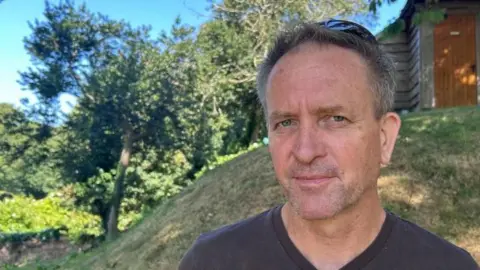
Director of Rocquettes Cider James Meller attempted to introduce the Wwoof program to his own farm around the time of the Covid-19 pandemic.
However, he said he was quickly advised by authorities that they were not permitted to volunteer on the farm due to employment and residential restrictions.
Meller said he would like to see a provision put in place allowing wwoofers to come to the island as "for me, it's a no-brainer".
He said: "It's something that happens all over the world and, if there could be provision in place to allow it to happen here, then we would."
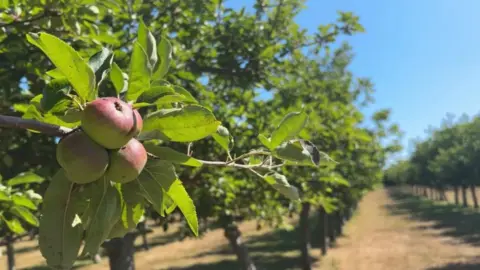
Meller added that wwoofers could help with the seasonal production needs, such as the apple harvest, when local farms needed "boots on the ground".
He said: "It would open up the growing experience and the potential, the sharing of ideas - which I think is really important.
"It's not easy to find people, so each year is a challenge. If we could have wwoofers coming to the farm, that would be one way of solving that problem."
Legal 'grey area'
Wwoofers, and people using schemes like it, fall into a a legislative grey area.
Such roles are not included in current employment policy due to their classification as voluntary. They are not eligible for an employment permit through their host.
Therefore, people who wish to come to Guernsey on such a programme, and who are not subject to immigration control (UK, Irish or settled EU status), must apply for a residential permit and live in an open market property (Part A or D).
However, as the wwoofing program relies on the host's farm as accommodation, which is generally local market, many farms on the island are ineligible.
Like wwoofers, au pairs fall into a similar grey area.
While still not considered eligible under the employment permit system, au pairs can apply for a designated "out-of-policy application", though they are considered on a case-by-case basis.
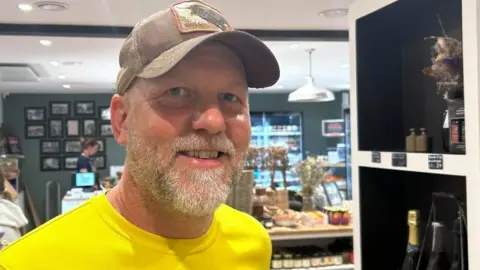
Jock Petit, co-founder of The Soil Farm and The Farm Shop in Guernsey, said the States needed to think outside of current legislation in creating an easier pathway to wwoofing.
He said: "I think, rather than seeing it as an employment situation where we, obviously, for all the right reasons, have the restrictions we have on licences and things, I think it's much more a casual holiday, helping out.
"[We] ought to be able to have some sort of standalone ledger that enables us to tap into the Wwoof system, which is [already] global, international, established."
Follow BBC Guernsey on X and Facebook and Instagram. Send your story ideas to channel.islands@bbc.co.uk.
