Gloucestershire records first deadly virus case

 Getty Images
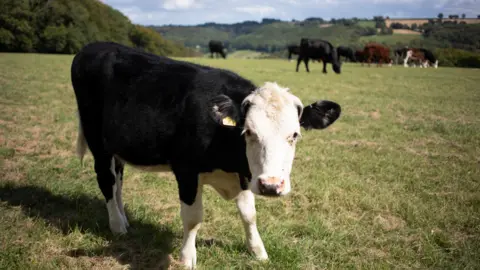
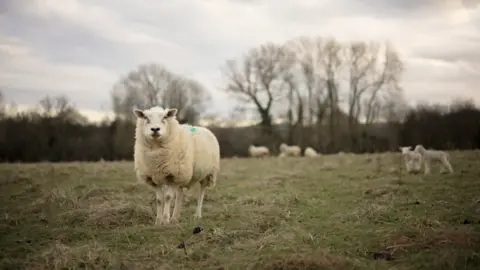
Gloucestershire has recorded its first case of bluetongue - a virus which can be deadly in livestock.
Cases of the insect-borne viral disease, which affects sheep and cattle as well as other animals, have risen to 630 across England, Wales and Scotland since the outbreak began in July.
Gloucestershire recorded its first case on 23 August, according to the latest Department of Environment, Food and Rural Affairs data.
The virus has spread across counties quickly because of the hot weather as high temperatures allow it to develop more quickly in midges.
It is not known exactly where the first case in Gloucestershire was recorded.
Farmers have previously told BBC News that the virus has killed their livestock and had a huge personal impact on their lives.
Bluetongue does not affect humans and anyone with livestock is being urged to place orders for vaccines to treat animals ahead of the peak of the virus.
The government said signs and symptoms in animals include fever, lameness, facial swelling, nasal discharge and mouth ulcers.
 Getty Images
A Defra spokesperson said: "This is an incredibly difficult time for animal keepers and vets who are on the frontline of this disease and we are monitoring the situation closely.
"Vaccination is the best tool available to prevent bluetongue.
"We are working with vaccine manufacturers to increase vaccine supplies so that farmers who have not already done so can vaccinate their livestock."
Elsewhere, two cases have been reported in Wiltshire and 84 in Somerset.
The government said there were currently 2,459 potential cases of bluetongue under investigation across the country.
Follow BBC Gloucestershire on Facebook, X and Instagram. Send your story ideas to us on email or via WhatsApp on 0800 313 4630.
