Scientists invent 'world's greenest party balloon'

 BBC
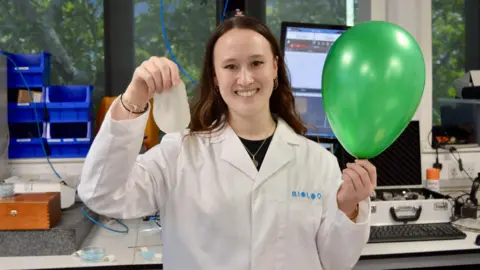
BBCScientists in London have invented what they claim is the world's first fully biodegradable party balloon.
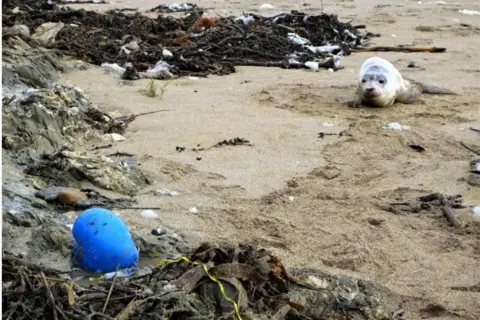
Researchers at Imperial College London say standard balloons can take years to break down and can release harmful chemicals.
But their new balloon biodegrades within nine months.
The research was part-funded by a party planner, who wanted to reduce the impact of balloon litter on marine wildlife.
 Charlotte Melia
The new balloon, called Bioloon, is no more expensive than a standard balloon and is easier to blow up, according to the scientists.
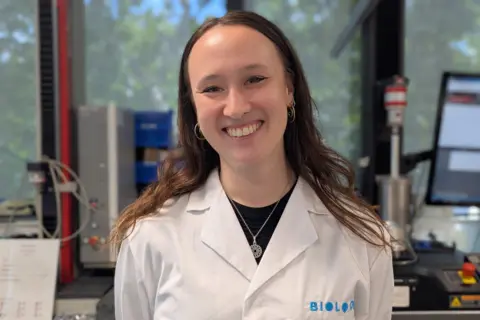
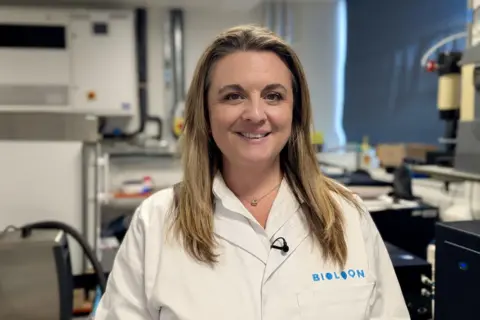
"Regular balloons are treated with a process to make them strong and stretchy," said 29-year-old co-inventor Juliana Cumming, a PhD researcher at Imperial. "But that process also stops them fully degrading and causes toxic chemicals to leach into the environment."
 Rob Wells
"For our balloon, however, we use a process that joins the biodegradable materials together without any additives, so it's able to break down fully."
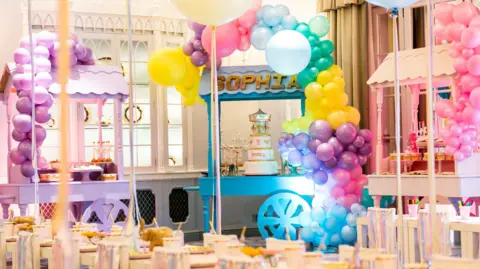
High-end party planner Charlotte Melia said "balloon arches" had grown in popularity, with many people inspired by parties held by influencers and celebrities.
 Charlotte Melia
Melia said she worried about how much it was harming the environment.
"We'd just hosted a large event and I was surrounded by thousands of popped balloons," she said.
"That was the straw that broke the camel's back. I wanted to take action."
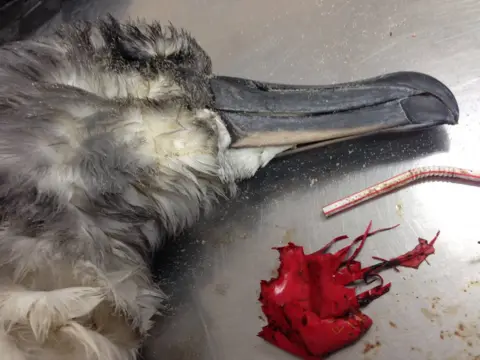
Balloon fragments are the marine debris most likely to kill seabirds that eat it, according to a recent study.
It found that balloons were 32 times more likely to result in death than when birds ingest hard plastic.
Campaigners have called for balloon releases to be banned because of the risk to wildlife when the material falls back down.
 Lauren Roman
Even balloons that are labelled as 100% biodegradable often never fully break down, unlike Bioloon, Melia claimed.
Standard balloons, made of natural rubber, undergo sulphur vulcanization, with accelerators, activators and other substances added, said the scientists at Imperial.
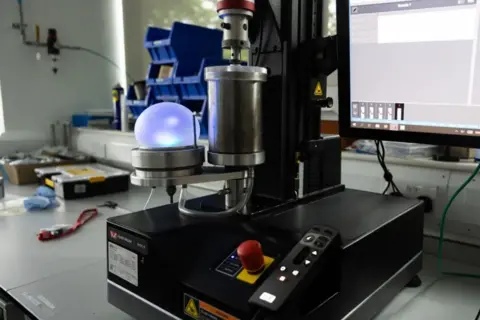
They said these often contained heavy metal salts or nitrosamines that can leach into the environment once the balloon degrades.
Bioloon starts with the same rubber material but uses a method that links the polymer chains together without harmful additives.
The team said the product would be available commercially within two years.
Melia hopes the material's use could be expanded beyond balloons.
"We hope to start working on gloves, surgical and non-surgical latex, medicinal apparatus, clothing, and even condoms in the future."
Listen to the best of BBC Radio London on Sounds and follow BBC London on Facebook, X and Instagram. Send your story ideas to hello.bbclondon@bbc.co.uk
