Work starts to protect former tip site from erosion

 BBC
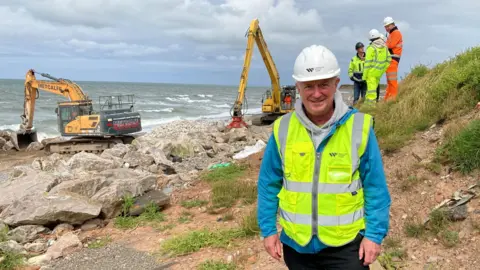
BBCWork is under way to protect a coastal former landfill site from the effects of erosion.
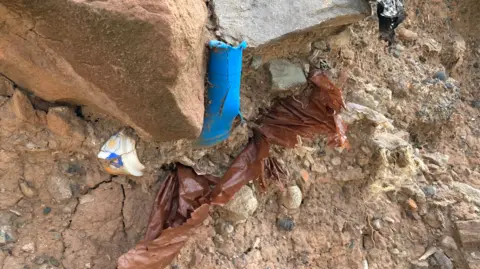
After operating for nearly 30 years, the tip beyond Biggar Bank, at South Walney, Cumbria, closed in the 1980s, but recent months have seen buried items exposed as the soil and rock washes away.
Westmorland and Furness Council has begun reshaping the edge of the site with the aim of creating a gentler slope to reduce slippage. It will then be topped with a liner, along with a 250m (820ft) stretch of rock armour designed to provide protection against severe flooding.
The scheme is expected to be completed by mid-August.
Councillor John Murray, cabinet member for climate, biodiversity and regulatory services, said the previous sea defences "haven't proved adequate to protect this site".
"From when this started to get exposed just over a year ago, we've had people working continuously clearing up litter and strengethening things as best they could, but this project will now provide a proper answer."
Modelling released earlier this year by Lancaster University warned Walney Island could see a potential sea level rise of 20cm (7.8in) by 2050 and 60cm (23.5in) by 2100 - figures that would further add to the problems faced along the coastline.
Murray, however, said the reinforcement work at the site had been "designed to stand up to extreme circumstances".
The nearby South Walney Coastal Path - part of the King Charles III England Coast Path - will stay open throughout the work.
