'Student loan repayments are holding back my career'

 BBC
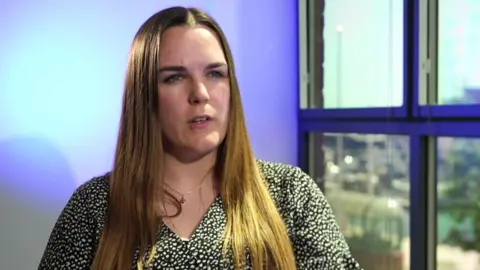
BBCA solicitor has said her student loan debt is limiting her career progression.
Charlene Merry, 31, is one of more than 52,000 people who responded to a recent Treasury Committee inquiry inviting people to share their views on student finance.
Merry, from Hull, said she wanted to apply for a promotion in Leeds with a better salary, but had calculated she would be left with less disposable income due to a combination of increased loan repayments, higher tax payments and travel costs.
The government said it had raised the repayment threshold recently and capped interest rates this year.
Merry told the BBC Politics North programme that the remaining balance of loans she took out for her undergraduate and postgraduate degrees, which she completed in 2018, now stands at £70,000. She is paying back £400 a month.
She said: "I wanted to progress my career to gain more experience in a big city centre firm, but the increase in my salary would mean I'd have to pay more towards my student loan."
A parliamentary inquiry is currently assessing if repayment terms for student loans in England are "reasonable".
Graduates with Plan 2 loans pay back 9% of everything they earn over the repayment threshold, which currently stands at an annual income of £28,470.
This threshold will remain frozen at £29,385 from 2027 to 2030, rather than rising with inflation.
In April, after the inquiry was launched, the government said interest on some student loans in England will be capped at 6% in the next academic year to protect graduates from the risk of rising inflation due to the Iran war.
Campaigners have welcomed this but called for wider reforms to the system.
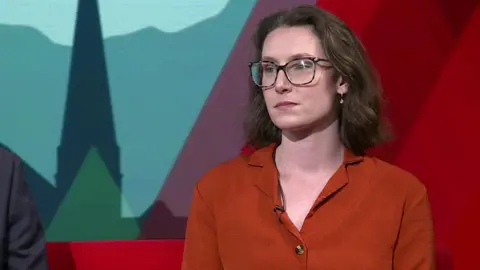
Beth Smith, an events and hospitality manager in Bradford, also appeared on the programme. Smith said she was the first person in her family to go to university and said nobody sat down with her and discussed the costs before she took out her student loan.
"I didn't know anything about interest or repayments," she said.
Smith said her debt is currently around £80,000.
"The biggest thing is how it impacts career progression - If I was to go for those higher earning jobs, I've got to pay more."
Merry said she was told at the time she took out the loan that her monthly repayments would be similar to that of a mobile phone contract.
The solicitor said that in retrospect, if she had fully understood the terms of the contract and repayments, she probably wouldn't have taken out the loans.
A government spokesperson said they recognised some graduates had concerns about the cost of student loan repayments.
"We inherited the current system and have taken steps to make it fairer – including raising the repayment threshold for the first time since 2021 and capping maximum interest rates this year to protect graduates from rising costs.
"We have also reintroduced targeted maintenance grants to expand opportunities for people from all backgrounds to go to university or college."
The spokesperson said the student finance system protected lower-earning graduates, with repayments linked to income and any outstanding balances and interest written off at the end of repayment terms.
Correction 07 July: A previous version of this article included the quote "leaving me with less disposable income than I have now. And has been updated to add more context and to state that in Charlene Merry's case, a rise in salary and subsequent rise in Plan 2 loan repayments would leave her with less disposable income only when other factors, such as travel costs and higher tax payments, are taken into account.
Listen to highlights fromHull and East Yorkshire on BBC Sounds, watch the latest episode of Look North.
Download the BBC News app from the App Storefor iPhone and iPad orGoogle Play for Android devices
