Coolcations: 'They used to joke about our weather - now they can't wait for the rain'

 BBC
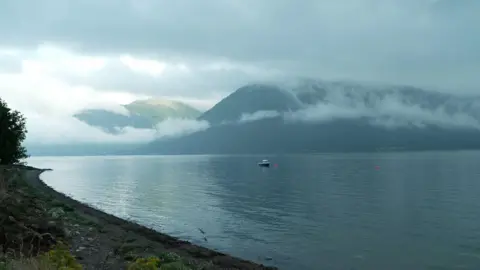
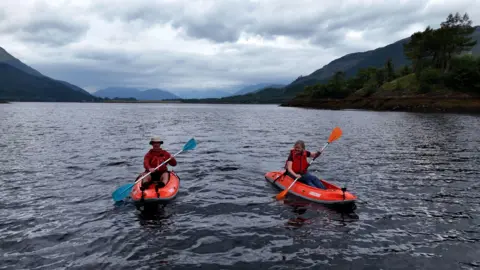
BBCIt's a beautiful day on a sea loch near Glencoe with light winds and calm waters.
The seals are out but they are not basking in the sunshine and neither are the holidaymakers who've come to kayak on Loch Leven's placid surface.
While much of Europe and large parts of England and Wales have sweltered in record-breaking heat this summer, the weather here is overcast and relatively cool.
But for an increasing number of tourists that is part of the attraction - they are heading to Scotland not to sunbathe but to seek respite from the heat on what have become known as "coolcations".
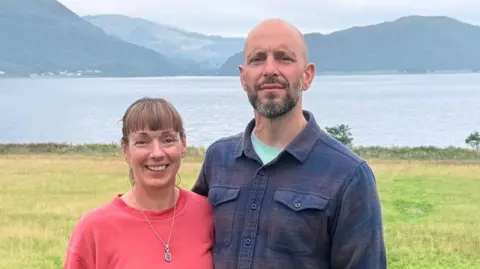
Esther and Nick Cochrane who run a self-catering holiday cottage business called Beside the Loch have noticed the uptick in visitors who say they have come here for lower more bearable temperatures.
At first they arrived from the continent – France, Italy and Spain – but now many are heading north on coolcations from within the UK as well.
This year, says Nick, "coolcationers" have also been coming up from the south of England. "That has been a real surprise," he adds.
Seizing the opportunity to turn Scotland's notoriously unreliable summer weather into a positive, the couple have begun marketing their cottages as coolcation destinations.
Esther tells me they recently had guests arrive who asked "is it going to rain at any point because this is what we came up for."
"The first thing they did when they arrived at the train station was to stand in the rain," she says.
"They hadn't experienced it for two or three months in Southern England, and they loved it."
"At one point we were apologising for the Scottish weather but people now want it. It's no longer a joke. It's quite a serious part of their holidays," she adds.
"They say you don't come to Scotland for the weather. Some do now."
'We can sleep under a duvet here'
Caroline and Christian Grant and their children, who live in the south of England, have been staying in one of their cabins for their holiday.
Christian says: "When it get to plus thirty you tend to just sitting around really can't do too much here you can go back to normality, doing things."
"We get to sleep under a duvet here, it is quite nice," Caroline adds.
The move towards coolcations appears to be more than just a fad.
Chris Greenwood, from the Moffat Centre for Travel and Tourism, says early data for this year is showing that flight searches to Scotland have been increasing, as well as international credit card spend.
Searches for cooler holiday destinations had increased by 74% from the first four months of 2025, according to travel agency trip.com "as travellers seek to escape the heat, shifting their attention to places that offer more comfortable climates and less overcrowding experiences."
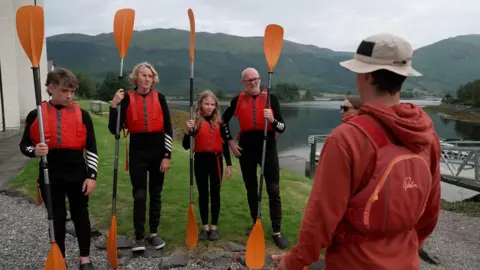
Rob Kingsland, from the outdoor adventure company Rugged Coast in Glencoe, believes Scotland's cooler, more comfortable climate is making it increasingly attractive to holidaymakers wanting to spend their time outdoors.
"It's a cracking day to be out. We've got very little wind, some nice temperatures. It's perfect," he says while we are kayaking alongside the islands in Loch Leven.
"We've found the last few years we've getting more and more Europeans and North Americans saying they have come to the West coast of Scotland exactly for the milder climate, with a little bit of rain, not too hot.
"They can do activities, they can put on a sweatshirt, not have the air conditioning on," he says.
Tourism is a big part of the Scottish economy.
According to VisitScotland the sector accounts for roughly 5% of Scotland's overall GPD, and supports around a quarter of million jobs.
Billions are spent by the millions who come and stay for a holiday.
But in some parts of the country there are concerns about overtourism.
Edinburgh recently introduced a 5% visitor levy on overnight accommodation to offset and manage the impacts that the large number of tourists coming to the capital is having.
Chris Greenwood however believes there are still opportunities for the sector to grow.
He said: "We know that popular places like Skye have a lot of visitors.
"But there's Moray, there's Aberdeenshire, there's also the Scottish Borders, Dumfries and Galloway, Angus.
"These areas that have got quality accommodation, activities, heritage. There are lots of areas and communities that could benefit from tourism spend."
 RSPB Scotland
Scotland is not immune to global warming.
Met Office data shows clear long-term temperature rises here and there has been plenty of warm, dry weather and sunshine in Scotland this summer.
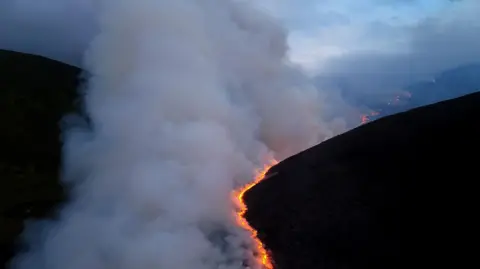
There was also a large wildfire in the Cairngorms that led to dozens of people having to temporarily evacuate their homes.
But the country avoided the worst of the sustained extreme heat that has led to mega wildfire, droughts, and destroyed homes elsewhere.
Tudor Davies lives in London and is holidaying in Glencoe with his family.
He says the temperatures in London have been getting to the level where they think twice about going outside whereas "in Scotland you don't get that kind of unbearable heat."
"It's been great. The weather has been kind," he says.
Scotland's lochs and mountains have always appealed to visitors.
The milder Scottish climate may now be part of the attraction too.
