Parents struggling to find schools that meet SEND children's needs

 Cathy Killick/BBC
Parents across Yorkshire are starting to get ready for the new academic year, choosing uniforms and picking out pencil cases.
However, for some families the challenge is more difficult; finding a school that can safely meet their disabled child's needs.
Demand for Education, Health and Care Plans (EHCPs), which are designed to support children and young people with special educational needs and disabilities (SEND), has more than doubled across Yorkshire, rising from 5,944 requests in 2019 to 14,041 in 2025, according to the Department for Education.
EHCPs set out the extra support a child requires in education, including specialist provision where needed.
However, some parents say growing demand means the solutions offered to them are not appropriate.
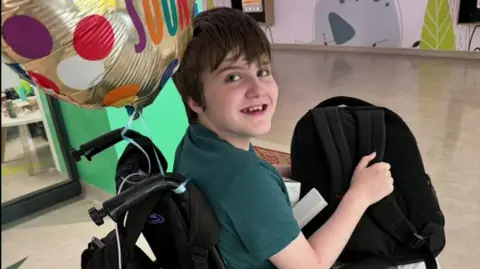
Isla is about to start secondary school, but even though she has had her EHCP since she was three years old, her parents say they have been unable to secure a place they believe can meet her needs.
 Provided
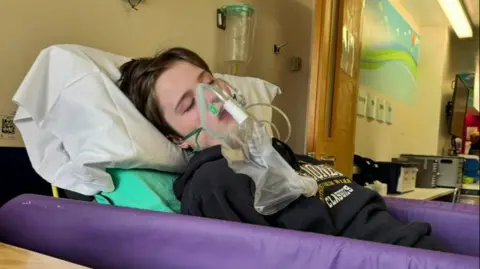
The 11-year-old, from Otley, has several complex needs, including autism, ADHD and a neurological condition where she collapses and becomes unresponsive and loses use of her legs.
She is also tube-fed through her intestines 16 hours a day, uses a drainage bag for her stomach and needs to have somebody monitoring her glucose levels.
Her mother, Shona Mellon, tried to secure specialist school provision for Isla to move into, but was unsuccessful.
The 1:1 support she experienced in primary school and small classroom environment would end if she takes up the place offered to her at Otley Prince Henry's Grammar School, a mainstream comprehensive with a large site and thousands of pupils..
 Provided
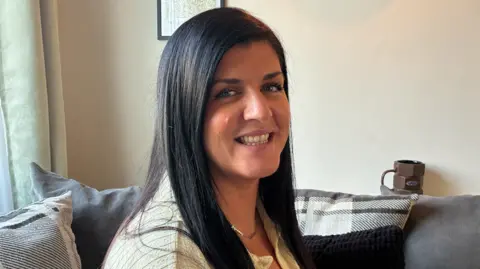
Speaking about Leeds City Council's decision, Shona says: "Mainstreams aren't built for all children, and no matter how many reasonable adjustments you put in place, that child is put at risk."
In a letter to Shona seen by the BBC, a representative from the school says that they have "significant concern that the final plan was issued", adding that the placement could be "dangerous due to her medical needs."
The letter also states that the school could not provide the 1:1 care that Isla needs and lacks equipment like changing tables and hoists that would be required for her safety.
Shona has approached three specialist providers, but all of them have refused Isla a place.
The government announced plans to reform the SEND system earlier this year, with a focus on making mainstream schools like Prince Henry's more inclusive for children with additional needs.
However, Shona has decided not to send Isla to the school and is challenging the allocation through a tribunal.
With a hearing not scheduled until July next year, her family fears Isla could miss almost a full academic year before the decision is reviewed.
"The system is broken. They don't see her as a child. She's just another caseload.
"At the centre of it all is a little girl that's being failed."
There are other frustrations families across Yorkshire say they are facing with the EHCP process.
The SEND Code of Practice used by local councils states that Education, Health and Care (EHC) assessments must be completed within 20 weeks.
However, figures show that for Leeds City Council only 7% of assessments were completed in this time, the lowest in the region, followed by Sheffield at 27% and Kirklees at 58%.
Jamie, from Kirklees, has already waited 58 weeks for his plan to come through.
The 16-year-old was meant to be transitioning to college but has now missed more than a year of education.
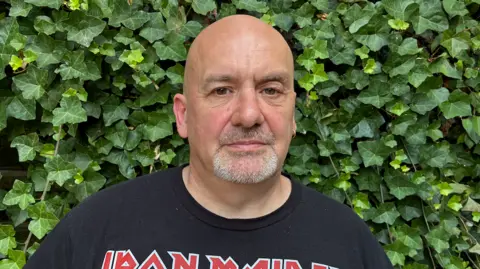
"There's been no explanation or apology or anything," says Mike, Jamie's father.
"I feel the system puts brick walls up constantly for parents to get what most kids take for granted, a decent education."
Jamie left school in March 2025 when he was struggling with his mental health and started to punch walls, damage property and break down in tears daily.
Jamie has just been offered a place, but like Shona, Mike finds it to be unsuitable for his need for 1:1 support.
It means he might face an even longer delay while they await a tribunal.
"My son has a right to an education, and they are legally obliged to provide it," says Mike, but he adds that there is "no accountability".
Despite the challenges, Mike knows that Jamie wants to be back in education.
He is currently working with the charities Stripes and MindJam to improve his confidence as a young leader.
"When the environment is right, Jamie will thrive." he says.
"He's got aspirations, he wants to learn, and he's got so much potential."
 Cathy Killick/BBC
In response, a Department for Education spokesperson said: "No child should be without a suitable school place.
"Our once-in-a-generation reforms will ensure every child gets the right support in their local school without having to fight for it.
"Through our £4 billion investment we're backing schools to improve inclusion, raising the number of specialists on the ground and rolling out comprehensive training for all teachers, whilst investing an additional £3.7 billion to create 60,000 specialists' places.
"We have received thousands of responses to our consultation and held over 200 engagement events with young people, parents and professionals, and will continue to work closely with them to build confidence in the system."
Meanwhile, Leeds City Council says that it is seeing "increasing demand for SEND support and specialist educational provision".
They are "working with schools and partners across the city to expand provision and promote inclusive practice in mainstream settings as part of our wider programme of SEND improvement".
Kirklees Council says that "EHCP processes around the country have been under pressure due to rising demand, but the timeliness and quality of plans is a high priority".
They say they are "fully committed to ensuring every young person receives the support they need while making decisions fairly, consistently and in line with our legal responsibilities".
The BBC reached out to Prince Henry's Grammar School, who were unable to comment.
Listen to highlights from West Yorkshire on BBC Sounds, catch up with the latest episode of Look North.
