Dry April has been 'very tough', says farmer

 Steve Hubbard/BBC
A farmer says he has found business "very tough" during the third driest April ever recorded in East Anglia.
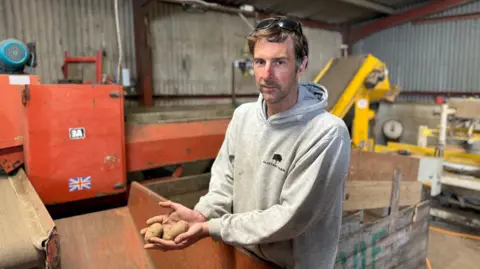
Luke Abblitt farms 400 acres (162ha) of wheat, barley and potatoes at Daintree Farm in Ramsey St Mary's, in the Cambridgeshire Fens, and was hoping to sell his crop of early planted potatoes directly to consumers.
However, he said his yield of potatoes - both in terms of the amount of harvest and size of the potato - was smaller due to the lack of rain this spring.
Abblitt said: "We need rain - they need moisture to grow, they need to lock the nutrients in the soil, but at the minute we're just not getting it."
The farmer, who is a Cambridgeshire County Council farm tenant, continued: "We are coming into some unprecedented weathers.
"We've seen some very... wet winters and very dry springs and summers - and this year, in particular, has been a drier one than what I think I can remember.
"Trying to plant my potato crop this year in the springtime has been very, very challenging."
 Martin Giles/BBC
According to Norwich-based company Weatherquest, April was the third driest ever recorded across East Anglia - with only those in 2007 and 1893 being drier.
Meteorologist Fred Best said: "We've seen about 4mm of rainfall average across the region, which is about 10% of what we'd expect for the month of April - it's likely May will come out with below average rainfall as well."
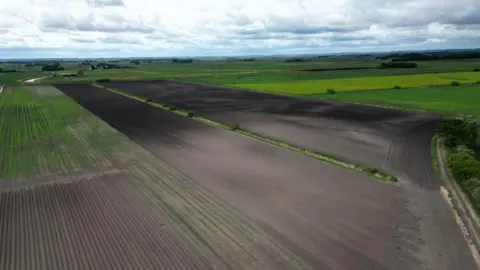
Abblitt said that as a tenant farmer it would be uneconomic to build a water reservoir, which could cost between £500,000 and £1m, or buy a licence to extract water as neighbouring farmers had.
 Steve Hubbard/BBC
But data from last summer meant he was under no illusions about how irrigation affected his crops.
Abblitt said he harvested 200 tonnes (200,000kg) of potatoes from 27 acres (11ha), while his brother produced the same tonnage from just 12 acres (4.8ha) as he was able to water the crop.
"If we're not getting the rain, then we're getting smaller potatoes, we're getting less potatoes and we're getting less quality," said Abblitt.
"We have less to sell, the margins are down and if I'm not growing the food people need because of the weather, we're going to have less food."
 Steve Hubbard/BBC
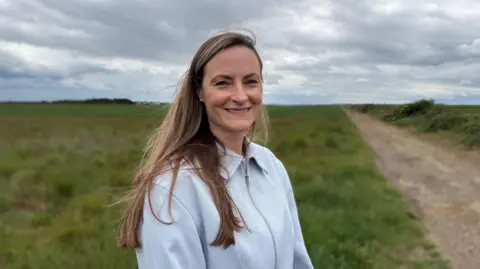
Cambridge Water, which supplies about 351,000 customers, said the lack of rain combined with hot weather had helped result in the highest demand it had ever seen for the month of April.
Natalie Akroyd, director of quality and environment for the company which operates across the Cambridge area, said droughts were becoming normal.
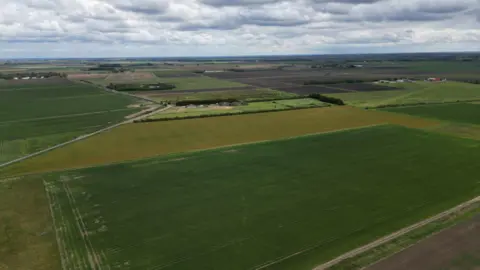
It had meant more resilience was needed and plans were under way by Cambridge Water and Anglian Water to build a Fens reservoir, near Chatteris, able to withstand a once-in-500-year drought, she said.
 Steve Hubbard/BBC
Akroyd said the project was in the detailed design stages ahead of planning permission being sought in 2028.
Construction could then start in 2030 and it could be available to use by the late 2030s, with it expected to fill up with water over two to three winters, she added.
The reservoir would also abstract water from rivers and waterways otherwise pumped out to the sea by the Middle Levels' network of pumping stations, it has been said.
Akroyd said the proposed reservoir could supply about 250,000 customers across the East of England, in a fast-growing area, and it would stop water companies' reliance on extracting groundwater.
"That reservoir will enable us to reduce abstraction from chalk streams to make sure they're protected for the future to meet the growth of the local region and also to improve drought resilience as well," she said.
"Because of the geology in Cambridge, that is all chalk aquifer - and the chalk nature is really susceptible to climate change.
"We need to make large reductions to that to make sure that those environments are protected and sustainable."
Do you have a story suggestion for Cambridgeshire? Contact us below.
Follow Cambridgeshire news on BBC Sounds, Facebook, Instagram and X.
