Home of former brickworks looks to future at 100

 Getty Images
A village formerly home to the world's largest brickworks is celebrating its centenary with an eye to the future.
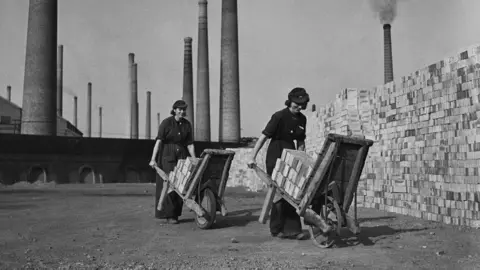
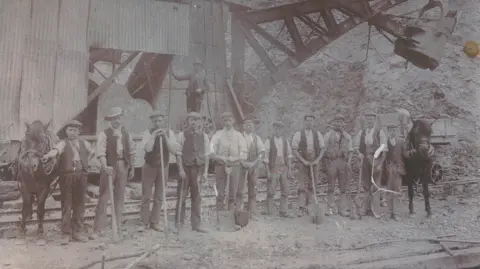
At its height, the London Brick Company (LBC) employed 2,000 people and produced 500 million bricks a year in Stewartby, Bedfordshire.
A series of events will take place to mark this milestone, ahead of new homes being built and Universal's planned UK theme park being constructed nearby.
Lee Melville, chair of Stewartby and Kempston Hardwick Parish Council, said: "It's an amazing time where a village that was once the world's largest brick producer can see a new future with one of the world's biggest and influential entertainment companies and celebrate both together."
 Forterra
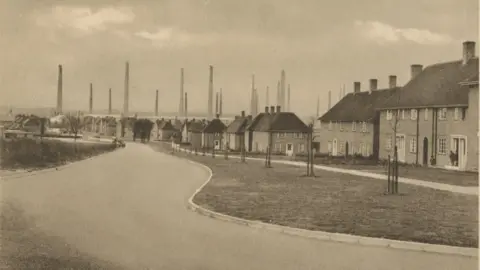
Stewartby was entirely built out of bricks from the brickworks and came with its own social club and later retirement cottages for its employees.
Four generations of Joy Cooper's family worked in the brick industry at Elstow and Stewartby.
The writer and historian said the place offered workers "dignity, comfort, and opportunity at a time when many industrial workers lived in harsh and unhealthy conditions".
"The houses were a far cry from the cramped Victorian back-to-back houses with no electricity, no running water, and no toilet connected to mains sewage," Cooper said.
"They had an indoor bathroom, hot and cold water to the kitchen sink and bath, and gardens large enough to grow fruit and vegetables for the family.
"There were also many sporting facilities, including a swimming pool, bowls, tennis courts and more."
Cooper recalled that before Stewartby got its name, it was suggested that it could be called "Stewartville – perhaps a nod to Bournville, the famous model village created by the Cadbury family".
However, it was named Stewartby after the Stewart family, directors of the LBC.
 Forterra
Many people avoided jobs in brick factories as it was extremely hard and tiring.
Following World War Two, thousands of Italian men were recruited to the UK on four-year contracts to work in brickworks, primarily in Bedfordshire and Peterborough.
Facing a massive labour shortage and a booming demand for bricks to rebuild bombed cities, British brick companies also established recruitment offices in southern Italy.
Rita Di Carlo's father came over from Italy to work on the site.
He was in his 50s, "totally on his own and not knowing anybody", she said.
"He went straight to work at London Brick. He's 95 now but still remembers everything."
 Jean Flannery née Blane
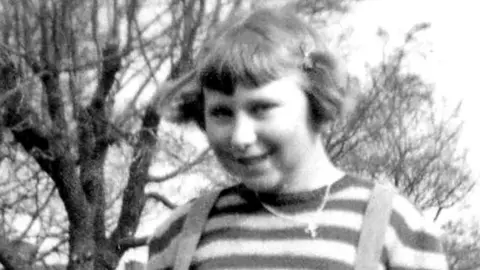
Jean Flannery née Blane lived in Stewartby during the 1950s, and her father was the Stewartby club secretary for more than 25 years.
She said it was a close-knit community which made the village such a special place to call home.
Jean remembers going to Christmas parties for the children of employees at the village hall.
"They were always good fun with entertainment and presents," she said.
The company's pensioners and widows were not forgotten about either.
"Each pensioner or widow household received a supply of coal and a chicken.
"The men also had a bottle of whisky and the women a box of chocolates.
"I suppose that was sexism and as such might not seem acceptable nowadays, but nobody complained then."
She added: "That's how things were and everyone seemed happy enough."
Jean recalls that "quite a few East European refugees [worked] for the brick company".
"In fact there was a hostel for them at Kempston Hardwick, an old Ministry of Defence depot just a few miles away toward Bedford, on the Ampthill Road," she said.
"Mr and Mrs Scott ran that, an elderly couple who lived on site and with whom Mum and Dad were friendly.
"We liked going to visit them as they had a lovely Old English Sheepdog. And with no children or grandchildren of their own, they also made much of us."
 Getty Images
Only people who worked at the site could live in Stewartby. David Szymanski, who was born in the village, was the last managing director of the brickworks.
He was sponsored by LBC to go to university and joined the company at 21, working there all his life.
In 2008, the brickworks closed after more than 100 years of brickmaking in the area.
He decided to shut the site as it was no longer viable, and at the time it only employed 200 people.
The bricks they were producing were not suitable for new-build homes, only for extensions on existing houses where people wanted the bricks to 'match' the existing brickwork.
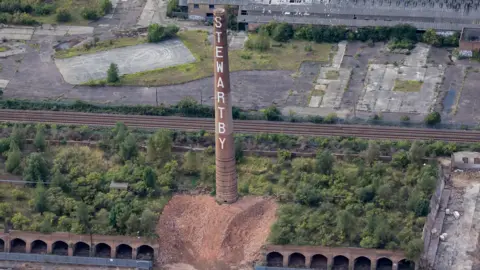
In 2021, four of the original chimneys on the site, standing up to 70m (230ft) tall, were knocked down.
 Getty Images
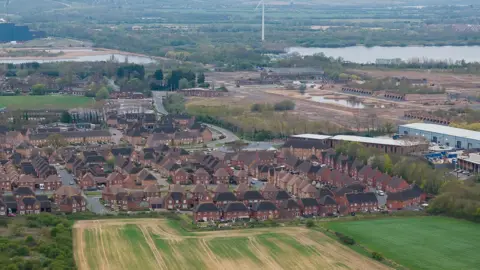
The site is set to undergo a transformation as it is close to land where Universal is building its first theme park in Europe.
Property developer Harworth purchased land in the village in September 2024, and obtained outline planning permission for 1,000 new homes, a school and community facilities.
Melville said there were "mixed feelings" about the "unprecedented scale of development" that will affect this "once quite village".
He said: "As a parish council, what we will always pursue is that the core heritage of the brickworks is not lost and is represented in any redevelopment. Stewartby only exists because of them."
A celebration to mark 100 years is taking place at the Dave Law Sports Pavilion, with fireworks, until 22:00 BST.
"It will be a day of great pride to bring the young and old together after months of planning," Melville said.
Harworth expects the first house on the site to be occupied by early 2028.
Universal's planned UK theme park is expected to draw 8.5 million visitors a year when it opens in 2031.
"Love it or hate it, these opportunities are very rare, and Stewartby & Kempston Hardwick will remain on the map for years to come," he added.
Do you have a story suggestion for Beds, Herts or Bucks? Contact us below.
Follow Beds, Herts and Bucks news on BBC Sounds, Facebook, Instagram and X.
