Scotland's centuries-old guga hunt could be refused licence

 BBC
BBCPermission could be refused for a traditional hunt of young seabirds to take place on an uninhabited Hebridean island later this summer.
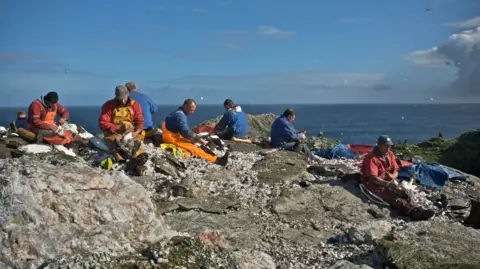
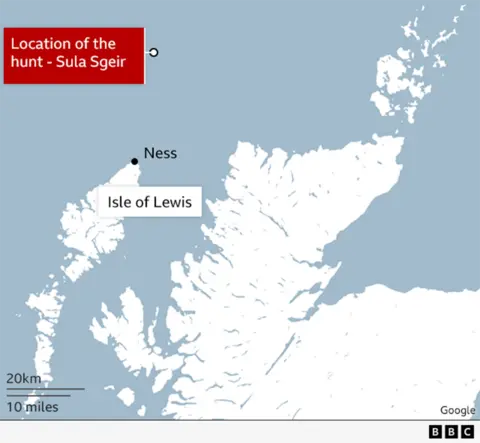
For centuries, gannets have been killed for their meat during an annual hunt on Sula Sgeir, a small rocky island 40 miles (64km) north of Ness on Lewis in the Western Isles.
NatureScot officials have recommended board members refuse granting a licence for this year's hunt due to the potential impact on Sula Sgeir's gannet population. The officials said animal welfare concerns were also considered.
The board, which is due to meet next week, could vote on two other options - allowing a hunt of either 2,000 or 500 birds.
NatureScot, a public body, issues licences for the hunts and has been assessing the latest application.
Previously it has said the cultural significance of the hunt was recognised under the Wildlife and Countryside Act 1981 and hunters must apply for permission every year.
In a new report, officials have recommended a licence be refused this year.
Animal welfare organisations have welcomed the move, but Save Our Guga Harvest campaign said it was disappointed by the recommendation.
The practice, called a guga hunt and dating back to the 15th Century, usually takes place in August.
Last year NatureScot granted a licence allowing up to 500 birds to be killed, following three years when the hunt had not been held due to bird flu.
The agency said the number had been reduced from 2,000 in recent times to allow the population to recover from the impact of the disease.
A total of 485 birds were taken at the 2025 hunt.
Ahead of Monday's meeting, NatureScot said: "We understand there are strong feelings about the guga hunt, and that some people will disagree with it taking place.
"The hunt is recognised in law under the Wildlife and Countryside Act, which makes specific provision for the granting of a licence for the purpose of providing food for human consumption in relation to the gannets on the island of Sula Sgeir.
"Our role is to make licensing decisions based on the most recent scientific evidence and the relevant legal frameworks."
It said it would not be making further comment until after the meeting.

Animal rights campaigners, who oppose the hunt and say it is no longer needed to provide food for islanders, held a protest at NatureScot's headquarters in Inverness earlier this month.
Devon Docherty, Scottish campaigns manager at Protect the Wild, said it would be "a relief" if 2,000 young gannets would get to "spread their wings and fly".
Scottish animal welfare charity OneKind said that "kindness and constructive evidence" looked set to end the hunt.
Chief executive Jason Rose said: "Since the licensing of the hunt resumed last summer, OneKind has calmly and clearly made the case for this grisly piece of history to be retired, as no animal should ever have to suffer in the name of human tradition."
Murdo Macritchie, of Save Our Guga Harvest campaign claimed there had been a "toxic nature" to the opposition to the hunt, and a lack of understanding about it.
He said it was unclear why a hunt involving 500 birds had not been recommended.
Macritchie said: "I'm really, really keen to get more details on why it was okay last year and why not this year.
"What has changed? Is there any change in the way the data is used or interpreted?"
More than 104,000 people have signed a petition calling for the Scottish government to prohibit the hunt.
Holyrood's petitions committee is considering whether the call should be debated by MSPs.
